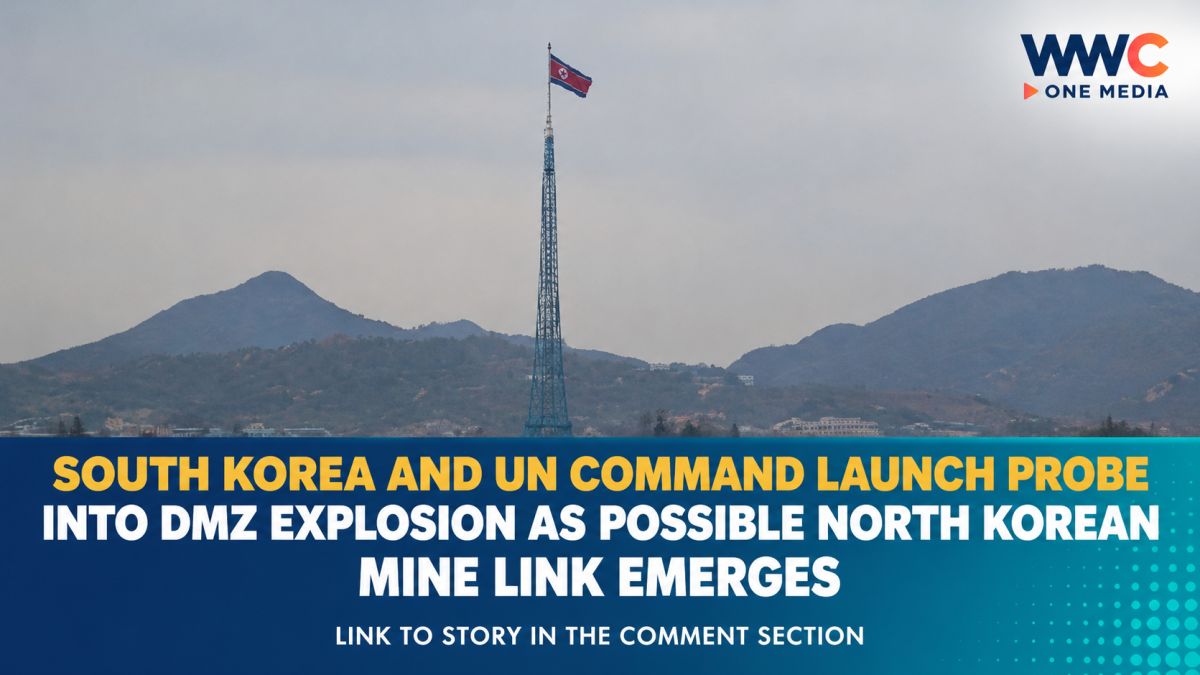
South Korea’s military and the United Nations Command have launched a joint investigation into a landmine explosion inside the Demilitarized Zone, as authorities work to determine what caused the blast that injured three South Korean soldiers.
The explosion occurred on Sept. 21 in the western sector of the DMZ near the Military Demarcation Line. The soldiers were clearing a patrol route when two explosions occurred, seriously injuring two troops and leaving another with minor injuries. South Korean President Lee Jae Myung said the blast was caused by a landmine.
About 40 personnel took part in the joint investigation on Sept. 27, including South Korean military personnel, members of the UN Command’s Military Armistice Commission and investigators from relevant agencies. The team used mine detectors while clearing and assessing routes leading toward the suspected blast area.
However, investigators were unable to reach the exact location of the explosion. The area remains considered dangerous because of the possibility of additional unidentified mines, while the extended operation also raised concerns over personnel fatigue. Further on-site inspections are planned.
The investigation has attracted particular attention because of questions over the origin of the explosive device. South Korean opposition lawmakers have called for transparency amid suspicions that the mine could have originated from North Korea.
Those suspicions have not been confirmed. The DMZ remains heavily contaminated with mines and other unexploded ordnance from decades of military confrontation, meaning investigators must establish the type and origin of the device before determining responsibility.
New information emerging on Sept. 28 has added another element to the investigation. South Korean military sources said soldiers involved in the original operation reported seeing an additional unexploded mine near the blast site. Some witnesses described it as resembling a North Korean wooden-box mine, although other accounts differed over its appearance and composition. The military has not yet verified whether the device was North Korean.
The presence of another suspected mine could provide investigators with additional evidence if it can be safely recovered and identified. However, the investigation team’s inability to reach the blast site means authorities have not yet been able to examine the area directly.
The incident comes as North Korean forces have reportedly continued strengthening sections of their side of the border, including mine-laying and construction of defensive barriers. South Korean authorities have been closely monitoring those activities, although that does not establish a direct connection between North Korea and the Sept. 21 explosion.
The DMZ remains one of the world’s most heavily militarized borders, and unexploded mines pose a persistent danger to military personnel operating in the area. The latest incident demonstrates the continuing risks involved even in routine patrol-route clearance operations.
For Seoul and the UN Command, the immediate priority is establishing exactly what exploded, where the device came from and whether additional mines remain in the area.
The investigation could therefore become significant beyond the injuries themselves, particularly if investigators establish evidence linking the device to North Korean military activity. Until the site can be fully examined and the evidence verified, however, the origin of the mine remains unresolved.