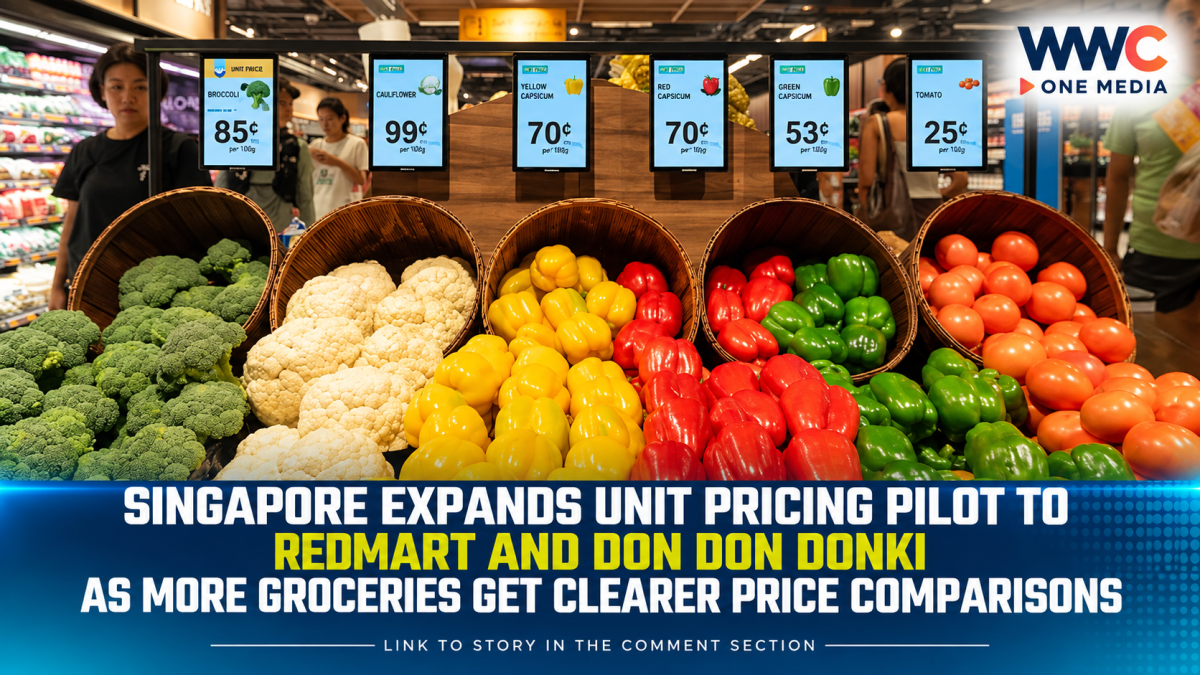
Singapore is expanding its supermarket unit-pricing pilot from Oct. 1, bringing the programme to more retailers, a wider range of everyday groceries and online shopping platforms for the first time.
The initiative is designed to make it easier for consumers to compare the actual cost of products sold in different package sizes and brands by displaying prices based on a standard unit of measurement, such as per kilogram or litre.
Don Don Donki and online grocery platform RedMart will join the expanded pilot from Oct. 1. Cold Storage and Giant will enter the programme from Nov. 1, while NTUC FairPrice, Sheng Siong and Prime Supermarket will also participate in the expanded phase beginning Oct. 1.
For the first time, unit pricing will also be displayed on selected online grocery listings. Sheng Siong and RedMart are scheduled to introduce unit-price information on their online stores from Oct. 1, with other participating operators expected to roll out the feature progressively.
The range of products covered by the pilot will also increase. In addition to categories included during the first phase, shoppers will see unit pricing for commonly purchased products such as flour, milk, butter, snacks, soups and sauces.
The first unit-pricing pilot ran from September to December 2025 at selected outlets operated by NTUC FairPrice, Sheng Siong, Prime Supermarket, Cold Storage and Giant. The programme allowed shoppers to compare prices using measurements such as dollars per kilogram or dollars per litre rather than relying solely on the package’s advertised selling price.
The expansion follows feedback from the first phase indicating that consumers found unit pricing useful when comparing products of different sizes and brands. Participating retailers also provided feedback on how the system could be implemented in stores.
The government and consumer authorities are continuing to treat the initiative as a pilot rather than a permanent nationwide requirement. A market research firm has been commissioned to gather additional feedback from shoppers during the expanded phase, including through surveys and interactions at participating outlets.
The move comes amid broader concerns about how consumers assess grocery prices, particularly when manufacturers or retailers sell products in different quantities. Unit pricing allows shoppers to compare the cost of the underlying product rather than simply comparing the total price printed on different-sized packages.
Singapore’s Price Kaki app also provides unit-price comparisons for more than 13,900 daily essentials, giving consumers another way to compare prices across products.
FairPrice has separately expanded its own unit-pricing initiative across its stores and has been working to extend coverage to additional categories and its online platform. The retailer previously said its expanded categories include staples and household products such as flour, bread, milk, soft drinks, diapers, sauces and shower products.
The expanded government pilot therefore represents a significant shift toward making price comparisons available across both physical supermarkets and e-commerce. As more retailers adopt the system, consumers will have greater access to comparable price-per-unit information when deciding between competing brands and package sizes.
The bigger question now is whether the expanded pilot will eventually lead to broader adoption of unit pricing across Singapore’s grocery sector — and whether the additional price transparency will become a permanent feature of how shoppers compare everyday essentials.