
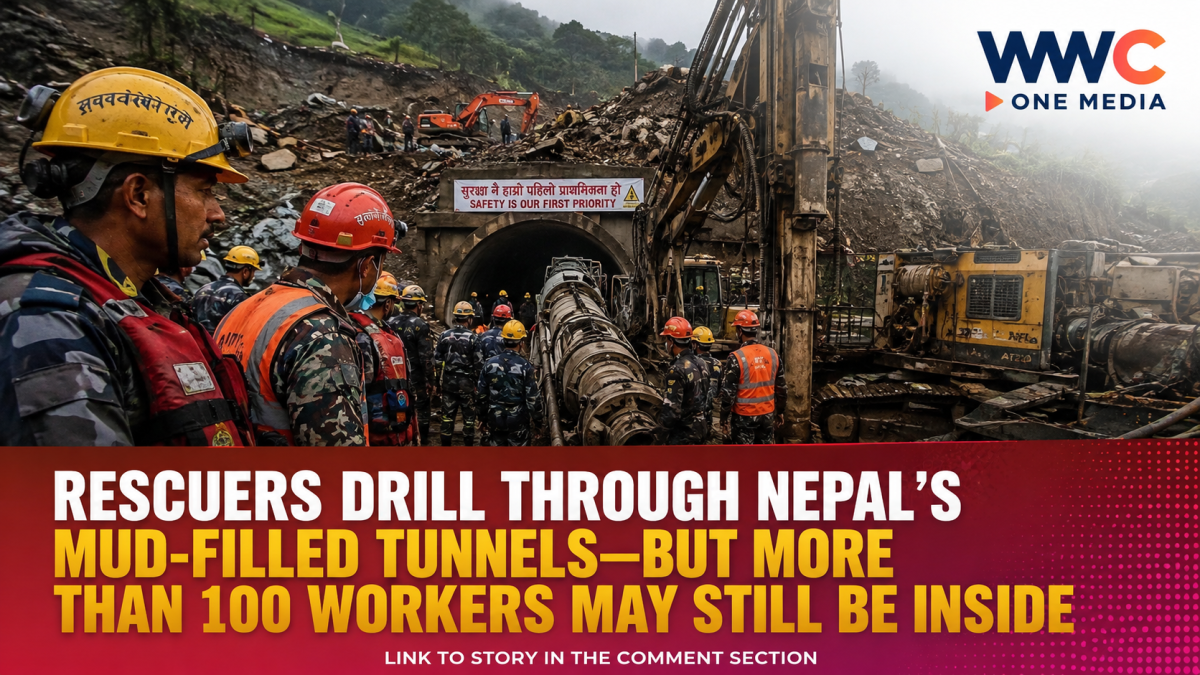
KATHMANDU, Nepal — Rescuers in Nepal are racing against time to reach hydropower workers believed to be trapped inside tunnels buried by mud, rocks and flood debris after a catastrophic Himalayan disaster, as emergency crews deploy heavy machinery and specialized teams in one of the operation’s most difficult missions.
Authorities said Sunday that four access holes had been drilled as rescuers prepared to enter the affected tunnels directly and begin an intensive search. The operation has been complicated by rain, rising river levels and vast amounts of debris left behind by the devastating floods and mudslides.
Nepal’s government has said that more than 100 workers may still be trapped or potentially alive inside tunnels at hydropower facilities in the hard-hit Himalayan river valley, with rescue efforts focused on the Trishuli 3A and 3B sites. The broader disaster has left hundreds of hydropower workers among those reported missing, highlighting the enormous scale of the tragedy.
A Race Against Mud, Water and Time
Rescue teams first broke through into part of a mud-filled tunnel and began pumping air inside and using cameras to search for signs of life. But worsening weather and rising water temporarily flooded excavation areas, forcing rescuers to battle dangerous conditions before operations could continue.
The Nepal Army said teams were using drilling machines, excavators, hydraulic cutters and other specialized equipment as they pushed deeper into the disaster zone. Government officials said advanced search cameras and monitoring equipment were also being used in the effort to locate anyone who may still be trapped.
Specialized tunnel-rescue teams from neighboring India and China have joined the operation, while Nepal’s experienced mountain rescue personnel—including experts accustomed to working in some of the world’s most extreme terrain—have also been deployed to support the search.
Disaster Zone Still Faces Threat of More Flooding
The tunnel rescue is unfolding against the backdrop of a much larger catastrophe along the Nepal-China border. International reports say the disaster was triggered by a major glacial or ice-and-rock collapse that unleashed destructive floods, mud and debris through Himalayan valleys.
The destruction has damaged roads, bridges, communities and hydropower infrastructure, while debris-dammed lakes and unstable terrain have raised fears of additional flooding. At one point, rescue operations in the region were temporarily halted as authorities monitored an overflowing dammed lake and warned residents of possible new danger.
The human toll has continued to rise as rescue and recovery operations expand, with hundreds confirmed dead and thousands reported missing across Nepal and neighboring Tibet in the latest international reports. The figures vary between official updates and continue to change as authorities reach isolated areas and verify reports.
For now, however, one of the most urgent questions remains deep underground: can rescuers reach the workers before unstable debris, water and time run out?
As drills cut through the mud-filled tunnels, families and communities are waiting for the answer.




Leave a Reply