SINGAPORE — November 4, 2026
President Tharman Shanmugaratnam has made his first visit to a unit of the Singapore Armed Forces (SAF), touring the Open Source Unit (OSU) of the Digital and Intelligence Service (DIS) as Singapore strengthens its ability to monitor an increasingly complex digital and security environment.
The visit took place on Nov. 3 and marked Tharman’s inaugural unit visit to the SAF since becoming President.
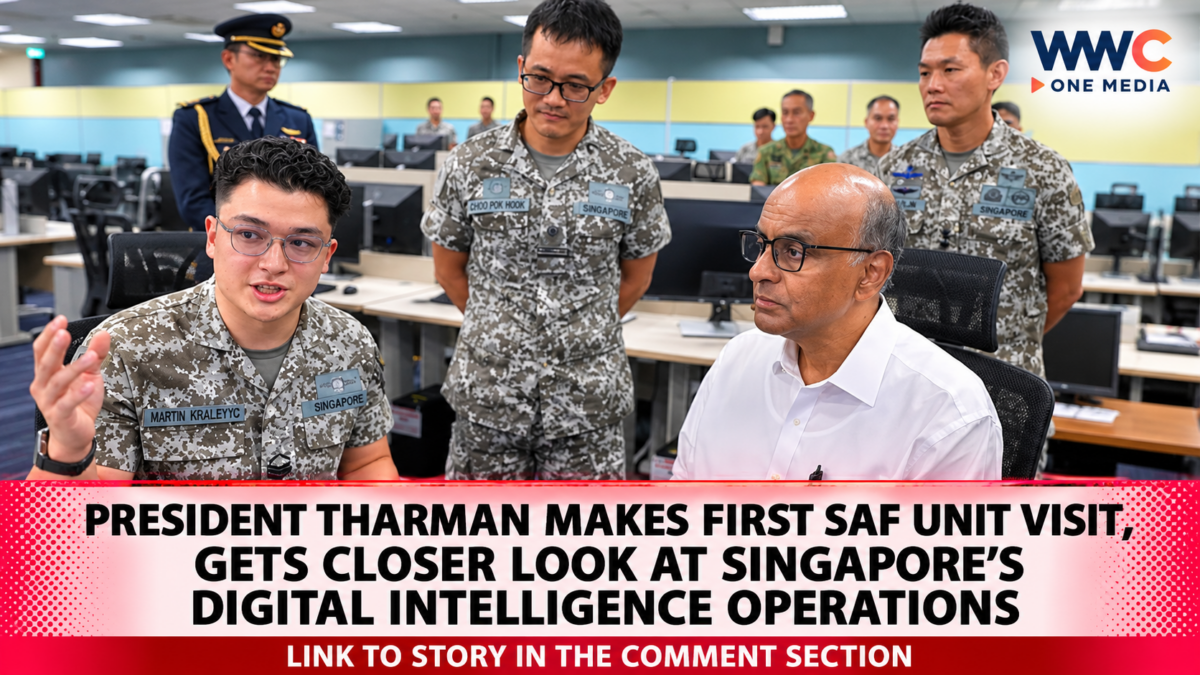
During the visit, he received briefings on the DIS and its Joint Intelligence Command, observed demonstrations of the OSU’s monitoring operations and met personnel serving in the unit, including full-time national servicemen and operationally ready national servicemen.
The Ministry of Defence (MINDEF) said the unit helps the SAF monitor news and information concerning global military and security developments, as well as natural disasters in the region.
The visit highlighted the growing importance of timely information and intelligence in helping Singapore assess developments beyond its borders and make informed decisions about national security.
Why the Open Source Unit Matters to Singapore’s Defence
The OSU supports the SAF by monitoring publicly available information about developments that could affect Singapore and the wider region.
Its work includes following global military and security developments, as well as natural disasters that may have implications for regional stability and preparedness.
According to MINDEF, the information gathered helps improve the SAF’s situational awareness and enables commanders to make timely, well-informed decisions.
This is particularly important in an environment where developments can unfold quickly and information can emerge from many different sources.
The unit’s role is not simply to follow headlines. It contributes to a broader intelligence picture that helps military leaders understand events and assess their possible implications for Singapore.
Tharman: Digital Threats Are Becoming More Complex
During the visit, Tharman emphasised the increasing importance of the DIS as digital threats grow in frequency, scale and sophistication.
He commended personnel for their efforts to keep up with developments and contribute to Singapore’s security.
His remarks reflect the growing role of information and digital awareness in modern defence.
Security developments today are not limited to conventional military activity. Events in the information environment, regional crises and rapidly changing international situations can also affect how countries assess risks and prepare responses.
For a small and highly connected country such as Singapore, the ability to monitor developments early is an important part of maintaining national security.
Senior SAF Leaders Hosted the President
Tharman was hosted by Major-General Lee Yi-Jin, Chief of the Digital and Intelligence Service and Director of Military Intelligence.
Chief of Defence Force Vice-Admiral Aaron Beng and other senior SAF officers were also present.
During the programme, the President received briefings on the DIS and its Joint Intelligence Command, which provides intelligence support for early warning and decision-making in SAF operations.
He also observed demonstrations of the OSU’s monitoring capabilities and engaged personnel about their work.
The participation of full-time national servicemen and operationally ready national servicemen highlighted the contribution of both active and reservist personnel to Singapore’s defence system.
What Is the Digital and Intelligence Service?
The DIS is the youngest service of the Singapore Armed Forces.
It was officially inaugurated on Oct. 28, 2022, at a parade officiated by then-President Halimah Yacob.
Its establishment reflected the SAF’s recognition that digital and intelligence capabilities have become increasingly important to military operations.
The service contributes to the SAF’s ability to collect, assess and provide intelligence that supports operational planning and decision-making.
Its responsibilities form part of Singapore’s wider defence structure, where information, technology and coordination are increasingly important alongside traditional military capabilities.
Singapore’s Military Is Expanding Its Use of Technology
The President’s visit comes as the SAF continues to modernise its capabilities and strengthen coordination between different military services.
In recent months, Singapore has highlighted developments involving automated systems, intelligence integration and precision capabilities.
Read more: https://wwconemedia.com/singapore-army-unveils-new-automated-artillery-and-precision-strike-systems/
The SAF has also continued participating in multinational exercises to strengthen coordination and interoperability with regional and international defence partners.
These developments demonstrate how Singapore is adapting its defence capabilities to a security environment that increasingly involves technology, intelligence and cooperation across different domains.
Digital Security Is Becoming a Wider National-Security Concern
The growing role of the DIS also comes as Singapore faces a broader range of security challenges.
Authorities have warned that threats can emerge through online platforms, information networks and international developments, making early awareness and public preparedness increasingly important.
Singapore’s 2026 terrorism threat assessment, for example, highlighted continuing concerns about online self-radicalisation and the changing nature of extremist threats.
Separately, Singapore has raised concerns about suspicious organisations and websites that may exploit the country’s reputation for diplomacy and national-security expertise.
These issues are different from the OSU’s specific responsibilities, but they illustrate why information awareness and the ability to assess developments accurately have become increasingly important to Singapore’s security agencies.
Why the Visit Matters
Tharman’s visit offers a closer look at a part of the SAF that operates largely outside public view.
While military equipment and exercises are often more visible, intelligence work plays an important supporting role in helping commanders understand changing situations and make informed decisions.
The OSU’s monitoring of global developments and regional natural disasters contributes to that wider picture.
The President’s first SAF unit visit also brought attention to the personnel responsible for this work, including national servicemen who support Singapore’s defence capabilities.
As digital threats and international security developments continue to evolve, the DIS is expected to play an increasingly important role in the SAF’s ability to remain informed and prepared.
For Singapore, the challenge is not simply keeping track of what is happening around the world. It is understanding which developments matter, how quickly they may change and what they could mean for the country’s security.