LONDON, United Kingdom — November 4, 2026 | WWC ONE MEDIA | Global Health, Pharmaceuticals & Business
A new controversy is shaking Britain’s fast-growing online weight-loss industry after advertising regulators ruled against four promotional campaigns that they said effectively marketed prescription-only obesity medicines to the public.
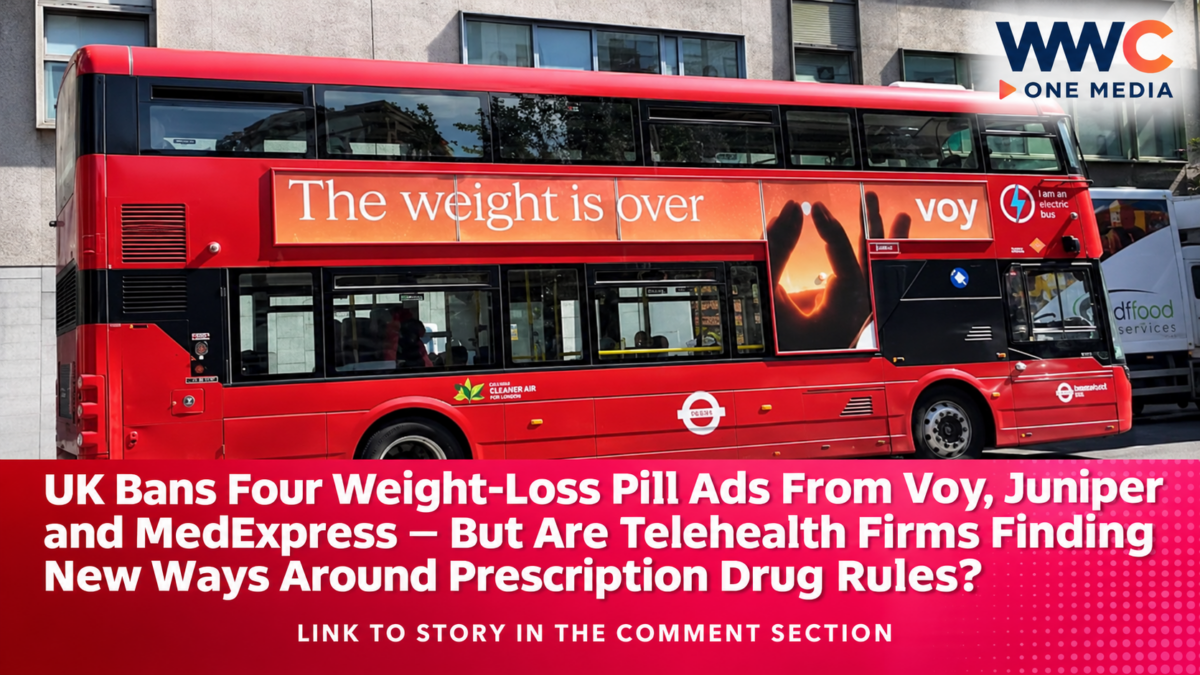
The UK’s Advertising Standards Authority (ASA) targeted advertisements associated with three telehealth providers—Voy, Juniper and MedExpress—including a promotion displayed on the side of a London bus.
The action follows the arrival of prescription oral GLP-1 weight-management treatments in the UK market and growing competition among businesses seeking to attract patients who prefer tablets to injections.
According to November 4 reporting by the Press Association, carried by AOL UK, the advertising watchdog found that the companies’ wording, images and overall presentation could lead consumers to believe that prescription-only weight-loss pills were being promoted.
The ruling is significant because British advertising rules prohibit companies from marketing prescription-only medicines directly to the general public.
But the latest enforcement action raises a much bigger question.
As pharmaceutical companies and telehealth platforms compete for a share of the booming obesity-treatment market, are advertisements becoming increasingly sophisticated at promoting prescription medicines without explicitly naming them?
A London Bus Advertisement Triggers Regulatory Action
One of the advertisements investigated by the ASA appeared on a London bus in July 2026.
The advertisement was associated with Voy, a digital weight-management provider operated by Menwell.
It showed a hand holding a white pill and carried the promotional message:
“The weight is over…Voy.”
A separate Voy advertisement appeared on a video-on-demand service in August.
That promotion also featured a pill and used language emphasizing oral weight support.
Both advertisements included smaller text identifying a glucomannan food supplement.
Glucomannan is a dietary fiber used in some weight-management products and is distinct from prescription GLP-1 medicines.
However, the ASA concluded that the overall impression of the advertisements could cause consumers to associate them with the newly available prescription-only oral Wegovy treatment.
The regulator considered the prominent imagery and messaging more influential than the smaller explanatory text.
This distinction is central to the controversy.
An advertisement does not necessarily comply with advertising rules simply because a disclaimer appears somewhere within it.
Regulators may consider what an ordinary consumer is likely to understand from the advertisement as a whole.
Why the ASA Rejected Voy’s Advertising Approach
The advertising watchdog examined how the advertisements would likely be interpreted by consumers.
The emergence of oral GLP-1 prescription medicines had created significant public interest in weight-management pills.
Against that backdrop, a large pill image combined with weight-loss language could lead viewers to associate a promotion with prescription medication.
The ASA determined that the smaller reference to a glucomannan supplement was insufficient to overcome that impression.
The video-on-demand advertisement also directed viewers toward a website where prescription-only weight-loss treatments were available.
This was an important consideration because regulators can examine the journey consumers follow after clicking on or responding to an advertisement.
A campaign may avoid naming a prescription product in its headline while still directing consumers toward the product.
The ASA’s position is that advertising compliance depends on substance and overall consumer interpretation—not merely the absence of a medicine’s brand name.
Juniper and MedExpress Also Face Advertising Restrictions
The latest action extended beyond Voy.
Juniper was investigated over a YouTube advertisement that promoted the availability of a weight-loss pill.
MedExpress faced scrutiny over an Instagram advertisement referring to new weight-loss tablets and emphasizing an alternative to injections.
The promotion also encouraged consumers to join a waiting list.
The regulator concluded that these advertisements effectively promoted prescription-only medicines to the public.
The companies were instructed not to repeat the advertisements in the forms investigated.
However, an advertising prohibition should not be confused with a blanket ban on the companies’ operations.
The rulings do not establish that Voy, Juniper or MedExpress must stop providing all legitimate telehealth services.
Nor do they mean that every weight-management medicine offered through online consultations has been prohibited.
The issue concerns the promotion of prescription-only treatments to the general public.
Why Weight-Loss Pills Have Become a Major Marketing Battleground
The obesity-treatment industry has experienced rapid growth as pharmaceutical companies develop medicines targeting hormones associated with appetite and blood glucose regulation.
GLP-1 receptor agonists have become particularly important.
Treatments such as semaglutide and tirzepatide have demonstrated substantial weight reduction in clinical studies involving appropriate patient groups.
The growth of these medicines has encouraged pharmaceutical companies to develop additional formulations.
Oral treatments may appeal to some patients who prefer tablets rather than injections.
For telehealth providers, this creates a commercial opportunity.
Online consultations, digital prescription services and home delivery can potentially make access more convenient for eligible patients.
But prescription medicines are not ordinary consumer products.
Their use requires appropriate clinical assessment, consideration of contraindications and monitoring for adverse effects.
This is why advertising restrictions remain important even when demand is strong.
UK Rules Prohibit Direct Public Advertising of Prescription Medicines
The British advertising framework generally prevents prescription-only medicines from being advertised directly to consumers.
Under the relevant Committee of Advertising Practice rules, businesses can promote legitimate healthcare services, subject to applicable restrictions, but they cannot use those promotions to market prescription-only medicines to the public.
This differs from the United States, where direct-to-consumer prescription drug advertising is permitted under specific regulatory requirements.
In the UK, simply avoiding a medicine’s name may not be sufficient.
Advertisers must consider whether their images, claims and promotional messages effectively identify a prescription treatment.
The ASA has repeatedly emphasized that the complete presentation matters.
Claims relating to appetite suppression, reduced cravings, substantial weight reduction and specific medication formats may contribute to an impression that a prescription product is being promoted.
Companies must also consider the content of websites to which their advertisements direct consumers.
Previous ASA Rulings Show a Broader Enforcement Campaign
The November 4 action follows earlier enforcement involving weight-loss advertising.
On October 7, the ASA upheld a complaint against MedExpress concerning a Facebook advertisement.
The advertisement included claims about reducing cravings and helping consumers feel full for longer.
MedExpress argued that the promotion concerned its broader weight-management services, including non-prescription options.
However, the regulator found that the wording and linked webpages effectively promoted prescription-only medicines.
The ASA also upheld an October ruling against Juniper involving a paid Google search advertisement.
The promotion referred to weight-loss medication, discounts and reductions in appetite or cravings.
The regulator concluded that the advertisement crossed the line into prohibited prescription drug promotion.
These decisions indicate that the ASA is examining not only explicit references to medicine brands but also indirect promotional methods.
For online healthcare businesses, that creates a substantial compliance challenge.
Marketing teams must evaluate the full customer journey rather than treating each advertisement as an isolated message.
Global Obesity Drug Competition Is Intensifying
The regulatory controversy comes as the pharmaceutical industry invests heavily in next-generation obesity treatments.
Eli Lilly and Novo Nordisk are among the most prominent companies competing in the market.
Their medicines include products marketed for diabetes and weight management, although approved indications vary by country.
WWC ONE MEDIA previously examined that competition in Lilly and Novo Bet on Amylin as the Next Obesity-Drug Battleground After the GLP-1 Boom.
That report explored the development of experimental medicines combining different hormonal mechanisms to improve weight reduction.
The competition is increasingly focused on treatment effectiveness, tolerability, dosing convenience and affordability.
However, success in clinical trials does not automatically guarantee regulatory approval.
Nor does approval eliminate the need for responsible advertising and appropriate prescribing.
Eli Lilly’s Growth Demonstrates the Commercial Stakes
The global financial opportunity surrounding obesity medicines is enormous.
Eli Lilly’s third-quarter 2026 results showed substantial demand for Mounjaro and Zepbound.
WWC ONE MEDIA reported on the company’s expansion in Eli Lilly Revenue Surges 39% to $24.4 Billion as Mounjaro and Zepbound Smash Records — But Why Did Its Earnings Forecast Fall?.
The report examined the importance of obesity and diabetes treatments to the company’s financial performance.
Rapid commercial growth encourages investment in manufacturing, clinical research and distribution.
It also increases competition among companies seeking to connect patients with available treatments.
But financial incentives can create pressure on advertisers to use more attention-grabbing language.
Regulatory scrutiny aims to ensure that promotional messaging does not encourage inappropriate medicine use or mislead consumers about what is being offered.
Novo Nordisk’s Pipeline Shows Why the Market Is Evolving
Novo Nordisk is also developing additional obesity treatments.
One candidate is CagriSema, an experimental combination involving semaglutide and cagrilintide.
WWC ONE MEDIA covered recent research in Novo Nordisk’s Experimental CagriSema Shows 25% Average Weight Loss in Women — But a Major FDA Decision and Rival Drug Remain the Biggest Tests.
The reported weight-loss result came from an exploratory analysis under specific clinical-trial assumptions.
It should not be interpreted as a guaranteed individual outcome.
CagriSema remains investigational, and its clinical development is separate from the UK’s current advertising rulings.
Nevertheless, the research demonstrates how quickly the weight-management market is changing.
As new treatment options become available, healthcare advertising may grow more complicated.
Regulators will need to distinguish legitimate information about medical services from promotions that effectively encourage consumers to request particular prescription drugs.
The United States Is Also Cracking Down on Misleading GLP-1 Claims
Britain is not alone in scrutinizing obesity-treatment advertising.
In March 2026, the US Food and Drug Administration issued warning letters to 30 telehealth companies over misleading claims involving compounded GLP-1 medicines.
The agency identified concerns about advertisements that implied compounded products were equivalent to FDA-approved drugs.
It also criticized branding that could obscure the actual source of the medicines.
The FDA emphasized that compounded medicines are not FDA-approved products.
Compounded treatments can serve legitimate medical needs, but they do not undergo the same premarket review for safety, effectiveness and quality as approved medicines.
The US action involved a different regulatory framework from the UK rulings.
Nevertheless, both demonstrate a shared concern: consumers must not be misled about the nature, approval status or expected benefits of medical treatments.
Why Misleading Marketing Can Put Patients at Risk
Weight-management medicines can provide clinically meaningful benefits for eligible patients.
However, they are not appropriate for everyone.
Potential adverse effects and contraindications must be considered through medical assessment.
Treatment decisions may depend on a person’s health history, existing medicines and individual clinical circumstances.
Advertising that emphasizes convenience or rapid results without sufficient context may create unrealistic expectations.
It may also encourage consumers to approach prescription medicines as if they were ordinary retail products.
This is particularly concerning when advertisements use countdowns, discounts or messages that suggest consumers must act immediately.
In May 2026, the ASA upheld an earlier ruling against Voy involving promotional emails.
The watchdog found that the campaigns promoted prescription-only medicines and created inappropriate urgency around purchasing medicated weight-loss programs.
That finding illustrates the regulator’s broader concern about the pressure marketing can place on consumers.
The Financial Impact Could Extend Beyond Drugmakers
The obesity-treatment boom is influencing industries beyond pharmaceutical development.
Manufacturers of packaging components, injection devices and related medical supplies have benefited from increased demand.
WWC ONE MEDIA previously examined this trend in West Pharma’s Profits Jump 36% as Weight-Loss Drug Demand Explodes — But a Bigger Billion-Dollar Opportunity May Be Emerging.
The article discussed how demand for injectable treatments contributes to the market for advanced pharmaceutical components.
The connection illustrates the scale of the obesity-treatment industry.
However, the commercial success of medicine manufacturers and their suppliers is separate from whether individual advertisements comply with national regulations.
The UK rulings concern marketing conduct, not the financial validity of the entire obesity-drug industry.
What the Advertising Crackdown Means for Telehealth Businesses
Digital healthcare providers face a difficult balance.
They need to inform prospective patients that legitimate medical services are available.
At the same time, they must avoid advertising prescription-only products in ways prohibited by national law.
This distinction is especially important when providers offer a mixture of consultations, lifestyle support, non-prescription products and prescription treatments.
Companies may need to strengthen internal marketing review procedures.
They may also need to examine affiliate promotions, influencer partnerships and automated advertising campaigns.
A message that appears compliant in isolation may become problematic when combined with images, webpages or product references.
For the industry, maintaining patient trust may require more transparent descriptions of services, treatment eligibility and the role of licensed healthcare professionals.
What the Latest Reports Confirm
The November 4 Press Association report confirms that four advertisements involving Voy, Juniper and MedExpress were ruled against by the ASA.
The advertisements appeared across outdoor, video-on-demand and social media channels.
The ASA’s previously published rulings against Juniper, MedExpress and Voy provide direct evidence of the regulator’s interpretation of prescription-drug advertising restrictions.
Meanwhile, the UK’s Medicines and Healthcare products Regulatory Agency has separately investigated online promotions involving oral weight-management products.
In July, the MHRA reviewed Voy promotions involving an over-the-counter orlistat product and language relating to anticipated oral weight-loss treatments.
That investigation demonstrated how advertisements for permitted products can become problematic when they also appear to promote prescription-only or not-yet-authorized medicines.
These earlier actions are separate from the November 4 ASA rulings, but they establish the broader regulatory context.
The Bigger Question: Will Obesity-Drug Marketing Become Harder to Police?
The rapid expansion of digital healthcare has created opportunities for patients to access consultations and prescriptions remotely.
But it has also introduced new advertising challenges.
Telehealth platforms operate across websites, mobile applications, online videos, social media and traditional outdoor advertising.
A campaign can move consumers between several channels before presenting detailed information about a prescription medicine.
For regulators, evaluating only the first advertisement may not fully capture its commercial purpose.
The latest UK rulings suggest that watchdogs are increasingly willing to assess the overall effect of promotional messages.
For healthcare businesses, the message is clear: an advertisement does not become compliant simply because the prescription medicine is left unnamed.
The Bottom Line
Britain’s advertising watchdog has ruled against four weight-loss promotions associated with Voy, Juniper and MedExpress, including a London bus advertisement.
The decision reflects growing regulatory concern about companies indirectly promoting prescription-only obesity treatments to the general public.
The action does not mean legitimate obesity medicines have been banned.
It means healthcare advertisers must respect rules intended to prevent misleading promotion and support informed medical decisions.
As oral GLP-1 medicines create new commercial opportunities and telehealth platforms compete aggressively for patients, will regulators succeed in protecting consumers—or could increasingly sophisticated advertising campaigns stay one step ahead of the rules?