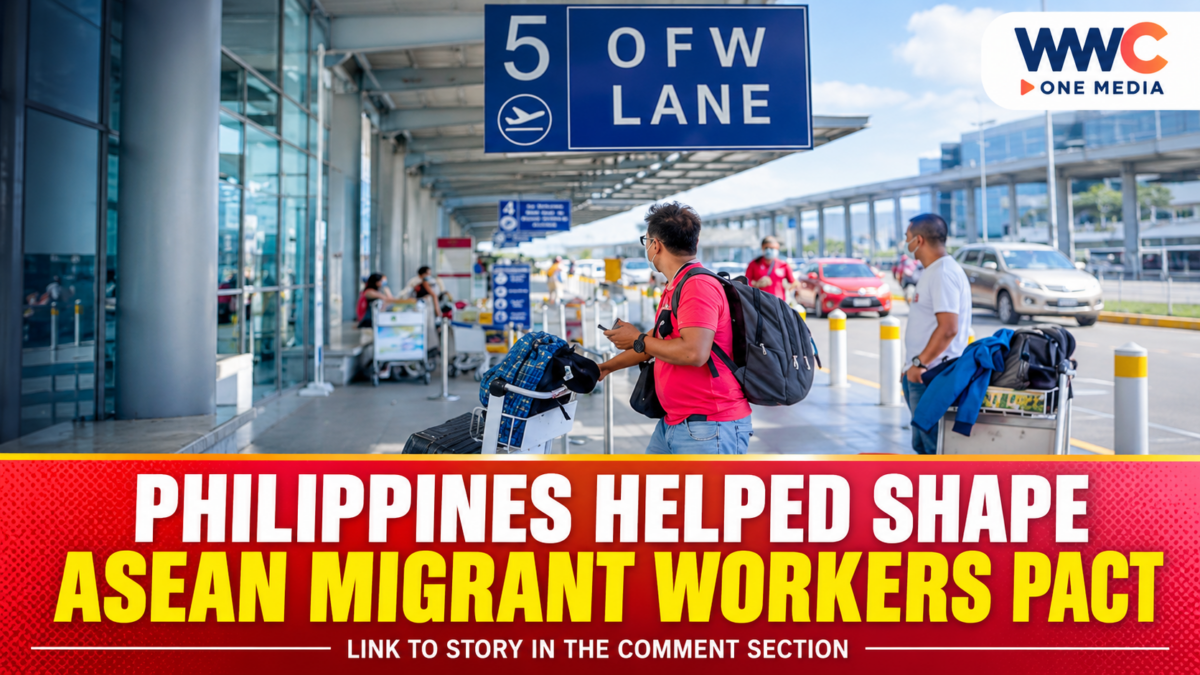
MANILA, Philippines — The Philippines has taken a leading role in developing a new regional framework designed to make overseas recruitment fairer, more transparent and safer for migrant workers, placing the protection of millions of Southeast Asian workers at the centre of its 2026 ASEAN chairship.
The proposed regional commitment, formally titled the ASEAN Declaration for Fair, Ethical, and Sustainable Recruitment for Empowered Migrant Workers, was developed through Philippine-led initiatives and subsequently adopted by ASEAN labour ministers in August 2026. As of November 16, the declaration had also received endorsement from the ASEAN Socio-Cultural Community Council ahead of its submission to regional leaders at the 49th ASEAN Summit in Manila.
The initiative addresses a persistent problem across international labour markets: workers can face excessive recruitment charges, misleading employment offers, inadequate contracts and limited protection when working outside their home countries.
For the Philippines, the development carries particular importance. Overseas Filipino workers (OFWs) remain an important part of the national economy, while the government continues to face the responsibility of protecting citizens employed in foreign countries.
But the bigger question is whether a regional declaration can translate into meaningful changes in the recruitment process, particularly for workers who have little bargaining power before accepting overseas employment.
Philippines Started Building the Recruitment Framework Before Its ASEAN Chairship
The Philippines’ involvement did not begin with the November summit.
The Department of Migrant Workers (DMW), in its 2025 Annual Report, documented its participation in the 18th ASEAN Committee on the Implementation of the ASEAN Declaration on the Protection and Promotion of the Rights of Migrant Workers and the 18th ASEAN Forum on Migrant Labour.
The meetings took place in Manila from June 23 to 27, 2025, and in Kuala Lumpur, Malaysia, from September 9 to 10, 2025.
The department’s annual report specifically identified its efforts to champion fair and ethical recruitment among ASEAN member states and spearhead the development of the proposed declaration.
This placed the initiative within the Philippines’ preparations for its 2026 ASEAN chairship, rather than treating it as a standalone diplomatic announcement.
The distinction matters because the country was involved in shaping the proposal before taking responsibility for leading the regional organisation’s annual agenda.
The declaration subsequently became one of the Philippines’ priority labour-sector deliverables.
During the 29th ASEAN Labour Ministers’ Meeting in August 2026, the Philippines secured regional backing for four labour-related outcome documents, including the recruitment declaration.
The other initiatives covered labour market and social resilience, occupational safety and health in the informal economy, and labour inspection in the fishing sector.
These priorities reflect a wider effort to address changing employment conditions while strengthening protections for workers across different industries.
What the ASEAN Migrant Workers Pact Actually Seeks to Change
The declaration focuses on improving how migrant workers are recruited and employed across the region.
Its stated objectives include eliminating illegal and unethical recruitment practices, protecting workers against exploitation and trafficking in persons, and strengthening accountability among recruitment agencies and employers.
These objectives address different stages of the overseas employment process.
Before departure, workers need accurate information about their employers, job descriptions, salaries, contracts and recruitment arrangements.
During deployment, they need protection against practices that violate employment agreements or undermine their rights.
When problems arise, workers also need accessible mechanisms for reporting abuse and seeking assistance.
The regional declaration recognises that recruitment practices cannot be addressed exclusively through the actions of workers’ home countries.
Sending countries regulate recruitment and deployment, while destination countries oversee employment conditions and enforce their own labour laws.
Cooperation between the two sides is therefore essential.
For example, a Filipino worker recruited in the Philippines but employed in another ASEAN country may need assistance from both governments when a dispute arises.
A coordinated regional approach could make it easier for authorities to exchange information, identify recruitment problems and strengthen oversight of employment arrangements.
The declaration’s emphasis on employer and recruitment-agency accountability is particularly relevant because workers frequently depend on intermediaries to access international employment opportunities.
Why the 2007 Cebu Declaration Still Matters
ASEAN’s latest recruitment initiative builds on a much longer regional effort to protect migrant workers.
On January 13, 2007, ASEAN leaders adopted the Declaration on the Protection and Promotion of the Rights of Migrant Workers in Cebu City, Philippines.
The agreement recognised the economic and social contributions of migrant workers and established responsibilities for both countries sending workers and countries receiving them.
It also addressed concerns involving undocumented workers, employment protection, access to legal remedies, recruitment practices and the welfare of migrant workers.
Importantly, the 2007 declaration directed relevant ASEAN bodies to develop a regional instrument on migrant workers’ rights.
ASEAN subsequently developed the 2018 ASEAN Consensus on the Protection and Promotion of the Rights of Migrant Workers, which established a broader framework covering fundamental rights, obligations and cooperation among member states.
However, the ASEAN Secretariat describes that consensus as non-legally binding.
The new recruitment declaration represents a more targeted policy initiative focused on the recruitment process itself.
It should not be confused with a binding regional treaty that automatically creates identical employment laws across all ASEAN countries.
Instead, its significance will depend on how participating governments translate the agreed principles into national regulations, administrative procedures and enforcement programmes.
The Philippines’ role in developing the initiative also reflects its longstanding involvement in regional migrant-worker protection.
The Risks Filipino Workers Continue to Face
The importance of stronger recruitment standards becomes clearer when examining the risks associated with overseas employment.
Illegal recruitment, misleading job advertisements and trafficking schemes can affect workers before they even reach their intended destinations.
The DMW’s 2025 Annual Report documented the department’s monitoring of 19,226 recruitment advertisements published through newspapers, online job portals and social media platforms.
Of these, 2,320 human resource pooling advertisements were approved for posting, while 889 advertisements were endorsed to the Migrant Workers Protection Bureau for further investigation.
These figures demonstrate the scale of recruitment monitoring required in an increasingly digital employment market.
The risks are not limited to advertisements that appear suspicious.
Some fraudulent recruitment operations use legitimate-looking company identities, attractive compensation packages and seemingly professional communication channels to convince applicants to accept employment.
WWC ONE MEDIA previously examined these concerns in its report on DMW community training against illegal recruitment and human trafficking in Davao.
The campaign highlighted the importance of involving local government personnel, community organisations and former OFWs in identifying suspicious employment offers.
Another example involved Filipinos allegedly deceived into joining online scam operations in Myanmar.
These cases illustrate why recruitment safeguards need to extend beyond the signing of employment contracts.
Workers also need access to reliable information, effective complaint mechanisms and assistance when employers or intermediaries fail to honour their obligations.
ASEAN Cooperation Could Strengthen Protection Across Borders
One of the challenges in protecting migrant workers is that recruitment and employment frequently involve multiple jurisdictions.
A worker may be recruited through an agency in one country, processed through another intermediary and eventually deployed to a different destination.
When problems occur, determining which authority should respond can become complicated.
Regional cooperation could help reduce these difficulties by encouraging governments to improve information-sharing, recruitment oversight and coordination between relevant agencies.
The Philippines’ 2026 ASEAN chairship provides an opportunity to advance these discussions.
The Department of Labor and Employment announced on August 28, 2026, that ASEAN labour ministers had endorsed four Philippine-led labour documents during the 29th ASEAN Labour Ministers’ Meeting in Bangkok.
The documents were scheduled for submission to the 49th ASEAN Summit in November.
The 36th ASEAN Socio-Cultural Community Council Meeting, held on November 6, subsequently welcomed the submission of the labour declaration alongside other regional outcome documents.
Its joint statement specifically identified the recruitment declaration as an initiative intended to eliminate illegal and unethical recruitment malpractices, protect workers from exploitation and trafficking, and strengthen accountability.
This provides an important indication that the initiative has progressed beyond the initial drafting stage.
However, endorsement and implementation remain separate stages of regional policymaking.
For Filipino workers, the practical value of the agreement will depend on whether recruitment agencies, employers and government authorities follow through on the commitments.
What Happens Next?
The next major milestone is the consideration of the regional outcome documents by ASEAN leaders during the 49th ASEAN Summit, scheduled for November 14 to 17, 2026, in Manila.
The recruitment declaration has already passed through the relevant labour-sector process and received endorsement from the ASEAN Socio-Cultural Community Council.
The next stage involves determining how its principles will be carried into national programmes and administrative practices.
For the Philippines, several areas deserve attention.
First, recruitment agencies must operate under effective oversight, with meaningful consequences for violations.
Second, overseas employment contracts should provide workers with clear information about their responsibilities, compensation and available protections.
Third, destination countries need accessible procedures for workers who encounter exploitation, unpaid wages or other employment-related violations.
Finally, regional commitments should be supported by measurable implementation efforts rather than remaining diplomatic statements.
The Philippines has helped put fair and ethical recruitment on ASEAN’s regional agenda.
Whether that achievement becomes a lasting improvement for migrant workers will depend on what governments do after the declarations are adopted.
For millions of Filipinos considering employment abroad, the ultimate measure of success will not be the number of agreements signed at regional meetings.
It will be whether workers can accept overseas jobs without being exposed to deceptive recruitment, unfair employment arrangements or preventable exploitation.
Frequently Asked Questions
1. What is the ASEAN Declaration for Fair, Ethical, and Sustainable Recruitment for Empowered Migrant Workers?
It is a regional policy declaration developed through Philippine-led initiatives to promote responsible recruitment, prevent exploitation and trafficking, and strengthen accountability among recruitment agencies and employers.
2. Why is the Philippines involved in developing the ASEAN migrant workers pact?
The Department of Migrant Workers spearheaded the development of the proposed declaration as part of the Philippines’ preparations for its 2026 ASEAN chairship.
3. When was the ASEAN recruitment declaration adopted by labour ministers?
The declaration was adopted by ASEAN labour ministers during the 29th ASEAN Labour Ministers’ Meeting in August 2026. It was subsequently endorsed by the 36th ASEAN Socio-Cultural Community Council on November 6, 2026.
4. Does the declaration automatically change employment laws across ASEAN?
No. The declaration establishes regional policy commitments. Its practical implementation depends on how individual member states translate those commitments into national policies, regulations and enforcement measures.
5. How could the agreement benefit overseas Filipino workers?
It could strengthen recruitment oversight, improve cooperation between sending and receiving countries, promote employer accountability and support measures against illegal recruitment, exploitation and human trafficking.