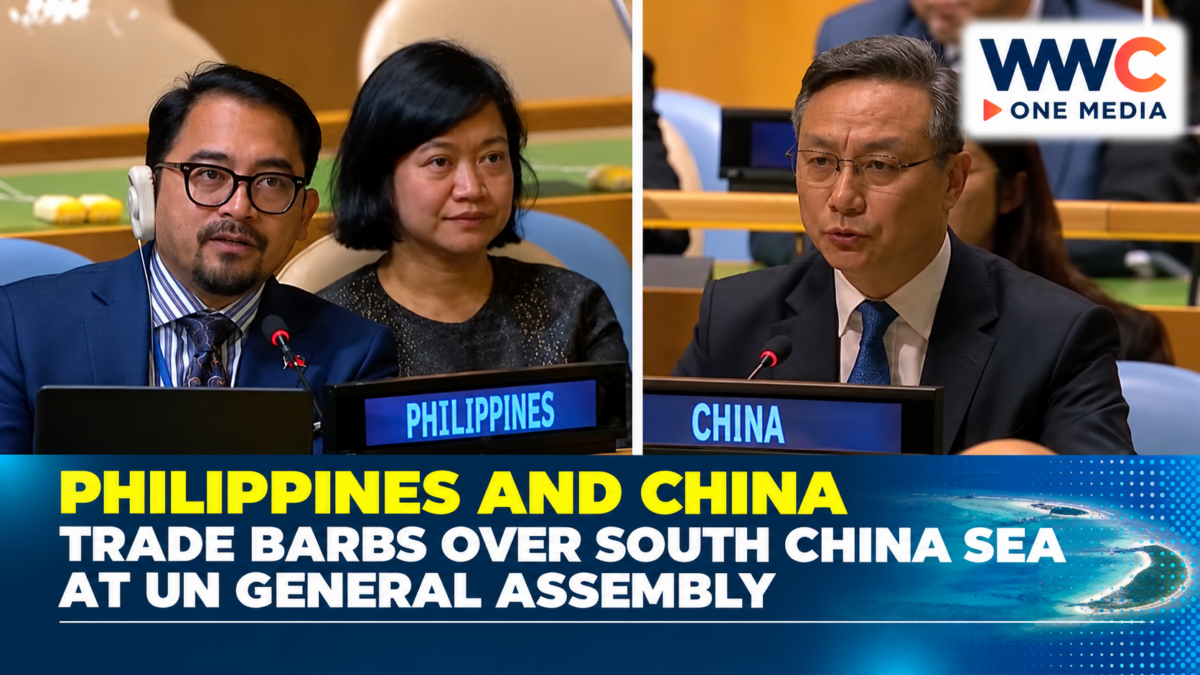
The Philippines and China exchanged sharply contrasting positions over the South China Sea during the 81st United Nations General Assembly in New York, with Manila defending the 2016 arbitral ruling and Beijing continuing to reject the decision.
The diplomatic exchange followed Philippine Foreign Affairs Secretary Ma. Theresa Lazaro’s address to the UN General Debate, where she reaffirmed Manila’s commitment to international law and the United Nations Convention on the Law of the Sea.
Lazaro highlighted that 2026 marks 10 years since the arbitral tribunal issued its ruling on the South China Sea dispute. She described the decision as final and legally binding and said international disputes should be resolved through diplomacy and law rather than force.
She also emphasized the importance of maintaining open and secure seas, saying maritime stability is essential to the Philippines’ security, economy and population.
China responded through its Deputy Permanent Representative to the UN, Sun Lei, who used his country’s right of reply to challenge Manila’s presentation of the dispute.
Sun argued that the United Nations was not the appropriate forum for resolving the South China Sea issue and reiterated Beijing’s position that disputes should instead be addressed through direct negotiations between the countries concerned.
He also rejected the 2016 arbitral ruling, maintaining that China does not accept or recognize the decision. Beijing has consistently disputed the tribunal’s authority and the legal conclusions reached in the case.
China further criticized the Philippines for highlighting the 10th anniversary of the ruling, arguing that the decision had not resolved the maritime disputes and had contributed to tensions in the region.
The Philippines then delivered its own right of reply through Paolo Marco Mapula, an expert from the Philippine Permanent Mission to the United Nations.
Mapula defended the tribunal’s authority and the legal status of its ruling, arguing that the decision was issued through the dispute-settlement mechanisms provided under UNCLOS. He also rejected China’s characterization of the arbitration and maintained that the award remains final and binding between the parties.
The 2016 case was brought by the Philippines against China under the UNCLOS dispute-settlement framework. The tribunal ruled against the legal basis of China’s expansive maritime claims based on historic rights within the so-called nine-dash line.
China has rejected the ruling since it was issued, while the Philippines has continued to treat it as a central reference point for its maritime rights and claims.
The dispute remains particularly significant because the South China Sea is an important route for international shipping, fishing and other economic activities. Several overlapping maritime claims involving China, the Philippines and other regional states have contributed to continuing tensions.
The latest diplomatic exchange at the UN comes amid renewed friction at sea. In late September, Philippine authorities accused Chinese coast guard and naval vessels of interfering with a Philippine resupply mission intended for personnel aboard the BRP Sierra Madre at Ayungin Shoal. China’s actions were described by Philippine officials as dangerous manoeuvres that created a risk of collision.
The Philippines has continued to assert that its maritime activities in areas within its legally recognized maritime entitlements are protected by international law. China, meanwhile, maintains its own claims and has repeatedly called for disputes to be handled through negotiations rather than arbitration or international forums.
The two countries have also disagreed over the status of the BRP Sierra Madre, a Philippine naval vessel stationed at Ayungin Shoal. Manila has rejected claims that it agreed to remove the vessel, maintaining that no such agreement exists.
The 2026 UN exchange therefore reflects a dispute that remains unresolved a decade after the arbitral ruling. While the Philippines continues to cite the award and UNCLOS as the legal basis for its position, China continues to reject the ruling and advocate direct negotiations.
The diplomatic statements at the General Assembly did not change either government’s established position, but they again placed the South China Sea dispute before the international community as the Philippines and China marked the 10th anniversary of the arbitral decision.