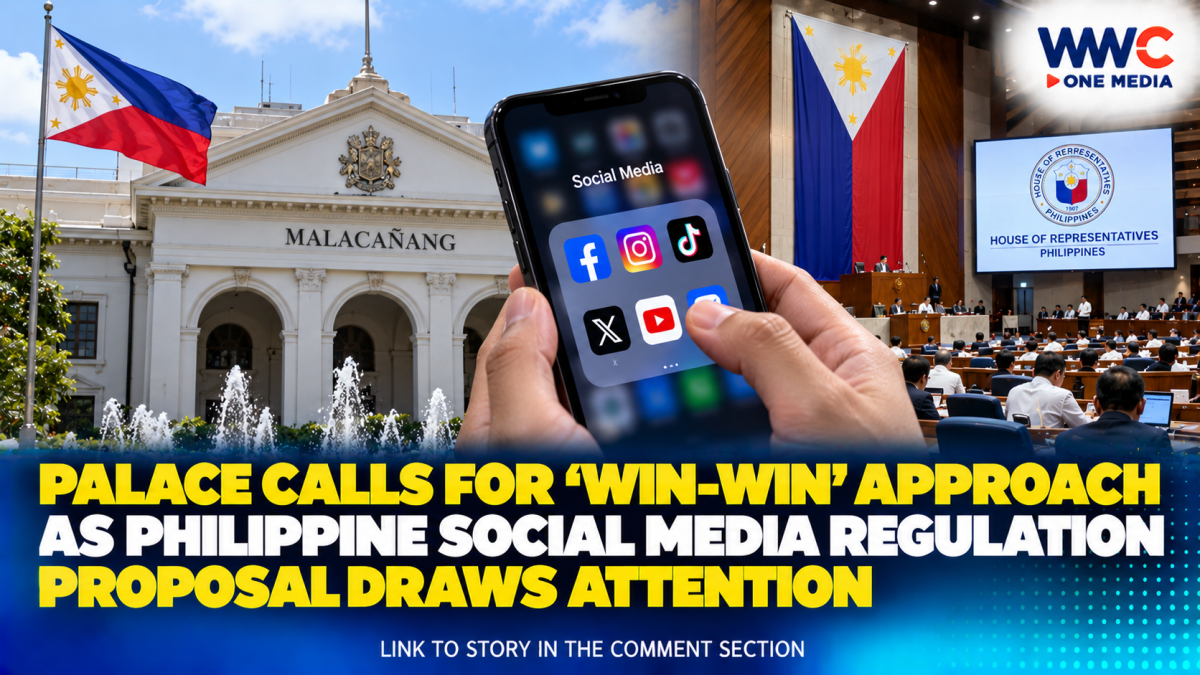
Malacañang is calling for a balanced approach to a proposal that would require social-media platforms to secure a congressional franchise before operating in the Philippines.
Palace Press Officer Claire Castro said on September 25 that the proposal needs careful study because social media is used not only by young Filipinos but also by businesses and other sectors of society.
Castro said President Ferdinand Marcos Jr. is open to measures designed to limit young people’s exposure to harmful online content, but the administration wants a solution that takes into account both public concerns and the operations of social-media platforms.
Palace: Proposal Needs Careful Study
Castro emphasized that any regulatory measure should strike a balance between protecting young people and maintaining access to digital platforms for other Filipinos.
She said Marcos would study the proposed measure before making a decision, while stressing the administration’s preference for what she described as a “win-win solution” for citizens and social-media companies.
The proposal comes amid wider discussions about the effects of social media on young people and the responsibilities of online platforms.
Government Wants Platforms to Take Greater Responsibility
Castro also called on social-media companies to cooperate with governments in addressing the misuse of their services.
She said platforms should play a role in tackling problems involving harmful content, violent extremism and disinformation rather than focusing solely on commercial interests.
Her remarks came as the government discussed a broader, whole-of-nation approach to concerns surrounding school attacks and online material that authorities associate with violent extremism.
What the Proposal Could Mean
Requiring social-media platforms to obtain a congressional franchise would represent a significant change in how major online services operate in the Philippines.
However, the proposal is not yet a final government policy, and Malacañang has not announced a final decision on whether it will support the measure. Castro’s comments indicate that the administration is still examining the possible effects on users, businesses and technology platforms.
The discussion also highlights a difficult policy question: how governments can strengthen protections for young people online while preserving legitimate uses of social media for communication, education, commerce and other activities.
For now, the Palace is signaling that any new rules will require further consideration before a final position is reached.
The debate over social-media regulation in the Philippines is only beginning—and the next step could determine how the country’s biggest digital platforms operate in the future.
WWC ONE MEDIA G,A