ANTALYA, TURKEY / TEHRAN, IRAN — November 10, 2026 — Iran is turning the world’s biggest climate summit into a platform for confronting the environmental consequences of war, drawing attention to the destruction caused by US military strikes as international leaders gather to discuss global warming, energy security and climate finance.
According to Bloomberg’s November 10 report, Tehran is using the COP31 United Nations climate conference in Turkey to highlight the impact of American military action.
The diplomatic intervention comes after months of US and Israeli strikes that damaged Iranian energy infrastructure, sparked major fires and raised concerns about toxic air pollution, contaminated water and long-term environmental damage.
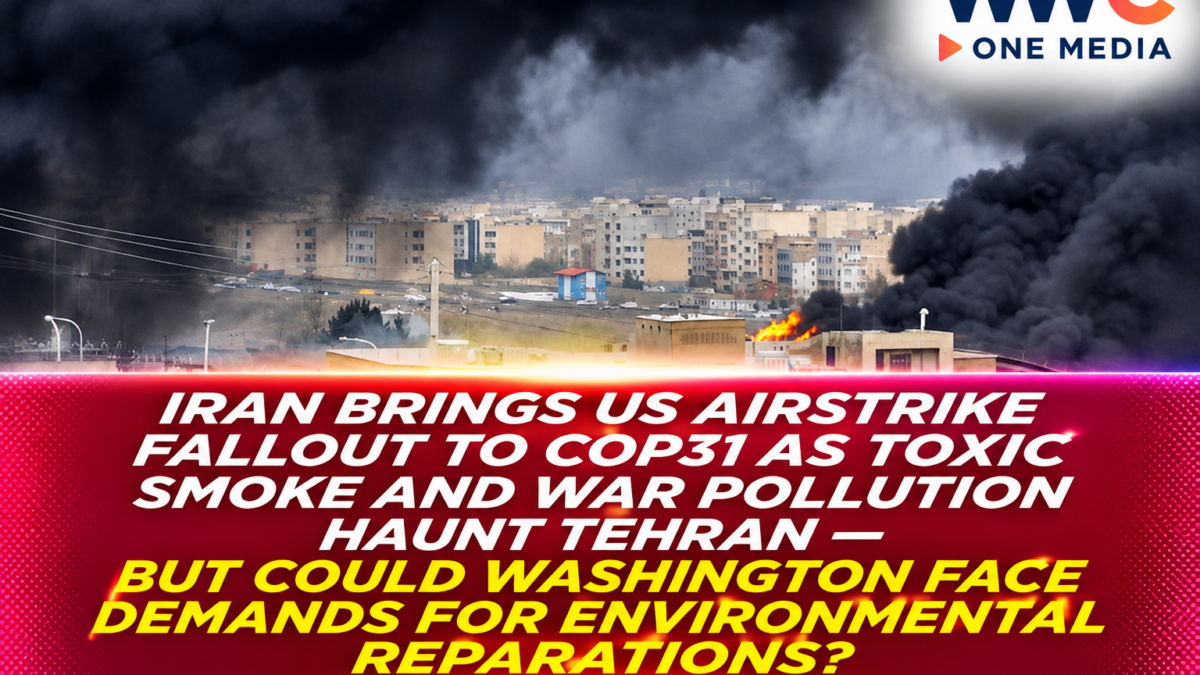
Earlier this year, burning oil facilities sent enormous plumes of smoke over Tehran, contributing to reports of dark, soot-contaminated rainfall.
Environmental researchers have warned that damage to petroleum storage sites and industrial facilities can release hazardous substances into surrounding communities.
But the full environmental cost remains difficult to calculate.
For Iran, the climate summit offers an opportunity to argue that the consequences of military operations deserve greater international attention.
For the United States and its allies, the controversy raises difficult questions about wartime environmental damage, accountability and the relationship between military security and climate policy.
The central question is whether Iran can turn documented environmental destruction into a serious international discussion about responsibility—or whether geopolitical divisions will prevent COP31 from confronting the environmental cost of modern warfare.
Iran Takes Its Environmental Grievances to COP31
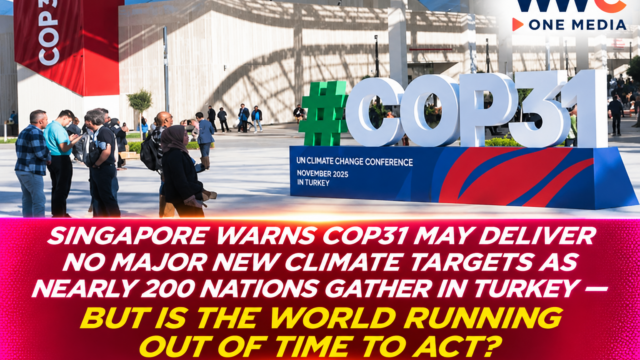
COP31 opened in Antalya on November 9 and is scheduled to continue until November 20.
Representatives from nearly 200 countries are gathering to discuss greenhouse gas emissions, renewable energy, climate adaptation and financial assistance for vulnerable nations.
But this year’s summit is taking place against an unusually tense geopolitical backdrop.
The war involving the United States, Israel and Iran has disrupted energy supplies, damaged industrial infrastructure and intensified uncertainty across international markets.
Iran is seeking to draw attention to another consequence of that conflict: environmental destruction.
The subject reaches beyond conventional debates over carbon emissions.
Military attacks on oil facilities, refineries, pipelines and other infrastructure can create immediate pollution hazards while producing longer-lasting contamination and reconstruction challenges.
Unlike ordinary industrial accidents, wartime damage may be difficult to investigate because active hostilities can prevent scientists and environmental authorities from accessing affected locations.
That difficulty complicates the process of determining how much pollution occurred, who was responsible and what restoration may be required.
As WWC ONE MEDIA reported in its coverage of COP31’s opening and the growing challenges confronting global climate negotiations, the summit is already under pressure to deliver measurable progress rather than additional diplomatic promises.
Iran’s intervention adds the question of wartime environmental accountability to that politically sensitive atmosphere.
Toxic Smoke and Black Rain Raise Concerns About Tehran’s Environment
One of the most visible environmental consequences of the conflict occurred in March 2026, when strikes on Iranian petroleum infrastructure triggered large fires.
Satellite imagery and independent environmental reporting documented damage involving oil storage facilities around Tehran.
As the fires burned, dark smoke spread across the capital.
Residents subsequently reported unusual dark rainfall, commonly described as black rain.
Scientists explained that rainfall passing through heavily polluted air can carry soot and other airborne particles toward the ground.
Oil-facility fires can release mixtures of pollutants, including fine particles, sulfur compounds and other substances associated with burning petroleum products.
The precise composition depends on the materials involved and the conditions of the fire.
The World Health Organization warned in March that damage to petroleum installations could create risks to air, water and food supplies.
Children, older adults and people with existing respiratory illnesses may be particularly vulnerable to heavy pollution exposure.
However, the presence of dark rainfall does not by itself establish the concentration of every hazardous substance or the long-term health effects experienced by residents.
Those questions require environmental sampling, exposure assessment and medical monitoring.
What Independent Investigators Have Established About the Strikes
The Conflict and Environment Observatory, an organization that investigates environmental harm associated with armed conflict, has examined damage to Iranian energy infrastructure.
Its satellite-based assessments have documented destruction involving oil storage tanks and other industrial facilities.
Earlier attacks affected the Shahran petroleum depot and infrastructure associated with the South Pars energy complex.
Further strikes in 2026 damaged additional facilities.
Iran International reported on November 4 that Iranian engineers were attempting to restore damaged oil and gas infrastructure, although rebuilding remained complicated by sanctions, financing constraints and the possibility of renewed attacks.
These findings provide independent evidence that significant energy infrastructure suffered physical damage.
However, assessing environmental harm requires additional steps.
Investigators must determine what materials were released, how far contaminants traveled and whether soil, groundwater or nearby ecosystems were affected.
Some of the consequences may not become fully apparent until long after the fighting ends.
That is why scientists caution against equating visible destruction with a complete assessment of environmental losses.
Could Iran Demand Compensation for Environmental Damage?
The possibility of reparations is emerging as an important part of Iran’s diplomatic position.
In October, Iranian Foreign Minister Abbas Araghchi discussed environmental destruction associated with the conflict during a Tehran event addressing ecocide.
He linked the damage to questions of responsibility and compensation and identified COP31 as a possible international venue for raising those concerns.
Iran has also previously raised claims concerning the financial cost of the war.
In April, an Iranian government spokeswoman estimated direct and indirect damage at approximately $270 billion.
That figure was an initial government estimate and was not accompanied by a publicly verified breakdown establishing the value of environmental damage specifically.
The distinction matters.
Compensation for damage to industrial infrastructure, compensation for civilian losses and claims concerning environmental restoration involve different questions.
International humanitarian law contains rules intended to limit damage during armed conflict, including protections relating to civilian objects and the natural environment.
But whether a particular military operation violated those rules requires an assessment of the applicable law and the facts surrounding the attack.
A claim that a military operation caused pollution does not automatically establish unlawful conduct or a legally enforceable obligation to pay compensation.
The United States could dispute Iran’s characterization of the strikes, their military justification or the scale of claimed damage.
No verified COP31 decision requiring Washington to compensate Iran has been established.
The Hidden Carbon Footprint of Modern Warfare
Beyond toxic pollution, warfare can also generate substantial greenhouse gas emissions.
Military aircraft burn fuel.
Naval vessels consume large quantities of energy.
Explosions and industrial fires release pollutants.
Destroyed buildings and infrastructure may need to be reconstructed using emissions-intensive materials such as steel and cement.
An analysis discussed by WIRED estimated that the first two weeks of the Iran conflict generated more than five million tonnes of carbon dioxide equivalent.
That estimate covered multiple sources associated with the fighting, not merely emissions from individual explosions.
The calculation illustrates how military operations can create environmental costs beyond the immediate battlefields.
However, wartime emissions estimates are inherently uncertain.
Reliable information about military fuel consumption, destroyed infrastructure and reconstruction requirements can be difficult to obtain.
Some environmental organizations have argued that military emissions deserve more systematic attention in international climate reporting.
Others caution that better data and consistent accounting standards are necessary before countries can accurately compare the environmental footprint of different conflicts.
A War That Has Shaken Global Energy Markets
The environmental controversy comes amid significant changes in international energy prices.
The conflict with Iran previously pushed petroleum prices sharply higher as traders worried about the security of Middle Eastern energy supplies.
The Strait of Hormuz became a major source of concern because of its importance to global oil transportation.
But prices have recently fallen as diplomatic negotiations raised expectations that additional US strikes might be avoided.
On November 9, Brent crude settled near $92.57 per barrel following a sharp decline.
The downturn reflected improved expectations about diplomatic progress, although the conflict had not been conclusively resolved.
In related coverage, WWC ONE MEDIA examined the fall in Brent crude toward $92 as President Donald Trump signaled that further strikes against Iran might not be necessary.
The price reversal demonstrates how closely international energy markets are tied to military developments.
For countries dependent on imported oil, the conflict has increased exposure to fuel-price volatility.
But the environmental consequences of damaged infrastructure remain important even when petroleum prices decline.
Lower oil prices do not remove toxic contamination or automatically restore damaged ecosystems.
A Surprising Climate Effect: Fossil Fuel Emissions Could Fall Slightly
The Iran conflict has also had an unexpected influence on energy consumption.
According to the Global Carbon Budget research released during COP31, worldwide carbon dioxide emissions from fossil fuels and cement production are projected to decline by approximately 0.4% in 2026.
That would bring emissions to roughly 38.2 billion metric tonnes.
Higher petroleum prices and disruptions to supply have encouraged some countries and businesses to reduce fossil fuel consumption or accelerate clean-energy investments.
However, the modest decline does not necessarily indicate a sustained turning point.
When land-use changes and deforestation are included, total global carbon dioxide emissions are still expected to rise slightly.
As WWC ONE MEDIA explained in its November 10 analysis of the projected 0.4% fall in fossil fuel emissions, a temporary reduction driven partly by economic disruption is not equivalent to a durable transition toward cleaner energy.
War can simultaneously reduce some forms of fossil fuel consumption while creating pollution, destruction and additional emissions elsewhere.
That contradiction is particularly relevant to Iran’s arguments at COP31.
US Absence Complicates the Climate Debate
President Donald Trump’s administration is not participating in COP31 through an official federal delegation.
The administration has retreated from major international climate commitments, creating another challenge for negotiations.
American state officials, congressional representatives and other nonfederal participants are nevertheless engaging in climate-related discussions.
The absence of official US federal representation makes the diplomatic environment especially complicated for Iran.
Tehran may raise concerns about American military action, but Washington is not participating in the summit in the same manner as governments that have sent official negotiating delegations.
That does not prevent environmental questions from being discussed.
It does, however, make direct US-Iran engagement over the allegations less likely within the formal climate negotiations.
COP31 also operates through international processes that generally require broad political agreement.
There is no guarantee that participating governments will support making wartime reparations a formal negotiating priority.
Why Environmental Damage From War Matters to the Philippines
Although the conflict is centered in the Middle East, its consequences have relevance for the Philippines.
The country depends heavily on imported energy and is exposed to changes in global fuel prices.
Oil-market disruptions can affect transportation costs, electricity expenses, food distribution and inflation.
The Philippines is also highly vulnerable to climate-related disasters.
That makes international discussions about environmental damage, financing and accountability particularly important.
The Philippine government has been working with international partners to strengthen its approach to climate-related loss and damage.
As WWC ONE MEDIA reported on the Department of Environment and Natural Resources and UNDP’s national loss-and-damage initiative, the country is developing systems intended to improve access to funding and assistance for communities affected by severe environmental events.
However, climate-related loss-and-damage financing and claims for environmental harm caused by warfare are not identical.
The former generally concerns losses associated with climate change.
The latter may involve international humanitarian law, state responsibility and other legal frameworks.
Iran’s intervention highlights how environmental accountability is becoming a broader international issue, but it does not mean established climate funds automatically cover damage from military strikes.
What Happens Next at COP31?
Several issues will determine whether Iran’s intervention produces more than international headlines.
The first is whether Tehran provides additional technical evidence documenting the environmental consequences of specific strikes.
The second is whether independent scientists and international organizations can evaluate contamination and potential long-term damage.
The third is whether other governments support greater attention to the environmental consequences of armed conflict.
The fourth concerns any separate legal or diplomatic initiatives seeking compensation or restoration.
Finally, negotiators will need to balance these debates against COP31’s existing priorities, including emissions reductions, clean-energy investment and financial assistance for vulnerable countries.
A discussion at the climate summit does not automatically create an investigation, legal judgment or compensation mechanism.
Meaningful progress would require evidence, international cooperation and appropriate legal processes.
The Bigger Picture: Can the World Ignore the Environmental Cost of War?
Iran’s decision to raise the consequences of US military strikes at COP31 brings an uncomfortable issue into the global climate debate.
Modern warfare can destroy infrastructure, release hazardous pollutants, damage ecosystems and generate substantial greenhouse gas emissions.
Its environmental consequences can persist long after military operations end.
Independent reporting has documented significant damage to Iranian energy infrastructure and serious concerns about smoke and pollution.
But the full environmental impact remains uncertain.
Iran’s claims concerning responsibility and compensation also require careful legal and factual examination.
For climate negotiators, the broader challenge is whether environmental protection can be discussed meaningfully while military conflicts continue damaging the systems and resources on which communities depend.
For the United States and Iran, the issue is unfolding alongside unresolved diplomatic and military tensions.
And for countries already struggling with climate change, it raises a larger question about accountability for environmental harm.
Iran is using the world’s most important climate summit to draw attention to the environmental destruction associated with US strikes. But as toxic pollution, damaged energy facilities and possible reparations become part of the diplomatic debate, will COP31 force governments to confront the hidden environmental cost of war—or will the issue become another casualty of geopolitical rivalry?