
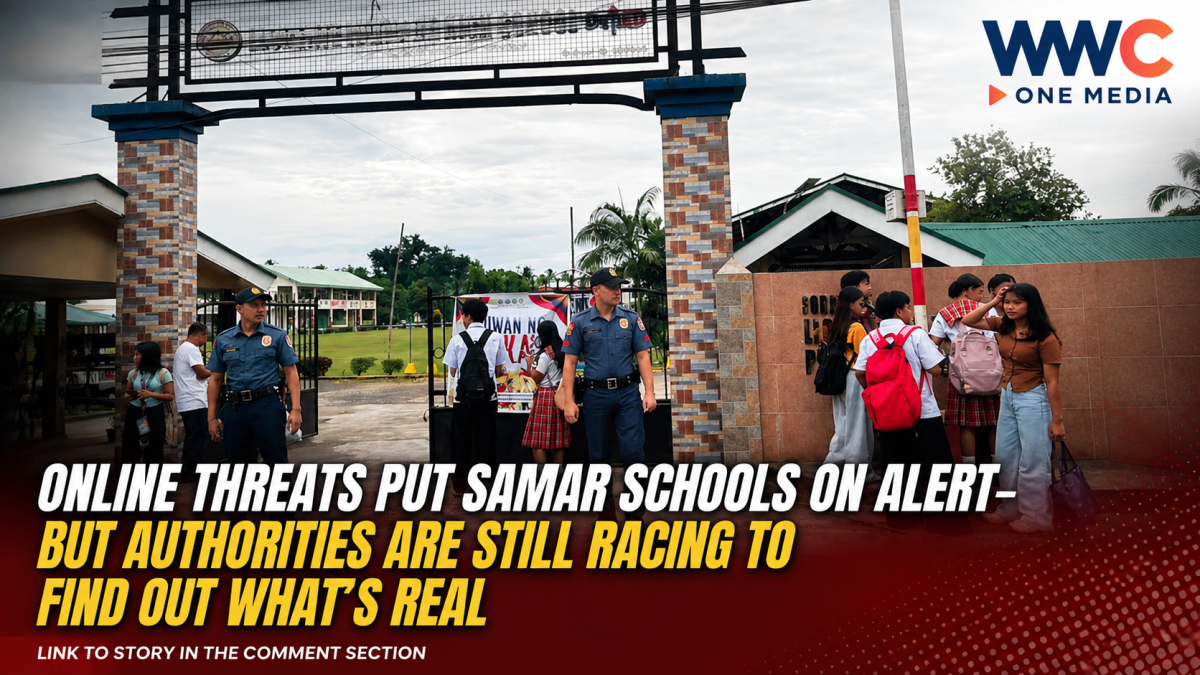
CATBALOGAN, Samar / LLORENTE, Eastern Samar — Two schools in Eastern Visayas have tightened security and sought help from law enforcement after separate threats circulated online, adding to growing anxiety among students, parents and educators following a series of school violence incidents and threat scares across the Philippines.
Samar Colleges, Inc. in Catbalogan City and Llorente National High School in Eastern Samar issued separate advisories after the threats emerged, with both schools emphasizing that student safety remains their top priority.
At Samar Colleges, school officials said they received information about a social media threat allegedly posted by an individual using the name “Jeonard Obing,” who was purportedly threatening retaliation over a failing grade. The school said it found no record matching the individual in its database of current or former students.
Despite the uncertainty surrounding the identity and credibility of the alleged threat, Samar Colleges said it did not take the matter lightly.
The school reported the incident to police and coordinated with local authorities and the Catbalogan City government. Security was also strengthened at campus entrances, with body and bag inspections and the deployment of metal detectors aimed at preventing weapons from entering the school.
School personnel, including guidance counselors, teachers and discipline officers, were also instructed to remain attentive to potential warning signs among students.
Llorente school threat also triggers security response
In Llorente, Eastern Samar, the local Department of Education division said it immediately coordinated with the Philippine National Police and other authorities after a reported threat involving Llorente National High School.
DepEd-Eastern Samar said it continues to enforce a zero-tolerance policy against bullying, harassment and threats, including those made online. The division also pointed to strengthened coordination among agencies, active child protection mechanisms and increased cyber-safety awareness.
However, authorities have urged the public to remain cautious about circulating unverified information. The official communication regarding the Llorente incident contained differing descriptions of the alleged threat, and there has been no public confirmation that an explosive device was found on campus.
That distinction matters: a threat circulating online is not the same as a confirmed attack—but authorities are treating such reports seriously while investigating their source and credibility.
A region still shaken by deadly school violence
The latest alerts come as schools across Eastern Visayas remain on edge following the June shooting at San Jose National High School in Tacloban City, where three students were killed and at least 20 others were injured, according to the latest report on the case.
The tragedy was followed by a series of online threats and security scares targeting schools in the region. Earlier in July, classes at Eastern Samar National Comprehensive High School in Borongan were suspended after an alleged bomb and gun threat surfaced online. Police conducted a security sweep, and reports at the time said the campus was later cleared.
The concerns are not limited to Eastern Visayas. Schools elsewhere in the Philippines have also faced online bomb and shooting threats in recent weeks, prompting suspensions, police investigations and renewed calls for stronger prevention measures.
A recent Reuters report noted that another fatal school shooting in Zamboanga City intensified the national debate over school safety, firearm access and the role of social media. Education Secretary Sonny Angara stressed that security equipment alone cannot prevent violence and that communities must also pay closer attention to students and intervene early when concerns arise.
Schools face a difficult new challenge: Which threats are real?
The growing number of online threats has created a difficult balancing act for school officials.
Ignoring a threat could have devastating consequences. But every unverified post can also spread panic, disrupt classes and place enormous pressure on students, parents and teachers.
That is why authorities are increasingly urging the public to report suspicious posts through proper channels instead of amplifying them online.
For now, the message from schools in Samar and Eastern Samar is clear: stay calm, stay vigilant and rely on verified information.
As police and school authorities work to determine who is behind the latest threats—and whether they pose any genuine danger—students across the region are once again confronting a question no school community wants to ask:
Is the next online threat just a hoax—or a warning that must not be ignored?



Leave a Reply