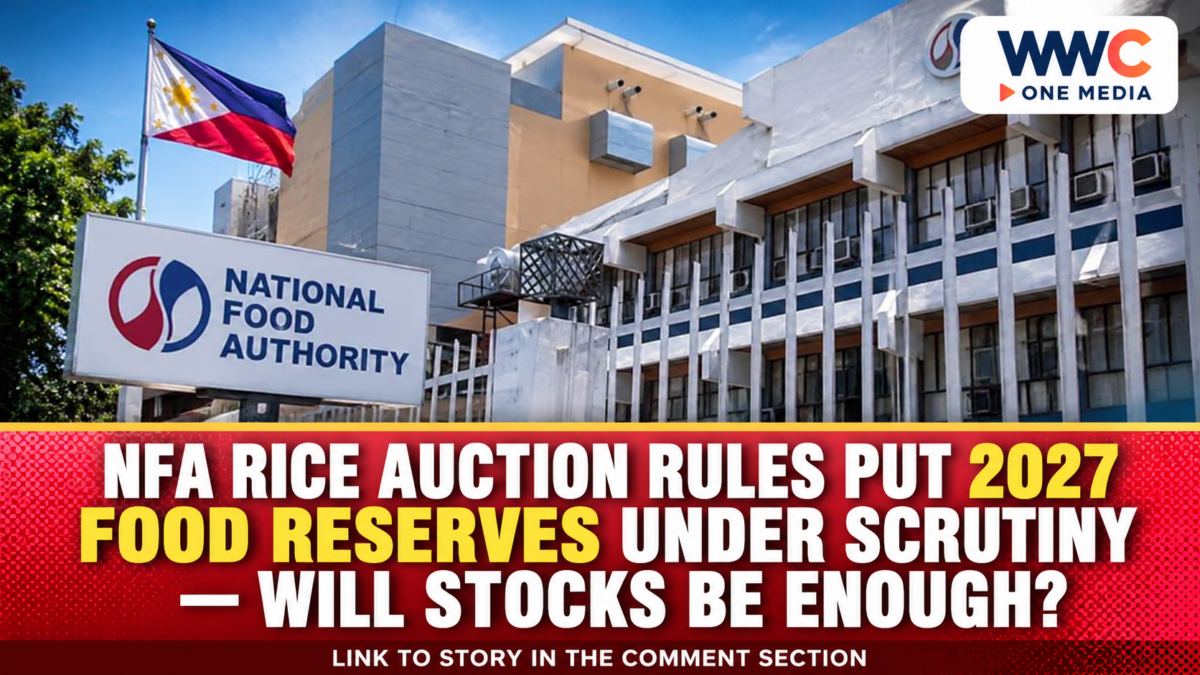
MANILA, Philippines — November 25, 2026. The National Food Authority’s management of aging rice stocks is entering a critical period as the government balances warehouse capacity, local palay procurement and the need to retain reserves for possible supply disruptions. The Department of Agriculture’s latest published figures show that the NFA held 278,444 metric tons of expected milled-rice inventory as of September 18, equivalent to seven days of consumption based on the agency’s daily requirement.
The question is not simply when the next rice auction will happen. It is whether the agency can dispose of stocks at the required stage of their storage cycle without weakening the reserves needed for emergencies, while also making room to buy more palay from Filipino farmers.
The legal framework is already in place. Republic Act No. 12078 requires the NFA to maintain an optimal buffer stock sourced exclusively from local farmers and to dispose of aging stocks through public auction under a first-in, first-out system. The timing of each disposal therefore has implications for farmers, government warehouses and consumers.
What the law requires from the NFA rice auction process
The rules governing the NFA rice auction are set out in Republic Act No. 12078, which amended the Agricultural Tariffication Act.
Under the amended law, the NFA must maintain an optimal rice buffer stock sourced exclusively from local farmers. It must dispose of its stocks one month before the aging period begins, following the first-in, first-out method.
The law defines the aging period as beginning three months after rice enters storage and six months after palay enters storage. In both cases, disposal through sale must be conducted through public auction. Lawphil+1
In practical terms, the rule creates a schedule for stock management rather than giving the agency unlimited discretion to hold rice indefinitely. The first-in, first-out approach means older inventory is handled ahead of newer stocks.
That requirement matters because stored rice has a limited period in which its quality can be maintained. Delaying disposal can increase storage demands and the risk of deterioration, while releasing too much inventory can reduce the reserve available for emergencies.
The law therefore places stock quality and food-security readiness within the same management problem.
How much rice does the government currently hold?
The latest NFA inventory figure located in the Department of Agriculture’s published 2026 update is 278,444 metric tons of expected milled rice as of September 18. The department said this was equivalent to seven days of consumption based on the NFA’s daily requirement. AgriPortal
The same government update reported that the NFA procured 92,032 metric tons of palay from January through September 2026. During that period, it distributed 207,648 metric tons of rice, including 126,737 metric tons released through the P20 rice program.
These figures show why the agency faces competing demands. It must purchase palay from local farmers, process and store the grain, and release rice for government programs while retaining enough inventory for emergencies.
The September inventory figure is a dated snapshot, not a live count for November 25. No newer consolidated NFA inventory total was established in the official records reviewed for this report.
WWC previously examined the agency’s effort to draw down older rice stocks while preparing for the wet-season harvest. That earlier stock-management challenge remains relevant because procurement and disposal are connected: warehouse space used by aging stocks cannot simultaneously be used for newly purchased palay.
The previous auction shows the scale of stock disposal
The Department of Agriculture reported that a competitive auction involving 39,597 metric tons of aging rice stocks generated an estimated ₱1.1 billion in revenue and freed warehouse space for incoming main-crop palay. AgriPortal
The transaction illustrates why auctions are part of the NFA’s inventory-management system. Disposing of aging rice can recover value from stocks and create room for fresh procurement.
But the revenue figure should not be mistaken for a direct measure of profit. The public announcement does not provide a complete accounting of the original purchase cost, storage expenses, handling costs or other financial components needed to calculate the net result.
There is also an important distinction between an auction announcement and a completed sale. A public auction allows eligible bidders to compete under stated terms. The final amount recovered depends on the volume offered, the quality and condition of the rice, the bidding process and the accepted offers.
For readers, the key issue is whether disposal is conducted on time and under transparent procedures, not simply whether a large volume is offered for sale.
Why El Niño makes the reserve decision more complicated
Rice inventory decisions become more sensitive when agricultural production faces weather risks.
The NFA’s buffer stock is intended to support government disaster-relief programs and food-security emergency responses. That purpose is reflected in the definition of buffer stock under Republic Act No. 12078. Lawphil
If the agency releases too much usable inventory, it could have less rice available if local production is disrupted. If it holds aging stocks for too long, however, it could face quality and storage challenges while limiting space for newly purchased palay.
This is not an argument for avoiding auctions. It is a reason to manage them carefully and transparently.
The wider supply picture also matters. The Philippines relies on both domestic production and imported rice, and the timing of shipments can affect the amount of grain available in the market. WWC has examined the country’s potential rice imports and the food-security risks surrounding 2027.
Consumers also face a separate affordability issue. Recent Philippine rice-price movements show why national supply totals do not automatically translate into lower retail prices. Import costs, domestic harvests, transport, storage and distribution all influence what households pay.
What happens next
The next important indicators are the NFA’s updated inventory figures, its palay procurement results, the age and condition of stored rice, and any official notices identifying the volume and schedule of future auctions.
As of November 25, the NFA’s public bid-and-auction portal lists several procurement and disposal notices, but the notices reviewed do not establish a nationwide first-quarter 2027 auction schedule for aging rice stocks. NFA Web
The statutory disposal rule remains clear, but the timing and quantity of any particular auction depend on the stocks involved and the applicable procedures. An official auction notice would provide the details bidders and the public need, including the volume, location, bidding requirements and timetable.
For farmers, timely disposal can create room for the NFA to buy more locally produced palay. For consumers, adequate reserves matter when disasters or supply disruptions affect availability. For the agency, the challenge is to comply with the law without compromising the purpose of the buffer stock.
The next auction should therefore be judged not only by how much rice is sold or how much revenue is collected, but also by whether the NFA preserves a reliable reserve and maintains the capacity to absorb local harvests.
Frequently Asked Questions
Does the NFA have to auction its aging rice stocks?
Yes. Republic Act No. 12078 requires the NFA to dispose of rice buffer stocks through public auction, following the first-in, first-out method and the statutory aging timetable.
When does rice become aging stock under the law?
The aging period for rice begins three months after storage. For palay, it begins six months after storage.
How much rice did the NFA hold in September 2026?
The Department of Agriculture reported expected milled-rice inventory of 278,444 metric tons as of September 18, equivalent to seven days of consumption based on the NFA’s daily requirement.
Did the NFA already announce a first-quarter 2027 rice auction?
The official public records reviewed for this report did not establish a confirmed nationwide first-quarter 2027 auction schedule. A specific date and volume should be treated as pending until an official notice is published.
Why does the NFA need to auction aging rice?
Auctioning stocks helps the agency comply with the statutory disposal timetable, manage inventory quality and free warehouse space for newly procured palay.