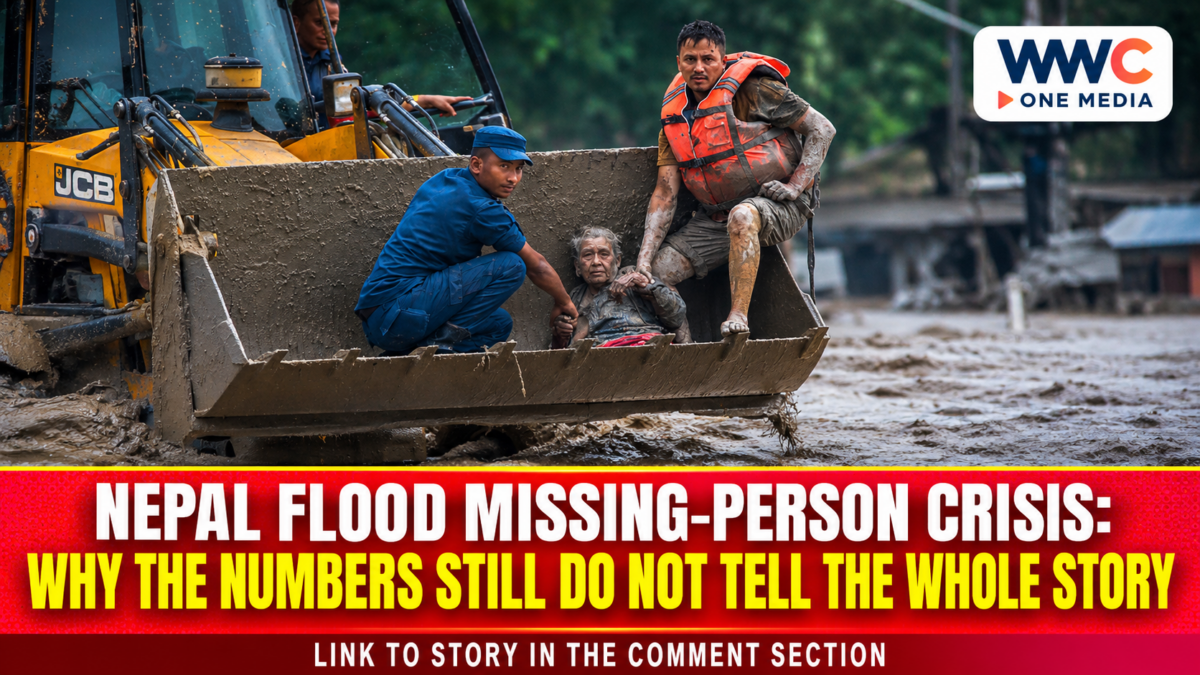
KATHMANDU — Nepal’s disaster authority is continuing to publish records of people rescued after the August 26, 2026, Bhote Koshi flood, while government agencies are also maintaining missing-person information and procedures for identifying recovered remains. The official records show that the disaster’s aftermath is not simply a matter of counting survivors: authorities must also verify identities, reconcile reports and help families establish what happened to relatives who remain unaccounted for. ndrrma.gov.np+1
The flood struck the Rasuwa border region and affected communities along connected river corridors. Its consequences reached beyond Nepal, including foreign nationals travelling through the Himalayan region. But a widely circulated figure of 63 missing Americans cannot be presented as a confirmed current count without a corresponding primary U.S. government record.
The more useful question now is what Nepal’s own records can establish, what remains uncertain and why the identification process matters to families waiting for answers.
What Nepal’s official records show
The National Disaster Risk Reduction and Management Authority (NDRRMA) operates a public Rasuwa flood portal that lists 4,898 verified rescued people. Its displayed breakdown identifies 4,595 Nepali nationals and 303 foreign nationals. The portal says its rescue database contains verified names and is updated as additional names are officially confirmed. ndrrma.gov.np
That distinction is important. A verified rescue entry establishes that a person appears in the authority’s rescue records. It does not automatically resolve every missing-person report connected to the disaster, nor does it establish the final number of people who died.
A separate NDRRMA situation report dated September 24 provides an earlier snapshot of the wider emergency. It recorded 1,453 deaths and 5,550 missing people across the districts included in that report. The authority cautioned that the missing-person figure could include unidentified bodies, people who had already been rescued and duplicate entries while verification was under way. ndrrma.gov.np
Those figures should not be presented as a final death toll or a current count. They are a dated snapshot, and the authority itself warned readers that the missing-person total was subject to change.
Why the missing-person numbers are difficult to reconcile
Large disasters can generate overlapping reports from relatives, local authorities, emergency teams and organisations responsible for groups of travellers. People may be reported missing in one location while their rescue is recorded elsewhere. Others may remain unidentified after recovery.
NDRRMA’s warning about duplicate entries and unconfirmed information illustrates why separate lists cannot simply be combined. A missing-person report, a confirmed rescue and an identified deceased person are different records and must be reconciled before a final account can be established. ndrrma.gov.np+1
The government’s SETU portal also publishes a separate Rasuwa missing-person list. The version accessible during this review displayed 1,538 records, with entries dated November 7, 2026. That list should not be treated as a verified total of flood victims or as a count of missing foreign nationals: its displayed records do not establish that every entry relates exclusively to the August disaster. Setu Rapid
For families, the practical consequence is a long process of checking names, locations and identifying information against records held by different agencies.
DNA testing has become a central part of identification
Nepal Police issued a public notice on September 2 asking relatives of missing Nepali and foreign nationals connected to the August 26 Bhote Koshi flood to provide DNA samples. The stated purpose is to help identify recovered bodies, body parts or remains. Nepal Police
The police notice recommends a sample from the closest available first-degree relative: a mother, father, son or daughter. If none is available, a sibling may provide a sample. It also asks families to submit two passport-size photographs.
For relatives living outside Nepal, the notice provides a separate process. A suitable relative can have a DNA profile prepared in their country of residence and send the digital profile, an INTERPOL Disaster Victim Identification form for the missing person and a photograph to Nepal Police’s designated email address. Nepal Police
This process matters because physical recovery and identification are not the same achievement. A recovered person or set of remains may still need formal identification before authorities can provide a definitive answer to relatives.
WWC previously reported on the Filipino doctor reported missing after the Nepal-Tibet flood. That case illustrates the international dimension of the disaster, but an individual family’s account should not be confused with a verified national casualty total.
Why the United States travel warning remains significant
The U.S. Department of State’s Nepal travel advisory identifies the Rasuwagadhi–Timure–Syafrubesi area of Rasuwa District, including the Nepal-China border crossing, as a Level 4: Do Not Travel area. The advisory cites flood damage, disrupted transport and communications, search-and-rescue and recovery work, and the risk of further flooding and landslides. Travel.state.gov
The warning is geographically specific. It does not say that all of Nepal is under a Level 4 warning. The broader country advisory is Level 2, or Exercise Increased Caution, while the named border area carries the highest restriction.
The State Department also tells people not to enter the disaster area independently to search for missing relatives. That is a significant safety message: damaged bridges, unstable slopes and river hazards can place untrained searchers at risk and complicate official operations. Travel.state.gov
For travellers and families, the advisory is also a reminder that consular assistance does not replace local rescue and identification procedures.
The international dimension of the disaster
The affected corridor is used by residents, workers, tourists and religious travellers. Some visitors travel through the region on journeys connected to Mount Kailash and Lake Mansarovar, making the consequences of the flood international as well as local.
WWC has also covered Singapore’s deployment of a crisis response team to Nepal. The response by foreign governments and organisations shows why accurate identification is important beyond Nepal: families may be trying to establish the whereabouts of citizens who were travelling far from home.
The disaster also damaged a major trade route. WWC’s report on flood damage to Nepal’s China trade connection examines a separate consequence of the same event. The destruction of roads and border infrastructure affects not only emergency access but also the movement of goods and the recovery of communities that depend on cross-border trade.
What happens next
The next important developments are likely to come from updated government records, verified rescue entries, identification work and official notices to families. Nepal Police’s DNA procedure gives relatives outside the country a formal route to submit comparison information, while NDRRMA’s rescue portal provides a public record of people whose rescues have been verified.
The figure of 63 missing Americans should remain attributed to the original reporting lead unless a primary U.S. government record confirms it. The same standard applies to any updated count of missing foreign nationals.
For now, the official record shows a large international rescue effort, a continuing need to reconcile missing-person reports and a formal DNA process for identifying recovered remains. Those are the facts that matter most to families still waiting for confirmation.
Frequently asked questions
When did the Nepal Rasuwa flood happen?
Nepal Police identifies the Bhote Koshi flood as occurring on August 26, 2026. Nepal Police
How many foreign nationals are listed as rescued?
NDRRMA’s Rasuwa flood portal currently displays 303 foreign nationals among its 4,898 verified rescued people. ndrrma.gov.np
Are 63 Americans still missing in Nepal?
That figure has not been confirmed as a current count by a primary U.S. government record retrieved for this report. It should not be presented as an independently verified figure.
How can relatives help identify missing people?
Nepal Police has asked eligible relatives to provide DNA samples. Relatives living abroad can arrange DNA profiling in their country and send the required documents to Nepal Police’s designated email address. Nepal Police+1
Is the Nepal-China border area safe for travel?
The U.S. Department of State advises against travel to the Rasuwagadhi–Timure–Syafrubesi area of Rasuwa District because of flood damage, disrupted services and continuing hazards.