
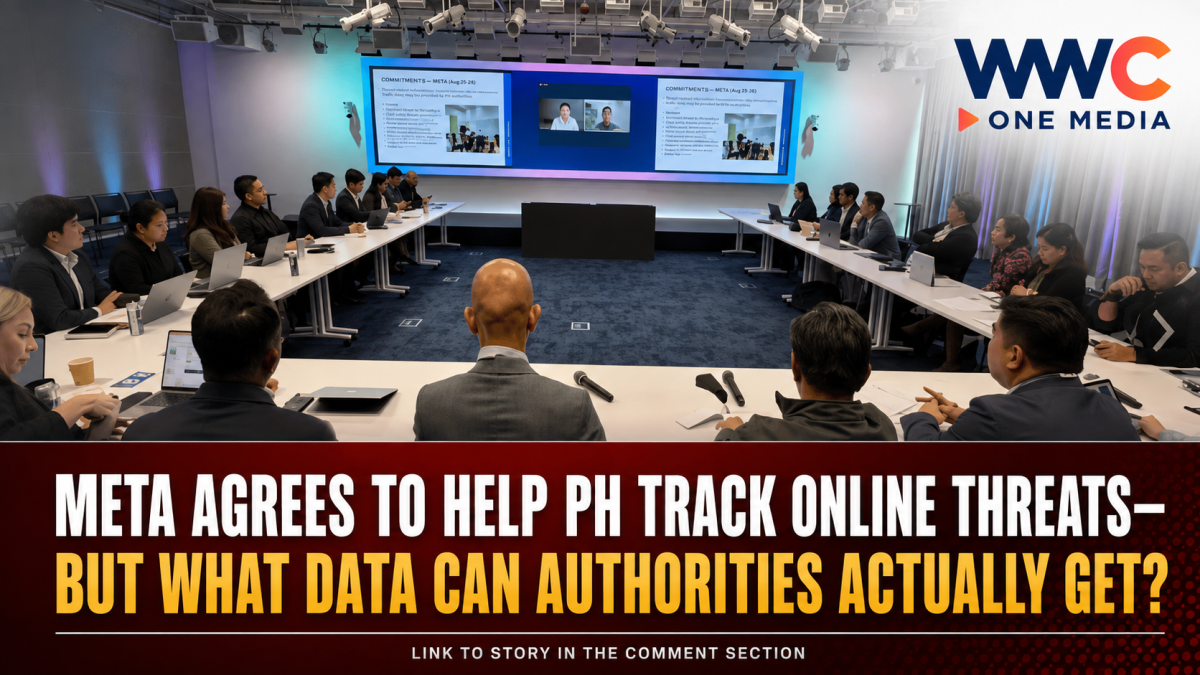
MANILA, Philippines — Meta, the technology company behind Facebook, Instagram and WhatsApp, has pledged closer cooperation with Philippine authorities in investigating serious online threats, cybercrime and harmful AI-generated deepfakes—marking a major step in the government’s growing campaign to make social media platforms more accountable.
The commitment emerged from a meeting in Singapore between Philippine officials and Meta representatives, where authorities pressed the social media giant for faster responses to dangerous online content and stronger coordination with law enforcement.
Sen. Risa Hontiveros said Meta committed to providing authorities with subscriber information and traffic data when officials identify threats to children’s safety, including situations where intervention may be needed before an attack occurs. However, the reported arrangement remains subject to applicable laws and legal procedures, and should not be interpreted as unrestricted government access to users’ private information.
According to the Cybercrime Investigation and Coordinating Center (CICC), Meta also committed to cooperate in cases involving online sexual abuse and exploitation of children, child sexual abuse material, obscene content and other forms of online abuse. The agency said relevant data may be provided following a subpoena issued by the National Bureau of Investigation, subject to legal requirements.
A New Front in the Fight Against Deepfakes
One of the most significant outcomes of the talks was a proposed stronger mechanism for dealing with AI-generated deepfakes—a growing concern as manipulated videos and images become increasingly difficult to distinguish from authentic content.
Philippine officials said the proposed system could allow individuals targeted by harmful deepfakes to seek protection and assistance, while Meta works to identify and remove the offending content before it causes further harm. A technical working group and dedicated points of contact are also expected to improve coordination and response times between the government and the company.
Meta is expected to send a team to Manila in mid-September to formalize the framework and commitments discussed during the Singapore meeting.
Pressure Mounts After Violent Incidents and Online Safety Concerns
The renewed push for stronger platform accountability comes as Philippine officials and lawmakers intensify concerns over online harms, particularly those affecting children and young people.
The debate gained urgency following recent violent incidents, including the deadly shooting at Ateneo de Zamboanga University that was livestreamed online. Philippine officials have pointed to such cases as evidence that platforms need faster systems for detecting and removing dangerous content.
Reuters reported that Meta and gaming platform Roblox agreed during separate discussions with Philippine officials to strengthen measures such as age verification, parental controls, faster takedowns of harmful content and closer cooperation with law enforcement. The companies also indicated a willingness to engage with Philippine lawmakers as Congress considers tougher online safety rules.
Lawmakers Say Meta’s Cooperation Is Only One Step
Senate President Sherwin Gatchalian welcomed Meta’s commitments but stressed that voluntary cooperation does not replace legislation. He said the Philippines still needs a legal framework that would clearly define the responsibilities of social media companies and impose penalties when platforms fail to meet required safety standards.
One measure gaining attention is Senate Bill No. 2424, or the proposed Child Online Safety and Protection Act, which seeks to establish stronger protections for minors and proposes a minimum age of 16 for social media use.
The government’s pressure on Meta did not begin with the latest meeting. Earlier this year, the Department of Information and Communications Technology and the CICC called on the company to strengthen its proactive detection systems, speed up content reviews and takedowns, establish clearer escalation channels and improve coordination with Philippine authorities amid concerns over disinformation and threats to public safety.
Why This Matters
The latest commitment signals a potentially important shift in the relationship between major social media platforms and Philippine regulators. But the bigger question remains unanswered: Will voluntary promises be enough—or will Congress move to give the government stronger legal powers to hold tech giants accountable?
For millions of Filipinos who rely on Facebook, Instagram and WhatsApp every day, the answer could shape how online safety, privacy and platform responsibility are balanced in the years ahead.
As AI-generated deepfakes become more sophisticated and online threats spread faster than ever, Philippine authorities are making one thing clear: the era of waiting for platforms to act after the damage is done may no longer be acceptable.

Leave a Reply