
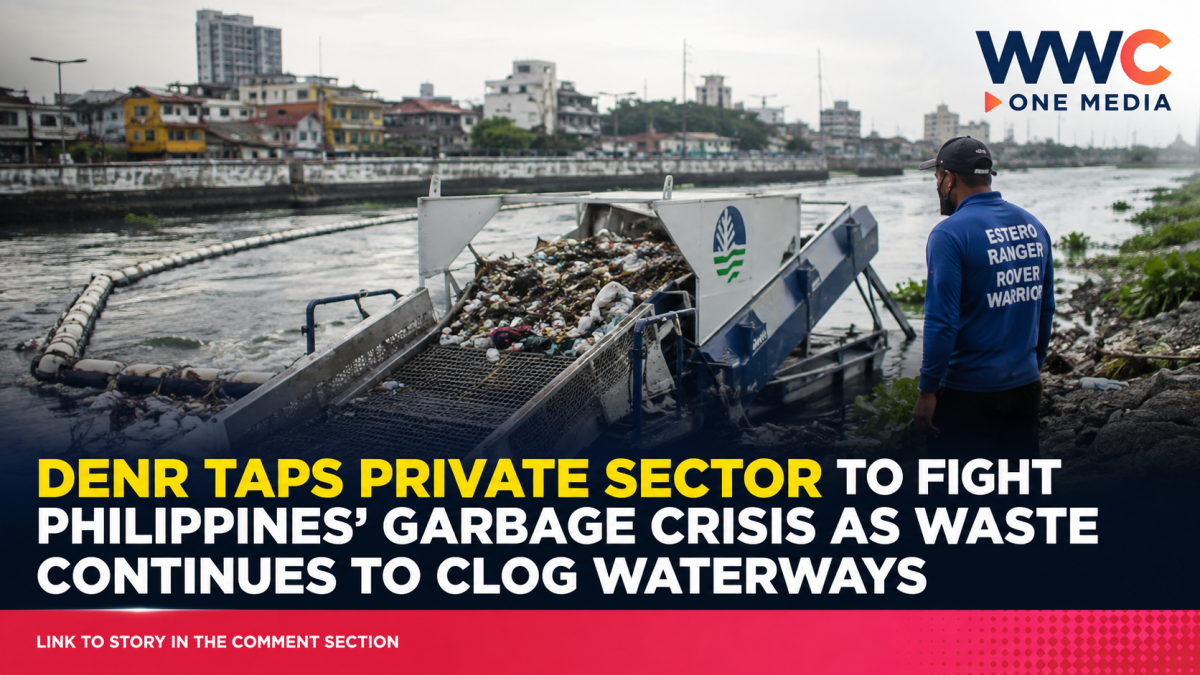
MANILA, Philippines — The Philippine government is looking beyond traditional cleanup operations in its fight against the country’s growing garbage problem, with the Department of Environment and Natural Resources (DENR) pushing for stronger private sector participation to stop waste before it reaches drainage systems, rivers and waterways.
Environment Secretary Juan Miguel Cuna said businesses could play a bigger role in addressing plastic pollution through existing laws and programs, particularly the Extended Producer Responsibility (EPR) Act of 2022, which requires large companies to take responsibility for recovering their plastic packaging waste.
The move comes as the scale of the country’s waste problem continues to draw attention, especially during heavy rains and flooding.
From Cleaning Up Trash to Stopping It at the Source
For decades, solid waste management has largely fallen on local government units. But the DENR is now emphasizing a broader approach involving businesses, communities and government agencies.
According to the DENR, the goal is not simply to remove garbage after it has entered waterways, but to prevent improper waste disposal from becoming a recurring environmental and public safety threat in the first place.
The agency is currently using 196 trash traps to collect floating waste and has deployed 1,500 estero rangers and rover warriors to monitor and clean esteros and rivers across Metro Manila.
But officials acknowledge that cleanup efforts alone cannot solve a problem that begins long before trash reaches a river or drainage canal.
The Numbers Show How Serious the Garbage Problem Has Become
Recent DENR data reported by GMA News paint a troubling picture: the Philippines generates up to 65,000 tons of waste every day, while only about 52% is collected, according to Environment Undersecretary Jonas Leones. The remaining waste can end up scattered in communities or finding its way into waterways and other parts of the environment.
The problem is particularly visible during the rainy season, when improperly discarded waste can contribute to clogged drainage systems and waterways.
Earlier this month, the DENR called on local governments to strengthen solid waste management programs as persistent Habagat rains and flooding brought renewed attention to garbage accumulation. The agency stressed that keeping waste out of waterways can help reduce preventable obstructions in drainage systems, even though garbage management is only one part of the broader solution to flooding.
Why Businesses Are Now Being Put at the Center of the Solution
The government’s strategy increasingly relies on the principle that companies producing plastic packaging should help manage the waste created after those products are consumed.
Under the Extended Producer Responsibility Act, covered enterprises are required to take responsibility for the recovery of plastic packaging waste. Recent government reports also indicate that authorities have been stepping up efforts to monitor compliance with these obligations.
The DENR has also been supporting a wider shift away from a waste system focused primarily on disposal and toward recycling, resource recovery and a more circular economy.
That approach could mean turning waste from a growing environmental burden into materials and resources that can be recovered, reused or processed—while reducing the amount sent to landfills and waterways.
Metro Manila Faces Its Own Growing Waste Challenge
The urgency is especially clear in the National Capital Region.
DENR-NCR data show that Metro Manila generated an estimated 4.34 million tons of solid waste in 2025, while waste generation per person increased compared with the previous year. At the same time, waste diversion through recycling, composting and other recovery methods showed a slight decline, highlighting the challenge of keeping up with the growing volume of trash.
Environmental officials have repeatedly called for stronger cooperation among national agencies, local governments, businesses and communities, arguing that fragmented efforts will not be enough to address the scale of the problem.
A Bigger Question Remains: Will Cooperation Be Enough?
The DENR’s latest push signals a major shift in how the government wants to tackle the country’s waste crisis: from repeatedly collecting garbage after the damage is done to preventing waste from becoming pollution in the first place.
But the challenge remains enormous.
Trash traps and cleanup crews can remove waste from waterways. Local governments can improve collection and enforcement. Businesses can be required to recover plastic packaging. And households can practice segregation and responsible disposal.
The real test, however, will be whether all of those efforts can finally work together before another wave of garbage ends up blocking a drainage canal, polluting a river or washing out to sea.
As the Philippines continues to confront heavier rains, flooding risks and rising waste generation, one thing is becoming increasingly clear: the country’s garbage problem can no longer be treated as someone else’s responsibility.
The question now is whether government, business and the public can turn that shared responsibility into action—before the next flood exposes just how much trash is still slipping through the system.

Leave a Reply