
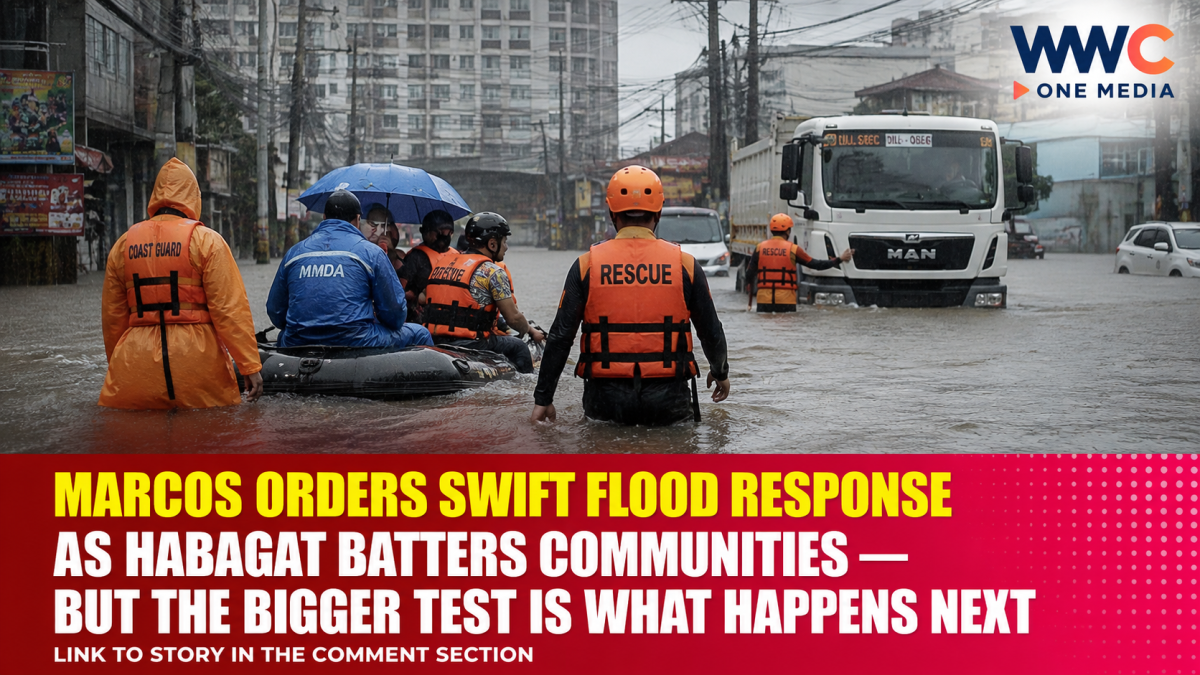
MANILA, Philippines — President Ferdinand “Bongbong” Marcos Jr. has ordered government agencies to move quickly in addressing the needs of communities affected by flooding and heavy rains as the southwest monsoon, or Habagat, continues to disrupt parts of the country.
In a statement reported by ABS-CBN News on Sunday, Aug. 30, Palace Press Officer Claire Castro said Marcos had instructed concerned agencies to respond to the effects of the continuing bad weather and prioritize the needs and safety of affected residents.
The directive comes as Metro Manila and several provinces face renewed flooding, with heavy and persistent monsoon rains affecting roads, communities and transportation.
Reports from other Philippine news organizations show that the flooding has been particularly serious in parts of Central Luzon, including Pampanga, Bataan, Bulacan and Tarlac. Government teams have been conducting rescue, relief, clearing and flood-control operations as authorities continue to monitor weather conditions.
Relief operations expand
The Department of Social Welfare and Development said it had released more than 60,000 additional family food packs to Central Luzon, including Pampanga, as the region dealt with widespread flooding. DSWD also deployed mobile kitchens to evacuation centers in Lubao and Porac to provide hot meals to displaced families.
The latest response is part of a broader government effort that has been underway since the enhanced Habagat began causing repeated flooding across Luzon.
Earlier in August, Marcos directed government agencies to maintain heightened alert, monitor flood-prone areas and closely coordinate the management of water releases from dams and reservoirs. Agencies were also told to protect communities and critical infrastructure from the effects of heavy rainfall.
Flooding raises bigger questions
The immediate emergency response is only one part of the problem.
Marcos has also acknowledged that the scale of recent flooding has exposed weaknesses in the country’s flood-management system. During a situation briefing in Pampanga, he pointed to both extreme rainfall and deficiencies in flood-control infrastructure, saying the flooding could not be attributed to a single factor.
The administration has consequently been pushing for repairs to damaged flood-control structures and additional long-term projects intended to improve water management.
The proposed 2027 national budget includes a major allocation for flood-control work, while plans have also been discussed for additional river and water-management infrastructure in Central Luzon.
At the same time, the renewed flooding is occurring amid continued public scrutiny of government flood-control projects, making the effectiveness and implementation of those projects an increasingly important issue.
Metro Manila remains under pressure
The capital region has also experienced another round of flooding.
The Metropolitan Manila Development Authority reported multiple flooded roads on Aug. 29, affecting major routes and creating traffic disruptions.
Another report noted that authorities were deploying pumps and other flood-control measures while some residents were evacuated from heavily affected areas.
A new low-pressure area was also being monitored outside the Philippine Area of Responsibility east of Northern Luzon, adding another weather system to watch even as the Habagat continues to affect the country.
What happens next?
For affected families, the immediate priority remains straightforward: food, shelter, transportation, medical assistance, safe evacuation and the restoration of essential services.
Marcos’ latest directive puts pressure on government agencies to ensure that assistance reaches communities quickly rather than remaining confined to announcements and situation briefings.
But the continuing floods also revive a much larger question: whether the government’s long-term flood-control plans can prevent the same communities from facing the same crisis every time extreme rainfall returns.
With the Habagat still affecting parts of the country, the coming days will show whether the government’s promised faster response translates into measurable relief on the ground — and whether longer-term flood-control projects can finally keep pace with increasingly severe rainfall.



Leave a Reply