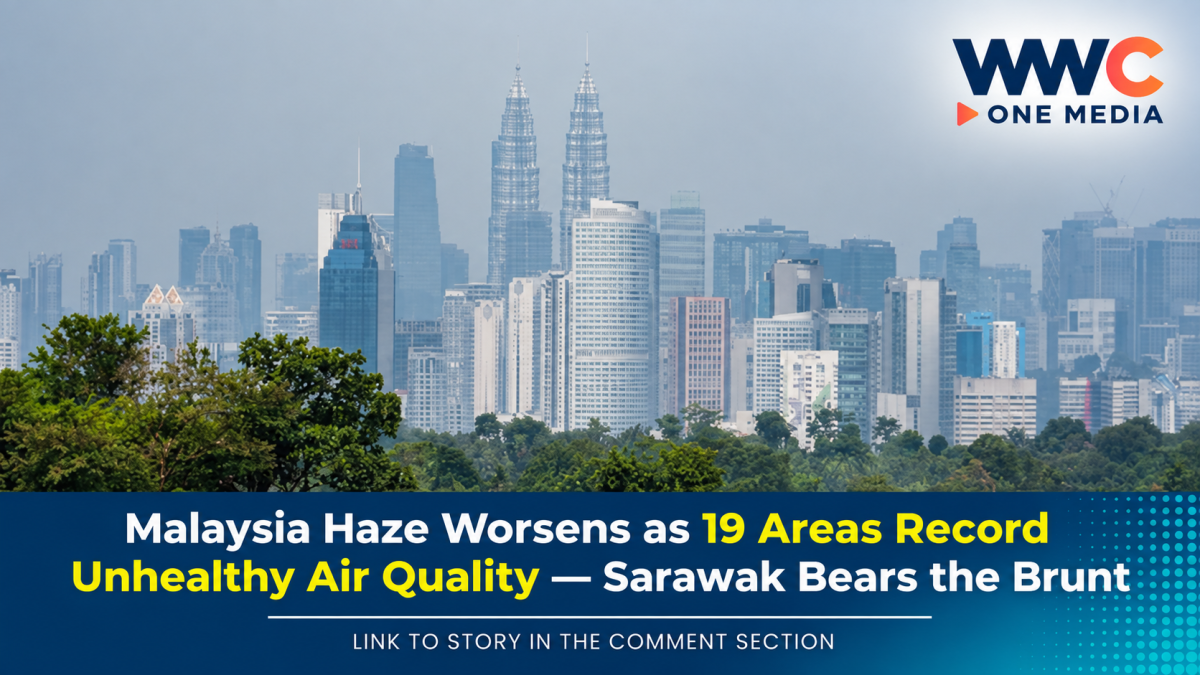
Air quality deteriorated across parts of Malaysia on Monday, Sept 21, with 19 areas recording unhealthy Air Pollutant Index readings as haze continued to affect the region.
Data from Malaysia’s Air Pollutant Index Management System showed that 11 of the affected areas were in Sarawak, which has been among the states most exposed to smoke from fires in the region. Other unhealthy readings were recorded in Klang and several areas around Selangor, Seremban and Wisma Putra.
Malaysia classifies an API reading of 101 to 200 as unhealthy, while readings between 201 and 300 are considered very unhealthy and anything above 300 is classified as hazardous. The index is designed to reflect potential health effects from air pollution.
The haze is occurring as Indonesia continues to battle a severe wildfire season. Satellite monitoring by the Asean Specialised Meteorological Centre detected hundreds of hotspots in Kalimantan and additional hotspots in Sumatra, with smoke capable of affecting neighbouring countries depending on wind conditions.
The situation has already shown how quickly air quality can change. On Sept 19, 20 Malaysian areas were recording unhealthy API levels, including locations in Sarawak, Perak, Selangor, Kuala Lumpur, Putrajaya, Negeri Sembilan, Johor, Melaka and Sabah.
Sarawak has experienced particularly severe haze episodes this year. Earlier in September, Serian recorded API levels above 200, while several other Sarawak locations also reached unhealthy levels. The Department of Environment has increased monitoring and enforcement as the haze situation continues.
The wider regional picture remains concerning. Reuters reported that Indonesia’s wildfires have been worsened by prolonged drought and an unusually strong El Niño pattern, with authorities warning that fires could continue into November. The smoke has already contributed to deteriorating air quality in both Malaysia and Singapore.
With more hotspots still being detected and weather conditions continuing to influence the movement of smoke, Malaysia’s air quality could remain unstable in the coming days.
For residents in affected areas, the latest readings serve as another warning that the haze problem is far from over — and conditions could change quickly depending on where the smoke moves next.