
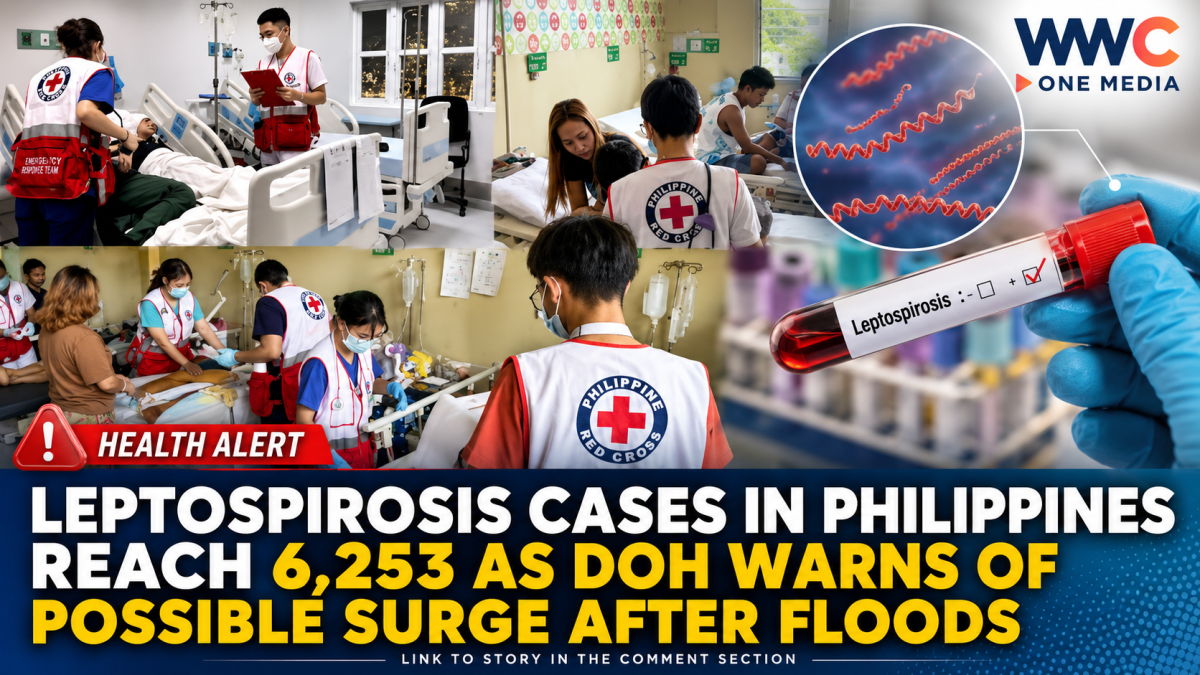
MANILA, Philippines — The Philippines has recorded 6,253 cases of leptospirosis and 378 deaths from January 4 through August 29, 2026, prompting the Department of Health (DOH) to warn that infections could rise further in the coming weeks following widespread flooding.
The latest figure, reported by the Philippine News Agency, comes as health authorities continue monitoring regions affected by persistent rains and flooding. Although the cumulative number of cases remains 12 percent lower than the same period last year, officials are concerned about a possible delayed increase because leptospirosis symptoms can emerge days after exposure to contaminated floodwater.
DOH warns of another possible wave
Health Undersecretary Gloria Balboa said the country could see another increase in leptospirosis cases in roughly two weeks.
The warning is linked to the disease’s incubation period. The DOH has said leptospirosis can take approximately five to 15 days to develop after exposure, meaning people who recently walked or waded through floodwater may not immediately know they have been infected.
That delay is particularly concerning after the recent flooding brought by persistent rains and the southwest monsoon, or habagat.
The DOH has therefore urged people exposed to floodwater to seek medical advice rather than waiting for severe symptoms to develop.
378 deaths recorded nationwide
Of the 6,253 cases recorded through August 29, 378 deaths have been attributed to leptospirosis, according to the DOH figures cited by multiple news organizations. The reported case fatality rate is about 6.05 percent.
Despite the alarming death toll, health officials stressed that the overall number of cases is still lower than last year’s comparable period.
The decline, however, does not mean the danger has passed.
Recent flooding has created conditions favorable for transmission, while health officials are preparing for infections that may only become apparent days after people were exposed.
Metro Manila among the hardest-hit areas
Metro Manila has emerged as a major area of concern.
The DOH recorded 1,961 leptospirosis cases in the National Capital Region, with Manila and Quezon City posting the highest cumulative numbers, followed by Caloocan and Taguig, according to reporting from Philstar’s Pilipino Star Ngayon.
Separate reporting from The Philippine STAR said 72 percent of Metro Manila’s leptospirosis cases were associated with flood exposure.
The same report said unemployed people and informal workers accounted for 55 percent of infections in the capital, highlighting how people who must continue working despite dangerous flood conditions can face a disproportionate risk.
Nine Metro Manila cities exceed epidemic thresholds
The situation is particularly serious in several parts of the capital.
According to DOH data reported by The Philippine STAR, Caloocan, Malabon, Manila, Navotas, Parañaque, Pasig, San Juan, Valenzuela and Quezon City had exceeded their respective epidemic thresholds.
Nationwide, approximately 3,296 cases, or 53 percent, were linked to flood exposure.
The figures underscore why authorities continue to discourage people from walking through floodwater whenever possible.
Hospitals prepare for more patients
The anticipated increase has also placed pressure on hospitals.
Several facilities in Metro Manila have reported high occupancy related to leptospirosis patients, including East Avenue Medical Center, José R. Reyes Memorial Medical Center, San Lazaro Hospital and the National Kidney and Transplant Institute, according to reports citing DOH officials.
The DOH said hospitals have surge-capacity plans that include adding beds, transferring patients when necessary and coordinating referrals to other facilities.
Earlier reports also said the government had established dedicated leptospirosis services and referral arrangements to help prevent major hospitals from becoming overwhelmed.
Why floodwater can be dangerous
Leptospirosis is a bacterial infection caused by Leptospira bacteria.
People can become infected when they come into contact with water or soil contaminated by the urine of infected animals, particularly rats. The bacteria can enter the body through cuts or wounds and through the eyes, nose or mouth.
This is why even apparently shallow floodwater can present a health risk, particularly in heavily urbanized areas where drainage problems, garbage and rodents can contribute to contamination.
Watch for symptoms after flood exposure
The DOH has warned people not to dismiss symptoms following exposure to floodwater.
Early symptoms can include fever and chills. More serious disease can affect the liver and kidneys. Severe cases may involve yellowing of the eyes or skin, dark urine, kidney failure and the need for dialysis.
Because the disease can progress quickly, health officials are urging people with a history of floodwater exposure to seek medical attention if symptoms develop.
DOH urges caution over doxycycline
The DOH has also discussed doxycycline as a post-exposure preventive medicine in appropriate circumstances.
However, health officials have repeatedly stressed that people should not self-medicate.
Whether doxycycline is appropriate depends on the individual’s circumstances, and it should be taken according to guidance from a qualified health professional. Some local health authorities have also made the medicine available through health facilities for people considered at risk.
The message from health officials is straightforward: people who have been exposed to floodwater should consult a health professional rather than waiting for the illness to become severe.
The warning comes despite lower year-on-year cases
The latest numbers present a mixed picture.
On one hand, the 6,253 cases are 12 percent lower than the comparable period last year. On the other, the recent surge following flooding and the disease’s incubation period mean the final numbers for the year could still climb significantly.
The contrast is important: a lower year-to-date total does not eliminate the immediate risk faced by people exposed to contaminated floodwater.
With the rainy season continuing and health officials anticipating a possible delayed wave of infections, authorities are urging the public to avoid unnecessary contact with floodwater and seek medical attention promptly when symptoms appear.
For many Filipinos, the danger may not end when the floodwater disappears. The next two weeks could reveal just how serious the latest wave of exposure has been.



Leave a Reply