Leptospirosis cases and deaths in the Davao Region have declined compared with the same period last year, but health authorities are warning residents not to become complacent after detecting an unusual shift in when infections began increasing.
The Department of Health-Davao Region recorded 403 leptospirosis cases from January 4 to September 5, 2026. That is 6.3 percent lower than the 430 cases documented during the same period in 2025.
Fatalities also fell sharply, with 30 deaths recorded this year compared with 68 during the comparable period last year.
Despite the overall decline, DOH-Davao Medical Officer III Dr. Kieneth Paul Cajes said surveillance data showed a notable change in the disease’s seasonal pattern.
Leptospirosis had traditionally increased in the region during January and February over the past several years. This year, however, health officials observed a pronounced rise beginning in early July and continuing into early August.
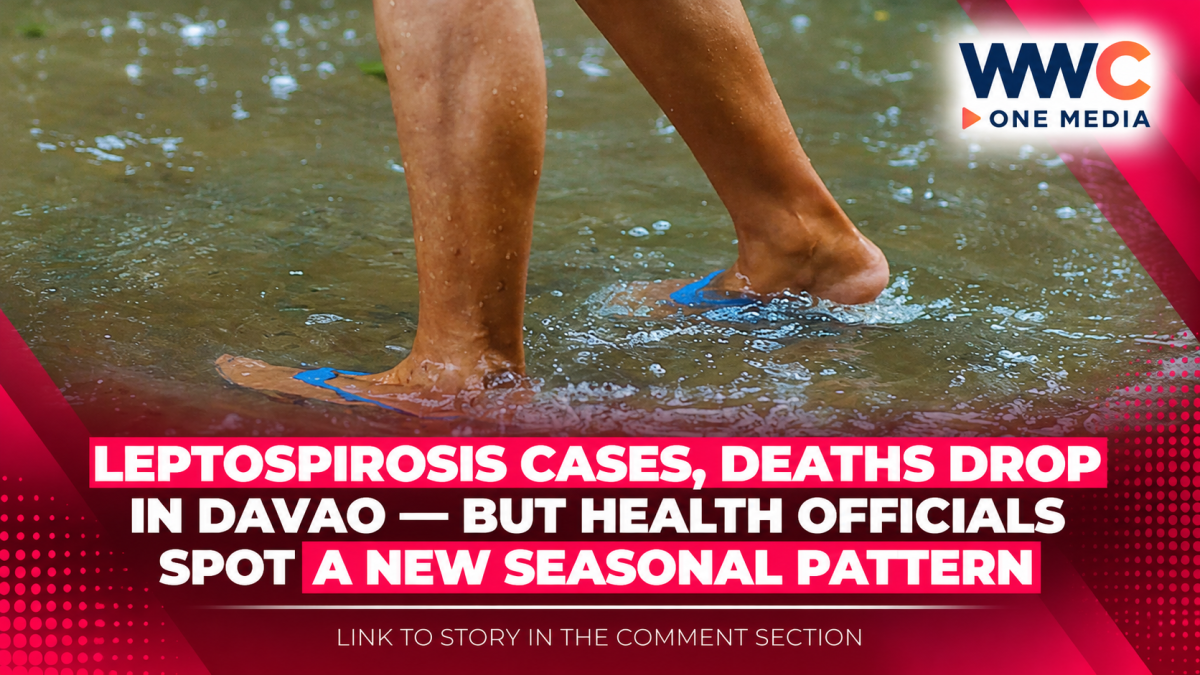
The shift has drawn attention because leptospirosis is closely associated with exposure to water or soil contaminated by the urine of infected animals, particularly rats. Flooding during the rainy season can increase opportunities for people to come into contact with contaminated water.
Earlier regional data showed that floodwater exposure remained the most frequently identified risk factor. As of August 29, 258 of the region’s 395 recorded cases were linked to floodwater exposure. Other reported exposures included mud, agricultural activities and contaminated food or drinks.
Davao City had the highest number of cases in the region in the August 29 surveillance report, with 149 infections and nine deaths. Davao del Norte followed with 107 cases and seven deaths, while Davao de Oro recorded 92 cases and two deaths.
The regional situation also comes amid a broader national concern over leptospirosis. The Department of Health reported 8,317 cases nationwide from January 4 to September 5, 2026, higher than the 7,280 cases recorded during the same period in 2025. However, nationwide deaths were lower, at 457 compared with 772 last year.
For Davao residents, health authorities continue to emphasize prevention, particularly during periods of flooding.
The DOH advises people to avoid wading through floodwaters whenever possible. Those who cannot avoid exposure should use protective boots, cover open wounds with waterproof bandages and wash exposed areas thoroughly with soap and clean water afterward.
People who have significant exposure to floodwater should also seek medical advice rather than automatically taking antibiotics on their own. DOH-Davao has assured the public that supplies of doxycycline are available, but health professionals must determine whether preventive treatment is appropriate based on the individual’s exposure and health condition.
Health officials also warn that untreated leptospirosis can become severe and affect organs including the kidneys and liver. Early consultation can be critical, particularly for people who develop symptoms after possible exposure.
The decline in Davao’s overall numbers is encouraging in terms of the year-on-year figures, but the unusual July-to-August increase shows that the disease pattern may not be following its previous seasonal trend.
With the rainy season continuing, health authorities are closely watching whether the recent decline will hold—or whether another increase in infections could emerge in the weeks ahead.