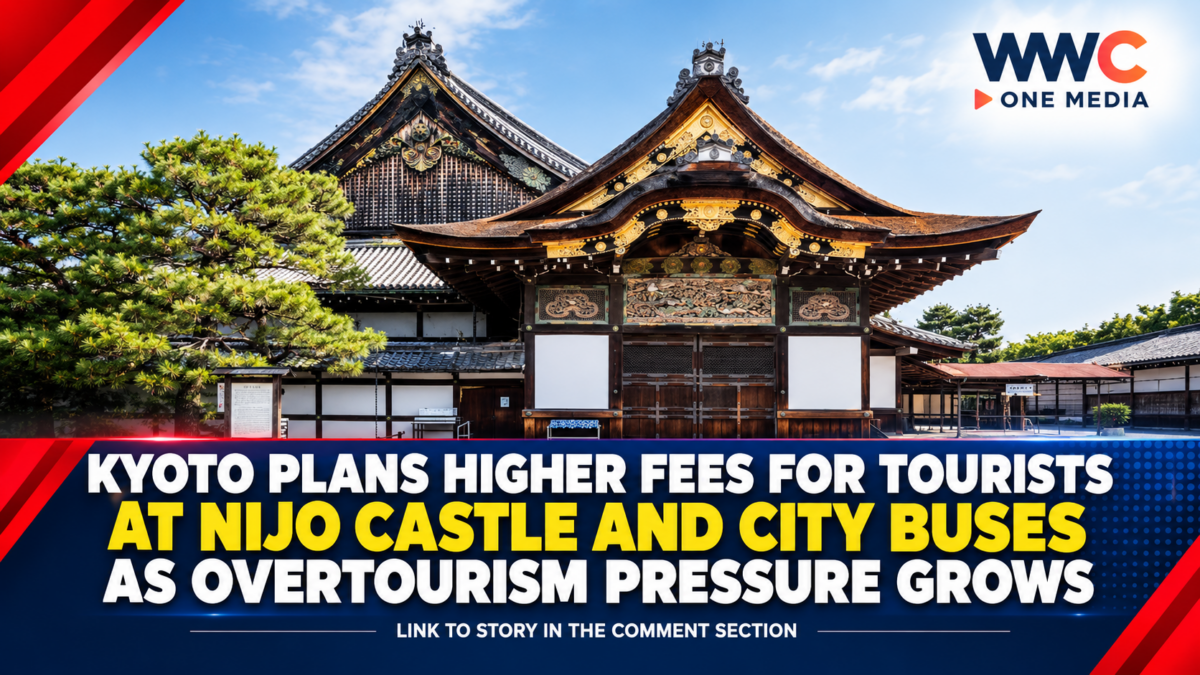
KYOTO, Japan — Kyoto is preparing to introduce a two-tier pricing system that would make Nijo Castle admission and city bus fares more expensive for visitors from outside the city, while giving Kyoto residents lower rates.
The proposed changes, targeted for fiscal 2027, are part of Kyoto’s effort to manage overtourism, ease pressure on public transportation and generate additional funding for the preservation of historic sites.
Nijo Castle Tickets Could Nearly Double for Visitors
Under the proposed system, combined admission to Nijo Castle and the Ninomaru-goten Palace would fall from the current 1,300 yen to 1,000 yen for Kyoto residents.
Visitors from outside Kyoto would instead pay 2,000 yen.
The additional revenue from non-resident visitors is expected to help finance conservation and repairs at the UNESCO World Heritage site.
Nijo Castle currently lists the general combined admission price at 1,300 yen, meaning the proposed visitor rate would represent a significant increase if approved.
Bus Fares Would Also Split Into Two Prices
The same approach is being proposed for Kyoto’s municipal buses.
The current fare of 230 yen would be reduced to 200 yen for Kyoto residents, while non-residents would pay 360 yen.
Kyoto officials say the change is intended partly to improve conditions for residents who depend on buses for everyday transportation and have faced overcrowding linked to sightseeing traffic.
If implemented, Kyoto would introduce what city officials describe as Japan’s first two-tier public-transport fare system specifically aimed at addressing overtourism.
Millions Are Visiting Nijo Castle
The pressure behind the proposal is reflected in visitor numbers.
About 2.07 million people visited Nijo Castle during fiscal 2025, which ended in March 2026.
A city survey conducted during a limited period last autumn found that Kyoto residents represented only about 2% of visitors, although the city does not have detailed residency data covering all visitors.
That means the proposed pricing structure would primarily affect the large majority of visitors coming from outside Kyoto.
Kyoto Is Trying to Balance Tourism and Daily Life
Kyoto has become one of Japan’s most internationally recognized tourist destinations, but the surge in visitors has also created challenges for residents.
Crowded buses, congested tourist areas and pressure on historic sites have increasingly pushed authorities to look for ways to manage visitor flows while maintaining tourism revenue.
The proposed Nijo Castle pricing model follows a broader trend in Japan toward different prices for local residents and visitors.
Himeji Castle in Hyogo Prefecture introduced a similar system in March, charging non-residents 2,500 yen for adult admission while residents aged 18 and over pay 1,000 yen.
Kyoto’s Bigger Overtourism Experiment
The proposed changes are about more than ticket prices.
Kyoto is effectively testing whether higher visitor charges can help finance preservation while lower resident prices encourage locals to use and enjoy the city’s cultural attractions and transportation system.
For international travelers planning a future Kyoto trip, the biggest change could come in 2027 if the proposal is approved.
A visit to one of Kyoto’s most famous landmarks could cost significantly more, while even an ordinary bus ride through the city could carry a different price depending on whether the passenger is a resident.
As Kyoto struggles to balance its global popularity with the needs of people who live there, the city is putting a price tag on a question facing tourist destinations around the world: how much can a place handle before tourism begins reshaping everyday life?
WWC ONE MEDIA G,A