Japan is approaching a historic economic turning point as rising wages begin to replace soaring import costs as a potential engine of inflation. But with interest rates already at their highest level in more than three decades and the government preparing tax cuts, a crucial question is emerging: Can Tokyo revive household spending without unleashing another wave of price increases?
Japan’s long struggle against deflation may be entering a new chapter, according to Finance Minister Satsuki Katayama, who said on Wednesday, October 21, that the world’s fourth-largest economy is moving toward sustained inflation driven by stronger wages.
The shift could reshape Japan’s economic future after decades marked by stagnant salaries, subdued consumer spending and extraordinarily low interest rates.
However, the transition comes at a delicate moment. Rising energy costs linked to the conflict involving Iran, a weak Japanese yen and growing global demand associated with artificial intelligence are adding pressure to prices, complicating the Bank of Japan’s efforts to maintain inflation near its 2% target.
From Decades of Deflation to a New Wage-Driven Economy
For years, Japan struggled to escape a cycle in which sluggish wages and weak consumer demand discouraged businesses from raising prices, limiting economic growth.
That dynamic is beginning to change.
Katayama told lawmakers that Japan’s inflation is still being influenced by higher import costs but is approaching a stage in which wage increases could become a more sustainable driver of price growth.
The distinction is critical.
Inflation caused by expensive imported oil, food and raw materials can squeeze household budgets without improving purchasing power. Wage-driven inflation, by contrast, can form part of a healthier economic cycle when higher salaries support consumption, encouraging businesses to invest and expand.
But the outcome depends on whether workers’ earnings actually rise faster than living costs.
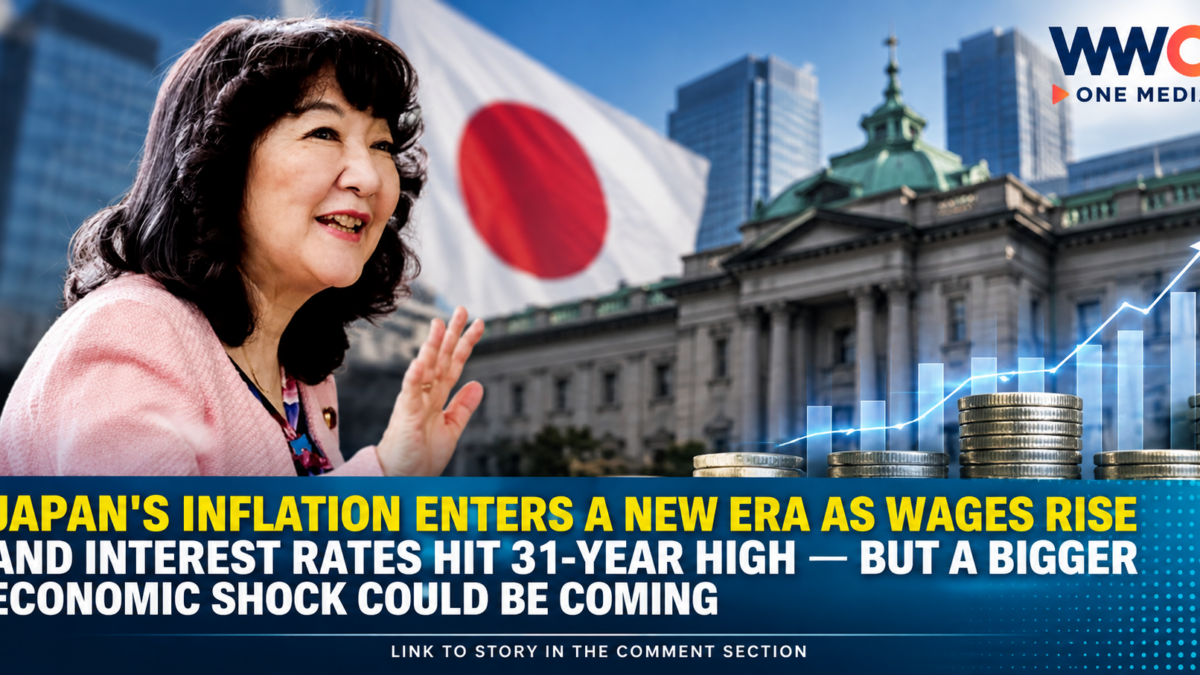
Bank of Japan Pushes Interest Rates to 1.25%, a 31-Year High
Japan’s central bank has already taken significant steps to control inflation.
In September 2026, the Bank of Japan raised its benchmark interest rate to 1.25%, the highest level in 31 years, as policymakers confronted mounting inflation risks.
Among the pressures influencing the central bank are elevated energy prices, the yen’s weakness and increasing demand linked to the global AI investment boom.
Higher interest rates can help restrain inflation by making borrowing more expensive. However, they can also increase financing costs for Japanese businesses and households, potentially slowing investment and consumer spending.
The challenge facing policymakers is to prevent inflation from becoming excessive without disrupting Japan’s emerging wage-growth cycle.
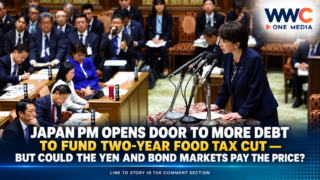
Takaichi Government Prepares Major Food Tax Relief
Prime Minister Sanae Takaichi’s administration is pursuing a different but related priority: protecting Japanese households from the rising cost of living.
The government plans to temporarily reduce the 8% consumption tax on food items for two years, beginning in April 2027.
The administration is also planning household financial assistance.
The measures are designed to ease the burden on consumers, particularly families struggling with higher grocery bills and other essential expenses.
Yet the policy presents an economic dilemma.
Reducing taxes can increase consumers’ purchasing power and stimulate demand. If businesses cannot expand production and services sufficiently to meet that demand, stronger spending could intensify inflationary pressures.
Katayama acknowledged that tax reductions generally have an inflationary effect but said the government’s fiscal strategy would also strengthen Japan’s productive capacity.
She rejected suggestions that the administration’s policies were fundamentally at odds with the central bank’s monetary tightening, emphasizing that the government and BOJ continue to exchange views.
Economists nevertheless warn that significant fiscal stimulus could make the central bank’s inflation-control objectives harder to achieve.
Japan’s Real Wages Rise for Eighth Consecutive Month
Fresh wage figures provide encouraging evidence that Japanese workers may finally be experiencing improvements in purchasing power.
Government figures released on October 7 showed inflation-adjusted wages rising 1.5% year-on-year in August 2026, marking eight consecutive months of gains.
Nominal wages increased 3.8%, while the inflation measure used to calculate real earnings stood at 2.2%.
The improvement matters because wage increases are sustainable for household living standards only when they outpace inflation.
Nevertheless, August’s real wage growth slowed from July’s revised 2.0%, highlighting the vulnerability of household purchasing power to renewed price pressures.
Economists Expect Another Interest Rate Hike in December
Japan’s monetary tightening cycle may not be finished.
A Reuters survey reported on October 20 found that a majority of economists expect the Bank of Japan to raise its policy rate from 1.25% to 1.50% in December 2026.
Nearly 70% of surveyed economists supported another December increase, while many expected borrowing costs to reach 2% by mid-2027.
These are forecasts, not announced central bank decisions.
A separate Reuters report on October 1 found that Japan’s major manufacturers were benefiting from strong AI-related demand, with business confidence reaching its highest level since March 2018. However, sentiment among non-manufacturing companies weakened amid higher costs and subdued household consumption.
The mixed signals underscore the difficulty of determining whether the economy is strong enough to withstand further interest rate increases.
Why Japan’s Economic Shift Matters Across Asia
Japan’s transformation could have implications far beyond its borders.
A sustained increase in Japanese interest rates may influence the value of the yen, international investment flows and borrowing conditions throughout Asia.
For the Philippines and other Southeast Asian economies, developments in Japan are particularly relevant because of the country’s role as a major investor, lender and trading partner.
A stronger yen could potentially improve the peso value of remittances from Japan while making Japanese imports more expensive. Higher Japanese interest rates could also influence investment decisions and regional financing conditions.
These are potential economic effects rather than confirmed outcomes of Japan’s latest policy developments.
The Bigger Question: Can Japan Finally Escape Its Economic Past?
Earlier this month, Japanese Economy Minister Minoru Kiuchi indicated that the country no longer required the extraordinarily loose monetary policies traditionally used to fight deflation.
Speaking at a Reuters event on October 15, Kiuchi described the economy as moving toward a cycle of greater corporate investment, higher wages and stronger consumption.
But he also cautioned that this positive cycle had not yet become firmly established.
That uncertainty remains central to Japan’s economic outlook.
If wage increases consistently outpace inflation, households could enjoy stronger purchasing power, creating a foundation for sustained domestic growth.
If inflation accelerates faster than earnings, however, Japanese consumers could face another period of financial pressure just as borrowing costs continue rising.
For Prime Minister Takaichi’s government, the stakes are substantial. It must demonstrate that its promised household relief can coexist with the Bank of Japan’s efforts to maintain price stability.
Japan may finally be moving beyond decades of deflation, but whether this becomes a lasting economic revival—or another costly inflation challenge—will depend on what happens to wages, prices and interest rates next.