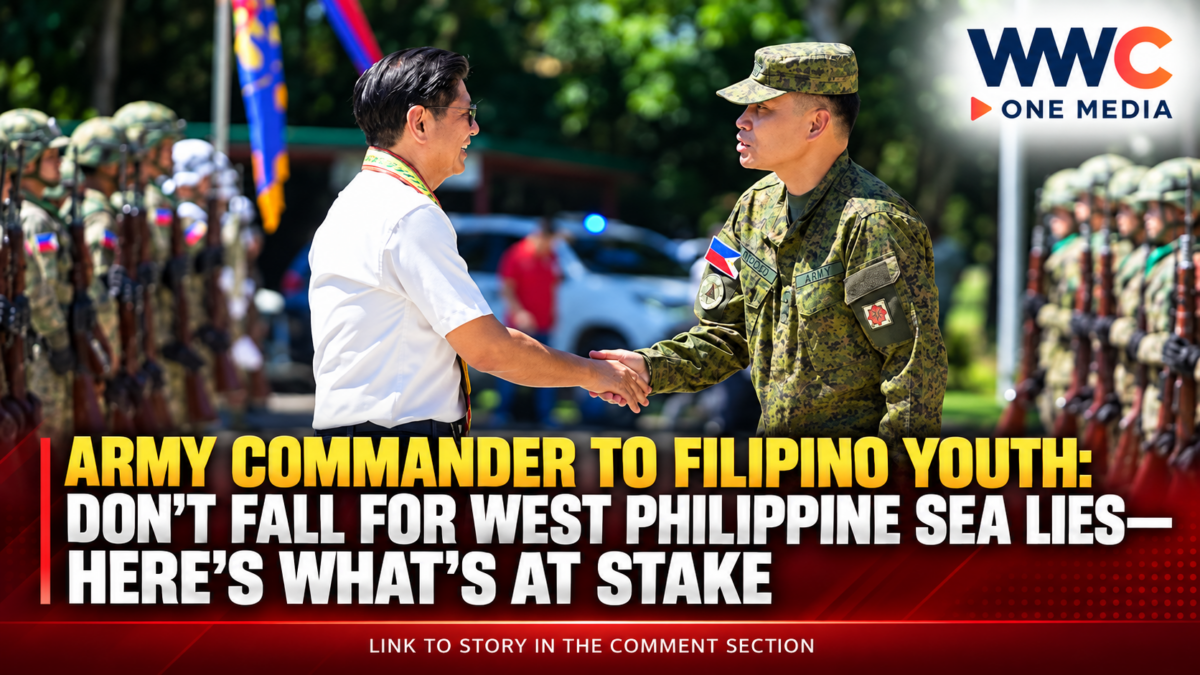
TACLOBAN CITY, Philippines — The Philippine Army is urging young Filipinos to be more discerning about information concerning the West Philippine Sea (WPS), warning that false and misleading narratives can undermine public understanding of the country’s maritime rights and national security.
The appeal, attributed to the Army commander in Eastern Visayas in a report by INQUIRER.net, highlights the growing importance of media literacy as tensions and competing claims in the South China Sea continue to shape public debate.
For Filipino students and young social media users, the message is clear: understanding the West Philippine Sea requires more than watching viral videos, reading online posts or accepting claims that circulate widely on social media. Information must be checked against credible reporting, official records and established international law.
Why the West Philippine Sea information battle matters
The dispute over maritime areas in the South China Sea is not simply a diplomatic disagreement. It also concerns fishing grounds, marine resources, energy prospects, maritime security and the Philippines’ ability to exercise its lawful rights.
The Philippine government has repeatedly emphasized the importance of informing the public about developments in the West Philippine Sea and correcting misleading accounts of encounters involving Philippine and Chinese vessels.
In July 2026, Philippine Coast Guard spokesperson Rear Admiral Jay Tarriela warned that fake news and misinformation were major challenges in the country’s efforts to assert its rights in the WPS. In a report by the Philippine Information Agency, Tarriela urged Eastern Visayas residents to stand together and remain informed about the maritime dispute.
The message reflects a broader concern among Philippine security officials: public understanding can be affected when misleading content circulates without context or verification.
The Philippines’ maritime rights and the 2016 ruling
The legal background is essential to understanding why the West Philippine Sea remains a major national issue.
In its July 12, 2016, ruling, the arbitral tribunal constituted under the United Nations Convention on the Law of the Sea (UNCLOS) rejected the legal basis for China’s claims to historic rights over resources within the so-called nine-dash line to the extent that they exceeded the rights provided under UNCLOS.
The tribunal also clarified maritime entitlements involving the Philippines and China in the areas covered by the case.
China has rejected the ruling. The Philippines, however, continues to invoke the decision in asserting its maritime rights.
The ruling did not decide sovereignty over land territory or delimit a maritime boundary between the two countries. These distinctions matter because inaccurate descriptions of the decision can create confusion about what international law actually established.
Why young Filipinos are part of the response
Young people are among the most active participants in online discussions, making their ability to identify unreliable information especially important.
In a July 2026 report, the Philippine Information Agency said the Philippine Army had been educating students in 20 schools across the Caraga region about the West Philippine Sea through information activities, educational materials and other learning initiatives.
The Armed Forces of the Philippines has also acknowledged that national security challenges extend beyond physical territory into the information environment.
In an October 14, 2026, report, the Philippine News Agency quoted AFP spokesperson for the West Philippine Sea Rear Admiral Roy Vincent Trinidad as describing efforts to counter false narratives and urging the public to verify information through authorized channels.
These initiatives underscore the importance of helping students distinguish verifiable facts from speculation, manipulated content and unsupported claims.
How to spot misleading West Philippine Sea content
Before sharing a post about a maritime incident, readers should consider several basic checks:
- Check the original source. Determine whether the information comes from a credible news organization, an official agency or an unidentified social media account.
- Look for independent confirmation. Compare reports from reputable outlets and review relevant statements from the Philippine Coast Guard, Armed Forces of the Philippines or Department of Foreign Affairs.
- Check the date and context. Old photographs and videos may be presented as if they show a new incident.
- Separate evidence from opinion. A political commentary or social media allegation is not automatically an established fact.
- Read beyond the headline. Examine what the available evidence actually demonstrates before drawing conclusions or reposting a claim.
These precautions do not mean that every official statement should be accepted without scrutiny. Responsible media literacy requires evaluating evidence, checking competing accounts and correcting errors regardless of who publishes them.
A national issue that demands informed citizens
The West Philippine Sea remains a significant concern for Philippine foreign policy, national defense and the livelihoods of coastal communities.
As the government continues to assert the country’s maritime rights, public awareness and responsible information-sharing can help citizens participate in discussions grounded in facts rather than misinformation.
For the youth, the challenge is not merely to take sides in online arguments. It is to understand the legal and historical background, examine claims critically and recognize the difference between verified reporting and content designed to provoke anger or confusion.
In a dispute where information can shape public opinion, checking the facts before clicking “share” is a small but meaningful responsibility.