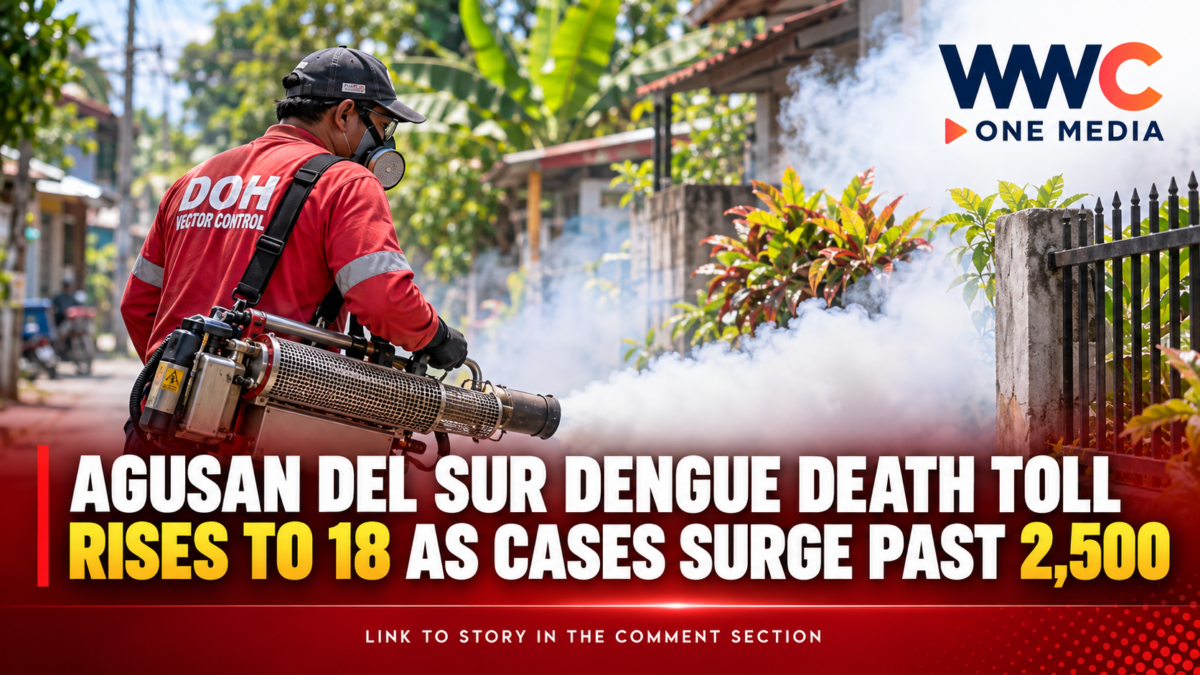
PROSPERIDAD, Agusan del Sur — The dengue outbreak in Agusan del Sur has claimed 18 lives, according to the latest report from Inquirer.net, raising fresh concerns over the growing threat of mosquito-borne infections in the province.
The latest report, published on October 21, said two additional dengue deaths had been recorded, bringing the reported death toll to 18 as of Tuesday. The increase follows earlier provincial health figures showing more than 2,500 dengue cases and 16 deaths as of October 15.
The figures underscore the continuing public-health challenge facing Agusan del Sur, where health officials have been intensifying disease surveillance, mosquito-control operations, and public awareness campaigns.
More than 2,500 cases recorded
A report published by Abante on October 19, citing the Provincial Health Office (PHO), said Agusan del Sur had recorded 2,572 dengue cases from January through October 15, with 16 deaths reported during that period.
Of the total cases, 1,896 patients, or approximately 73.7%, required hospital admission or treatment in health facilities. Children aged 10 to 14 accounted for the largest share of infections, representing 18.39% of reported cases. The average age of patients was 16.
Bayugan City recorded six deaths, while Rosario reported five. Loreto had two, and Bunawan, San Francisco, and Trento recorded one death each, according to the same report.
The latest Inquirer report raises the death toll to 18. The 2,572-case figure, however, refers specifically to the reporting period ending October 15; a newer cumulative case count was not confirmed in the reports reviewed for this article.
Province-wide outbreak declared
Agusan del Sur’s Provincial Health Office declared a province-wide dengue outbreak following increases in infections, hospital admissions, severe cases, and reported deaths.
The provincial government’s October 2 report said the outbreak declaration was issued through a public-health advisory dated September 29, after surveillance data indicated that the province had exceeded the dengue epidemic threshold.
Earlier reports documented a rapid increase in infections over the course of the year. Department of Health-Caraga data cited by the provincial government showed 206 cases during the first half of 2026, rising to 674 by August 8.
These figures cover different reporting periods and should not be mistaken for weekly totals. They nevertheless illustrate how the outbreak developed over several months.
Health officials step up mosquito-control measures
Authorities have intensified efforts to identify and eliminate mosquito-breeding sites, conduct community inspections, and monitor areas reporting clusters of infections.
The provincial government has also urged residents to follow the Department of Health’s 4S Kontra Dengue strategy:
- Search and destroy mosquito-breeding sites, especially containers and areas holding stagnant water.
- Self-protection by using mosquito repellent, wearing protective clothing, and using mosquito nets when appropriate.
- Seek early consultation when dengue symptoms appear.
- Support fogging or spraying in identified hotspots when recommended by health authorities.
Fogging and misting have also been conducted in selected areas, including schools, as part of efforts to control adult mosquitoes. However, these measures need to be accompanied by the removal of breeding sites to help prevent further transmission.
Warning signs residents should not ignore
Dengue can cause fever, headache, body aches, nausea, vomiting, and rash. Some patients can develop severe complications, particularly around the time their fever begins to subside.
The World Health Organization identifies warning signs that require urgent medical assessment, including severe abdominal pain, persistent vomiting, bleeding, rapid breathing, unusual tiredness or restlessness, and blood in vomit or stool.
Residents experiencing these symptoms should seek immediate medical care rather than waiting for their condition to worsen. Anyone with suspected dengue should consult a healthcare professional for assessment and advice.
Community action remains critical
The rising death toll is a reminder that dengue prevention requires coordinated action from health authorities, local governments, schools, and households.
Residents can help reduce risks by regularly emptying and cleaning water containers, covering stored water, clearing clogged drains, and disposing of discarded items that collect rainwater. Community cleanups and prompt consultation when symptoms develop are also important parts of the response.
With 18 deaths now reported and earlier figures already showing more than 2,500 infections, the situation in Agusan del Sur warrants continued vigilance. Residents should follow official advisories and seek updated information from the Provincial Health Office and the Department of Health as new figures become available.