TOKYO, Japan — October 21, 2026. Japan’s central bank is sending another strong warning to financial markets: the era of ultra-cheap money is continuing to fade, and borrowing costs could climb even further as inflation pressures threaten the world’s fourth-largest economy.
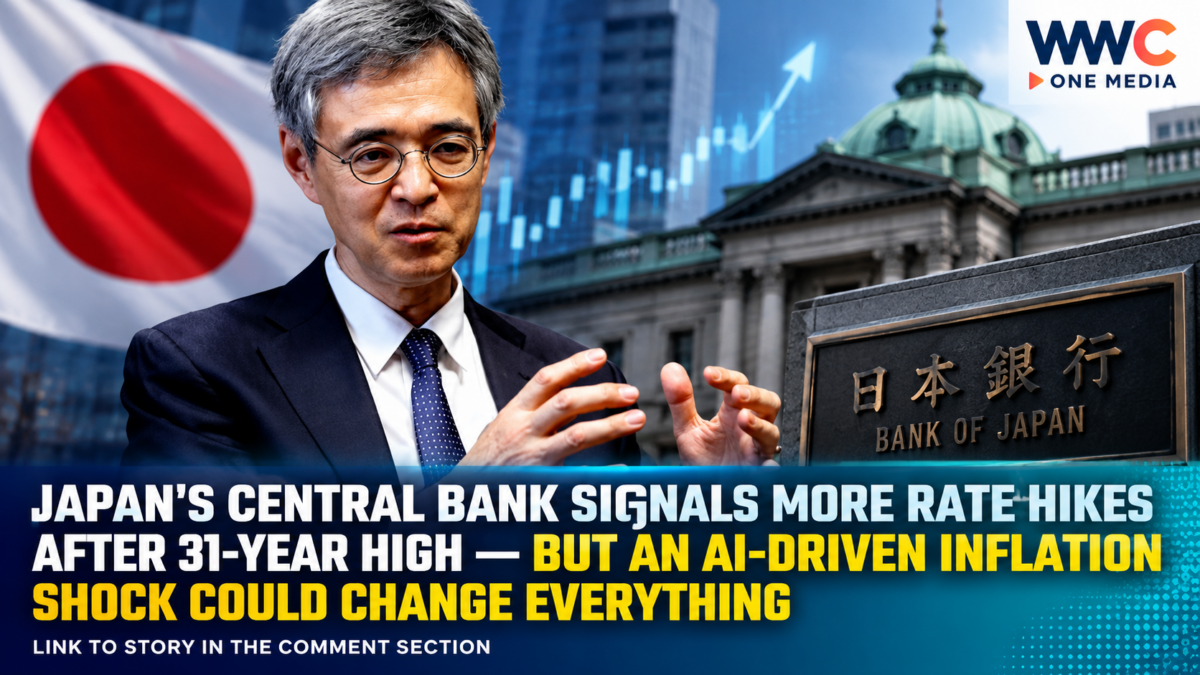
Bank of Japan (BOJ) Deputy Governor Ryozo Himino signaled on Wednesday that additional interest rate increases remain necessary, arguing that underlying inflation is approaching the central bank’s 2% target while borrowing conditions are still relatively loose.
The warning comes just weeks after the BOJ raised its benchmark interest rate to 1.25% in September, its highest level in 31 years, underscoring Japan’s historic transition away from decades of exceptionally accommodative monetary policy.
But the bigger concern is no longer simply how high interest rates will climb. Policymakers must now determine whether rising energy costs, a weaker yen and surging global demand for artificial intelligence will keep Japanese inflation elevated longer than expected.
BOJ Warns That Delaying Rate Hikes Could Hurt Japan’s Economy
Speaking before Japan’s parliament, Himino explained that inflation expectations over the medium and long term have been increasing, suggesting that price pressures are becoming more deeply embedded in the economy.
He also emphasized that financial conditions remain supportive of economic activity despite September’s interest rate increase.
Inflation-adjusted borrowing costs remain low, while Japanese banks continue to report strong lending growth.
That means the central bank still sees room to gradually withdraw monetary stimulus without necessarily imposing severe restrictions on businesses and households.
Himino warned that postponing necessary policy adjustments could allow inflation risks to build and ultimately damage economic stability.
His remarks strengthen expectations that the BOJ will continue raising interest rates, although the precise timing of its next move remains uncertain.
AI Boom Emerges as an Unexpected Inflation Driver
One of the most striking developments in Japan’s inflation outlook is the growing influence of artificial intelligence.
The global race to build AI infrastructure has boosted demand for Japanese technology, semiconductor-related products and industrial equipment.
That demand supports Japanese exports, business investment and manufacturing activity.
However, stronger demand and investment can also contribute to rising prices, particularly when production capacity, specialized equipment and labor availability are constrained.
Himino identified the AI-driven increase in exports and capital expenditure as an additional source of upward pressure on prices.
This creates a complicated balancing act for policymakers.
The same technological boom supporting economic growth could also reinforce inflation pressures, making it harder for the central bank to maintain price stability.
Middle East Energy Crisis and Weak Yen Add More Pressure
Japan’s inflation challenge is being intensified by geopolitical instability and higher import costs.
As a major importer of energy, Japan remains particularly vulnerable to disruptions in Middle Eastern oil supplies.
Associated Press reported on October 21 that Japan recorded a ¥2.81 trillion trade deficit for April through September 2026, as surging petroleum import costs pushed overall imports above exports.
The weaker yen has compounded the problem by making imported fuel, food and other goods more expensive in local currency terms.
Higher energy prices can increase transportation, manufacturing and electricity costs, eventually affecting households and businesses.
These pressures place Japan in a difficult position: leaving interest rates too low risks prolonging inflation, while tightening too quickly could weaken consumer spending and business activity.
Economists Expect Another Rate Increase in December
Financial markets are increasingly preparing for another BOJ policy adjustment before the end of 2026.
According to a Reuters survey released on October 20, a majority of economists expect the central bank to raise its policy rate to 1.50% in December, extending the tightening cycle following increases in June and September.
Nearly 70% of surveyed economists supported the expectation of another December hike, while most anticipated rates reaching approximately 2% by the middle of 2027.
However, these are forecasts rather than confirmed central bank decisions.
The BOJ must still evaluate inflation, wage growth, consumer demand, business confidence and global financial conditions before determining whether another increase is appropriate.
Japan’s Government Faces a Delicate Economic Balancing Act
The interest rate debate also comes as the Japanese government seeks ways to shield households from persistent price increases.
Finance Minister Satsuki Katayama said Japan is moving toward a more sustainable phase of inflation driven by wage growth rather than solely by rising import prices.
That transition would represent a significant development for an economy that struggled with stagnant prices and wages for decades.
But potential tension remains between the government’s efforts to stimulate economic activity and the BOJ’s objective of reducing monetary accommodation.
Fiscal support measures may help consumers withstand higher living costs, while additional interest rate increases could raise financing expenses for businesses, households and the government.
Maintaining economic growth while preventing inflation from becoming entrenched will therefore remain a central policy challenge.
Why Japan’s Next Rate Hike Matters Beyond Its Borders
The consequences of further BOJ tightening could extend across Asian and global financial markets.
Higher Japanese interest rates may support the yen by narrowing interest rate differences with other major economies.
They could also influence international capital flows, Japanese government bond yields and the financing strategies of investors who borrow yen to purchase higher-yielding foreign assets.
A rapid adjustment in currency markets could increase volatility in international equities, bonds and emerging-market investments.
For Asian economies, including the Philippines, developments in Japan’s monetary policy are particularly relevant because of the region’s trade, investment and financial connections.
Still, the ultimate impact will depend on how rapidly Japanese rates increase, how other central banks respond and whether global energy pressures ease.
What Happens Next?
Japan’s next major test is whether inflation can stabilize near 2% without forcing the BOJ to raise interest rates more aggressively than currently anticipated.
A gradual increase would allow businesses and households more time to adjust to higher financing costs.
But persistent energy shocks, continued currency weakness and stronger-than-expected demand could complicate that process.
For now, Himino’s latest comments leave little doubt about the central bank’s direction: Japan is moving further away from ultra-low interest rates.
The question is whether the BOJ can normalize borrowing costs gradually—or whether a new wave of inflation will force Japan into a much more difficult economic adjustment.