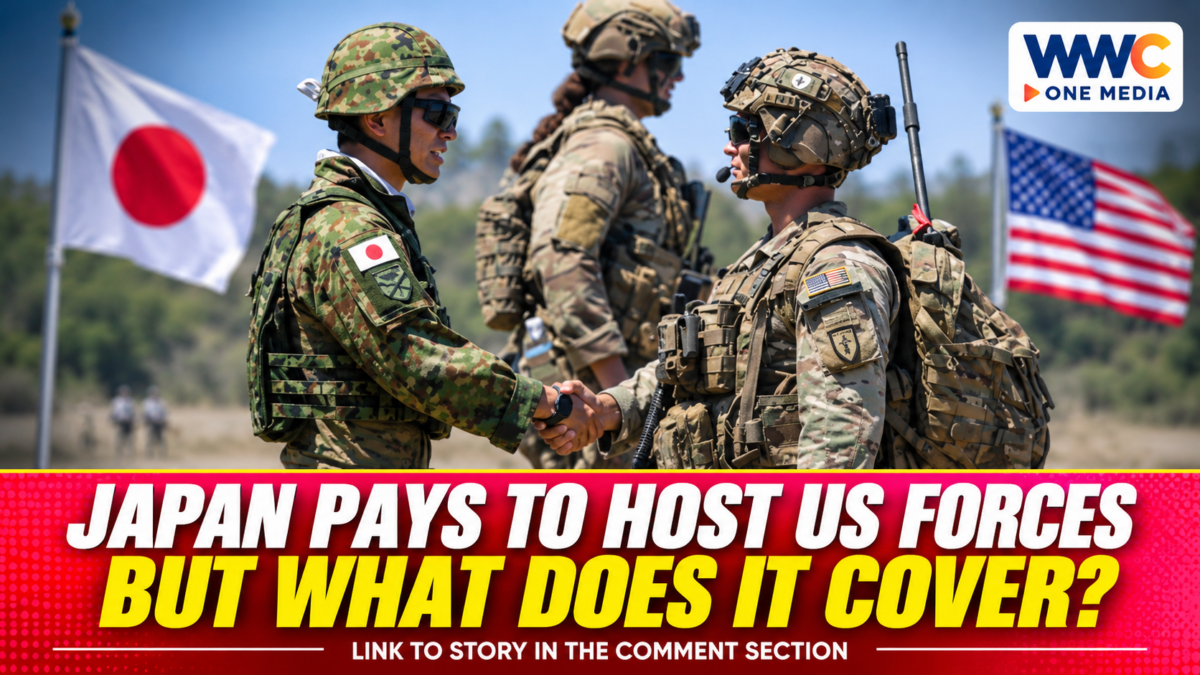
Japan’s host nation support is a long-running cost-sharing arrangement that helps pay for the presence and operation of United States forces stationed in the country. Under the current framework, Tokyo funds specified expenses such as local employee wages, utilities, training-related costs and improvements to facilities, while the agreement governing several of these payments is scheduled to run through Japanese fiscal year 2026.
The arrangement matters beyond Japan because the US military presence supports the wider American security posture in the Indo-Pacific, a region that includes the Philippines. But host nation support is not a single cheque handed to Washington: it is a collection of payments and programmes governed by bilateral agreements, budget decisions and the Japan-US Status of Forces Agreement.
What Japan’s host nation support actually pays for
Japan’s Ministry of Defense lists ¥216.3 billion for host nation support in its FY2026 defence budget. The allocation is divided into three main components:
- ¥157.7 billion under the New Special Measures Agreement, covering labour, utilities, training equipment and materials, and training relocation.
- ¥30.1 billion for the Facilities Improvement Program, including aircraft shelters and maintenance hangars.
- ¥28.6 billion for employer contributions to social insurance premiums for locally employed US Forces personnel, including health and pension insurance.
The figures describe different types of support rather than one unrestricted payment to the US government. They also show that Japan’s contribution includes costs connected to the people working at American facilities and the infrastructure needed to keep those installations operating. Ministry of Defense Japan+1
The budget separately lists ¥166.7 billion for facility rents and compensation, including payments for land used by defence facilities and compensation for reduced fishing income linked to training activities in certain waters.
That separate category should not automatically be added to the ¥216.3-billion host nation support figure without explaining the difference. Both relate to the broader financial burden associated with US military facilities, but the Japanese budget classifies them separately.
The agreement has a legal framework — and a deadline
The arrangement is built around two important instruments: the Japan-US Status of Forces Agreement (SOFA) and the Special Measures Agreement (SMA).
SOFA establishes the framework governing the presence and status of US forces in Japan. The SMA provides additional arrangements under which Japan assumes specified expenses, including labour, utilities and training-related costs.
Japan’s Foreign Ministry records that the latest SMA entered into force on April 1, 2022, after the two governments exchanged diplomatic notes confirming completion of their respective domestic procedures.
Its coverage runs from Japanese fiscal year 2022 through fiscal year 2026. Japan’s fiscal year ends on March 31, meaning the current agreement’s scheduled period runs through March 31, 2027. Ministry of Foreign Affairs of Japan+2
The agreement also specifies the number of locally employed workers whose labour costs Japan will cover: 23,178. That includes 3,893 workers in revenue-generating welfare facilities and 19,285 engaged in administrative work, headquarters activities and asset maintenance.
For utilities, Japan’s annual contribution under the agreement is set at ¥13.3 billion for fiscal years 2025 and 2026. The agreement also authorises up to ¥20 billion over its five-year period for the procurement of training equipment, materials and related services, subject to the required budget procedures. Ministry of Foreign Affairs of Japan+1
These provisions make the arrangement more specific than a general political promise to support the alliance. They identify categories of expenditure, workforce coverage and a defined period.
Why the arrangement matters beyond Japan
The US military presence in Japan is part of Washington’s wider security network in the Indo-Pacific. Japanese official policy describes the alliance as important not only to Japan’s defence but also to regional peace and stability.
The two governments also cooperate in areas such as maritime security, ballistic missile defence, cyberspace and outer space. Their defence relationship includes joint exercises and coordination between US forces and Japan’s Self-Defense Forces. Ministry of Foreign Affairs of Japan+1
For the Philippines, the arrangement is relevant because regional security cooperation increasingly involves overlapping partnerships rather than isolated bilateral relationships.
Manila and Tokyo, for example, have put their own defence logistics framework into effect through the Acquisition and Cross-Servicing Agreement. WWC previously explained what the Philippines-Japan logistics pact allows their armed forces to exchange.
Japan, the United States, Australia and India have also pursued cooperation through the Quad. Their recent Manila meeting discussed maritime surveillance and regional coordination, developments covered in WWC’s report on the Quad’s new maritime and technology plans.
These arrangements are not interchangeable. Japan’s host nation support finances specified costs connected to US forces stationed in Japan. The Philippines-Japan logistics agreement governs reciprocal supplies and services between their armed forces, while the Quad is a separate diplomatic partnership.
The distinction matters because regional security cooperation involves different legal commitments, financial responsibilities and participating countries.
The cost of hosting forces also affects local communities
The financial discussion is not limited to military readiness.
Japan’s official framework includes measures intended to address the effects of US military facilities on surrounding communities. These include facility improvements, soundproofing and other local-area measures, alongside rent and compensation arrangements.
Okinawa remains an important part of the public debate about the American military presence. Residents and local officials have raised concerns about the effects of military facilities, including aircraft noise, accidents and incidents involving service personnel.
Those concerns form part of the wider policy challenge for Tokyo: maintaining the security benefits it associates with the alliance while responding to the communities that live near military installations.
WWC has previously examined public protests and concerns surrounding the US military presence in Okinawa. That local dimension is relevant to host nation support because the sustainability of the arrangement also depends on how its effects are managed beyond military headquarters.
The Japanese government’s budget documents identify community-related measures separately from the core host nation support allocation. This separation is important when assessing how much public money goes towards supporting US forces and how much is directed towards mitigating the impact of military facilities on local residents.
What happens next
The current SMA covers fiscal years 2022 through 2026, with its scheduled period ending on March 31, 2027. The next phase will depend on what Japan and the United States agree for the period that follows.
Any successor arrangement will need to clarify which expenses Japan will continue to cover, how much funding will be allocated and whether the existing categories will change.
For Japanese taxpayers, the issue is one of public spending and accountability. For the alliance, it concerns the resources required to maintain the US military presence and coordinate defence activities. For neighbouring countries, including the Philippines, it is part of the wider question of how regional security partnerships are funded and sustained.
The central point is that host nation support is not simply a payment for permission to station troops. It is a defined cost-sharing system covering people, utilities, training and infrastructure — with a legal framework and a timetable that will require renewed attention before the current agreement expires.
Frequently asked questions
1. What is Japan’s host nation support?
It is Japan’s cost-sharing arrangement for specified expenses connected to the stationing and operation of US forces in Japan. It covers items such as labour, utilities, training-related costs and facility improvements.
2. How much does Japan allocate for host nation support in FY2026?
Japan’s Ministry of Defense lists ¥216.3 billion in its FY2026 budget for host nation support. Facility rents and certain compensation payments are listed separately.
3. Does Japan pay all expenses of US military bases?
No. The arrangement covers specified costs under the Japan-US security framework. It does not mean Japan assumes every expense incurred by the US military.
4. When does the current Special Measures Agreement expire?
The current agreement covers Japanese fiscal years 2022 through 2026. Its scheduled period ends on March 31, 2027.
5. Why should the Philippines follow Japan’s host nation support arrangement?
Japan’s agreement is part of the wider US security presence in the Indo-Pacific. Its funding and future terms are relevant to understanding the regional security environment in which the Philippines also maintains defence partnerships.