
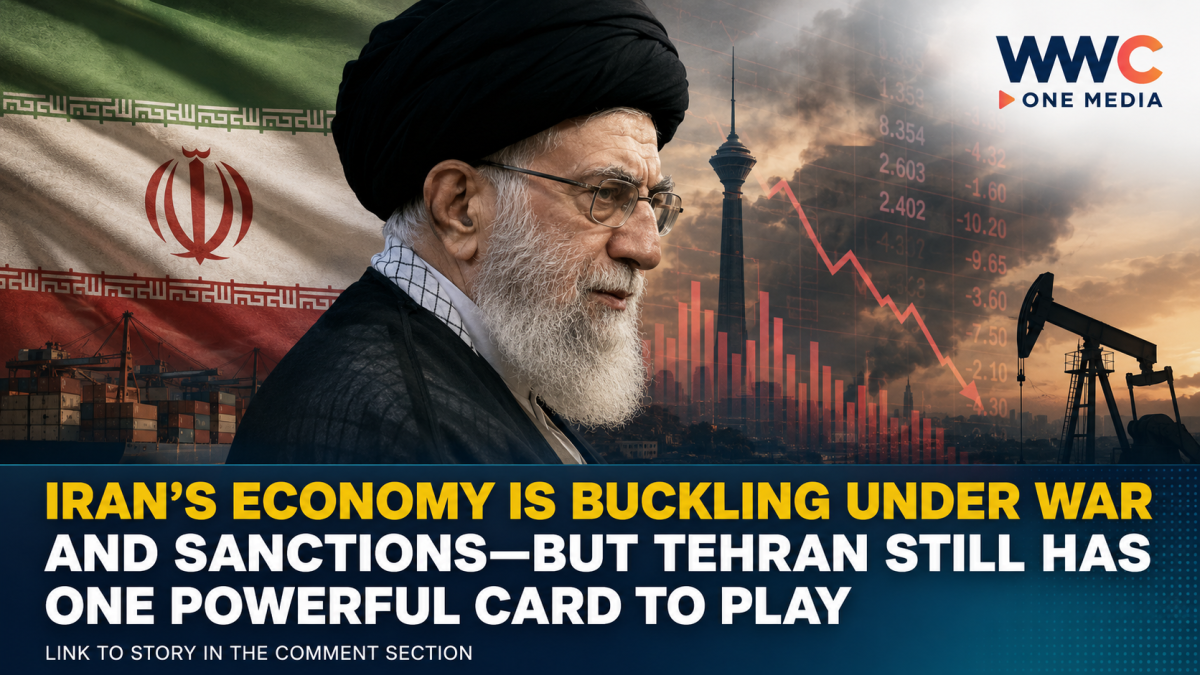
Iran is facing mounting economic pain as months of war and a tightening U.S. sanctions campaign squeeze trade, fuel inflation and put increasing pressure on ordinary citizens. But despite the deepening crisis, Tehran is signaling that it is not ready to back down.
Iranian President Masoud Pezeshkian has acknowledged the growing economic toll, saying the country’s foreign trade has fallen by roughly 35% amid U.S. sanctions and a naval blockade affecting Iranian ports, according to Reuters. The country’s annual inflation rate reached 66% in July, intensifying concerns over the rising cost of food, jobs and essential goods.
The economic warning comes as the conflict with the United States reaches its six-month mark and Washington ramps up efforts to further isolate Tehran from international markets.
Iran’s Supreme Leader Ayatollah Mojtaba Khamenei has called on the government to confront inflation, unemployment and market instability, highlighting the seriousness of the challenges facing the country. Iranian officials, however, continue to publicly project defiance and insist that economic pressure will not force Tehran into submission.
Prices Rise as Iran’s Currency Takes Another Hit
The strain is being felt beyond government statistics.
The Iranian rial recently fell to a new record low on informal currency markets, while years of sanctions and the latest conflict have further weakened household purchasing power. The Associated Press reported that prices of key staples have surged sharply since the war began, while the International Monetary Fund has projected a significant contraction in Iran’s economy.
For millions of Iranians, the economic crisis is increasingly becoming a daily reality—one defined by higher prices, a weaker currency and uncertainty over what comes next.
Washington Tightens the Economic Squeeze
The Trump administration has intensified its campaign against Iran, warning countries and businesses that continued commercial ties with Tehran could expose them to U.S. penalties.
Washington has already targeted Iran-linked entities and moved against financial channels accused of facilitating business with Tehran. Reuters reported that the latest pressure campaign has extended beyond Iran itself, demonstrating Washington’s willingness to target international institutions and networks connected to Iranian commerce.
However, the strategy faces a major challenge: Iran still has important economic partners, particularly China.
AP reported that China remains Iran’s biggest oil customer and a crucial trading partner, while countries across the region face difficult choices as they try to balance economic ties with Tehran against the risk of secondary U.S. sanctions. Alternative trade routes may provide Iran with some relief, but replacing lost access to major markets and financial networks will be far more difficult.
The Strait of Hormuz Remains Iran’s Biggest Leverage
Even as its economy comes under increasing pressure, Iran retains one major strategic advantage: the Strait of Hormuz.
The waterway is one of the world’s most important energy shipping routes, and disruptions there can quickly affect global oil markets and international trade. U.S. officials have said they are working to restore navigation, while Iranian authorities continue to assert influence over the strategic passage. Shipping activity through the strait has remained significantly disrupted, underlining the conflict’s potential consequences far beyond Iran’s borders.
That leverage gives Tehran a powerful bargaining tool—but it also raises the stakes for the global economy if tensions escalate further.
Diplomacy Is Still on the Table—For Now
Despite the threats and growing economic pressure, diplomatic channels have not completely closed.
Qatar and Pakistan have been involved in efforts to encourage renewed dialogue after a short-lived June agreement temporarily eased tensions and allowed limited Iranian oil sales. Iranian officials have described recent diplomatic discussions as constructive, even as the broader political and military standoff continues.
Iran’s government has also signaled that it is focusing on stabilizing markets, creating jobs, supporting domestic production and reducing dependence on the U.S. dollar as it attempts to withstand the latest wave of pressure.
The Bigger Question: Who Blinks First?
Iran is now confronting a difficult reality: war is damaging its economy while sanctions are making recovery even harder. Washington appears determined to increase the financial cost of Tehran’s resistance, but Iran’s ability to maintain alternative trade relationships—and its strategic influence over the Strait of Hormuz—means the outcome is far from certain.
The pressure is growing. Inflation is soaring. Trade is shrinking.
But with diplomacy still alive and one of the world’s most critical waterways hanging in the balance, the question is no longer just whether Iran’s economy can endure—it is who will be forced to change course first.
Leave a Reply