
OSAKA, Japan — The familiar paper train ticket that passengers have been feeding into Osaka Metro gates for decades could soon become a thing of the past.
Osaka Metro is preparing to phase out magnetic tickets around fiscal 2031 and replace them with tickets carrying QR codes, marking another major step in Japan’s shift toward digital and contactless transportation. The plan is expected to be included in the company’s upcoming medium-term management plan.
The move would not necessarily mean that paper tickets disappear altogether. Instead, Osaka Metro is considering issuing paper tickets printed with QR codes, allowing passengers to hold the code over a compatible reader rather than insert the ticket into a conventional magnetic gate.
The biggest change is happening at the gates
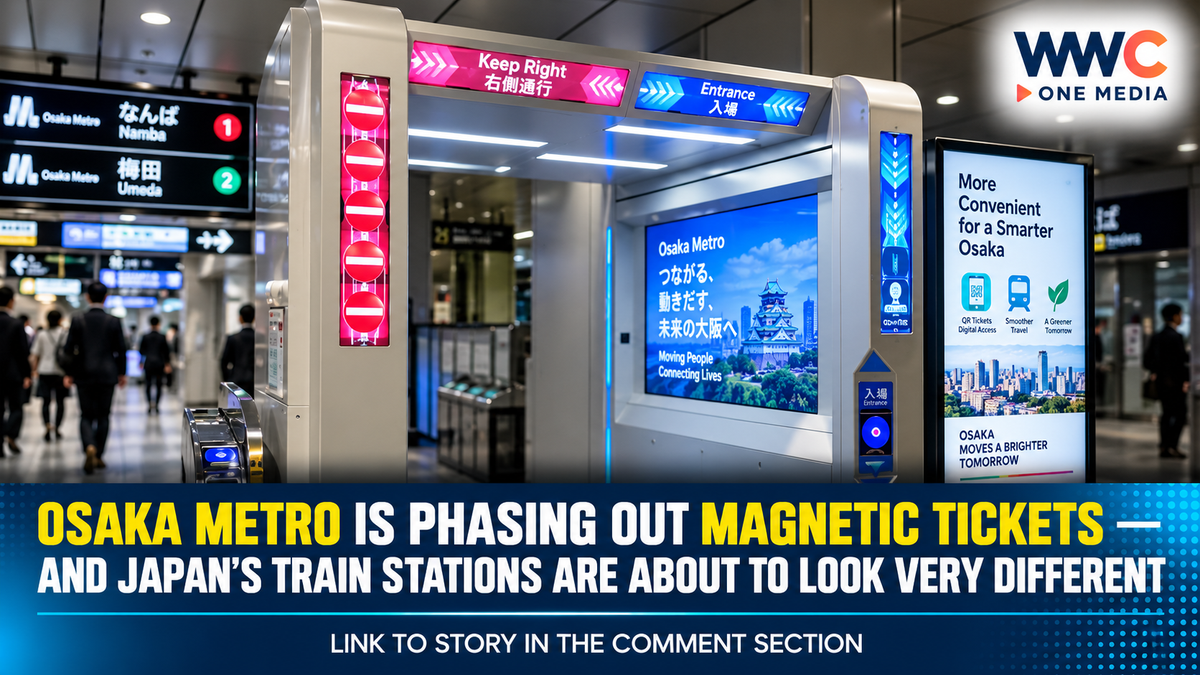
Osaka Metro has already installed QR-compatible ticket gates across its network, meaning the infrastructure needed for the transition is largely in place.
The system already allows passengers using Osaka Metro digital tickets to display a QR code on a smartphone and scan it at the gate when entering and exiting.
Under the planned transition, the same basic technology could be used for printed QR tickets.
That means passengers who still prefer physical tickets may not necessarily have to switch to a smartphone. Instead, the magnetic strip would disappear while the paper ticket itself could remain.
Why is Osaka Metro getting rid of magnetic tickets?
There are several reasons.
Magnetic tickets require mechanical systems inside fare gates to accept, transport and read the ticket. That equipment can be more complicated to maintain, while tickets can also become stuck in the machinery.
Osaka Metro’s planned replacement with QR-compatible gates is expected to reduce maintenance requirements and operating costs. The magnetic material used in conventional tickets also makes recycling more difficult.
The shift is therefore about more than convenience.
It is also an attempt to simplify the technology behind the gates while reducing long-term maintenance costs.
Osaka Metro is already living in the QR era
The planned abolition of magnetic tickets may sound like a dramatic technological leap, but Osaka Metro has already been using QR-based ticketing.
Its digital ticket system allows passengers to purchase tickets through the e METRO app or the SURUTTO QRtto platform and scan their QR codes at compatible gates.
Osaka Metro also sells digital passes covering its subway network, including various one-day and multi-day options.
For example, the company’s current digital-ticket lineup includes Osaka Metro day passes and 26-hour and 48-hour tickets, with passengers using QR codes to enter and exit the system.
The network has also expanded QR-ticket cooperation beyond Osaka Metro itself.
In 2026, Osaka Metro and other Kansai railway operators continued offering the ONE KANSAI QR Ticket, allowing travelers to purchase certain regional transportation passes digitally and use participating rail networks during their validity period.
Face recognition could be the next step
But QR codes may not be the final destination.
Osaka Metro is simultaneously expanding face-recognition ticket gates, allowing registered passengers to pass through without physically presenting a ticket or card.
The company’s system links a registered facial image with a digital ticket. When the passenger approaches the gate, the camera compares the person’s face with the registered information and allows them to pass.
According to reporting on Osaka Metro’s upcoming plans, the company currently has face-recognition gates at 130 of its 134 stations and intends to install them at the remaining four stations during fiscal 2027.
That means Osaka’s future transportation system could offer several ways to get through a station:
QR code.
Digital ticket.
Face recognition.
And, for now, traditional magnetic tickets.
Osaka is not alone
The move reflects a much broader transformation taking place across Japan’s railway industry.
East Japan Railway Co. (JR East), for example, announced that it will discontinue magnetic short-distance tickets on conventional lines and transition to QR-code tickets beginning in spring 2027. The initial change covers trips of up to 100 kilometers.
JR East said QR tickets would also eliminate ticket jams inside automated gates and reduce the environmental impact associated with the magnetic layer on conventional tickets.
Other major railway operators have also announced plans to move away from magnetic ticket technology, suggesting that the change is becoming an industrywide trend rather than an isolated Osaka Metro experiment.
What it means for tourists
For international visitors, the transition could ultimately make navigating Osaka’s transportation system easier.
QR-based tickets can be purchased digitally before a journey, reducing the need to line up at ticket machines. Osaka Metro already promotes digital tickets that can be purchased through its app or online platforms.
However, travelers should pay attention to the specific validity and coverage of each QR ticket.
Not every Osaka Metro digital ticket covers other railway operators, and some passes have specific validity periods or route restrictions.
So while QR technology may make the physical act of entering a station easier, passengers will still need to make sure they have purchased the correct ticket for their route.
A quiet revolution at Japan’s train gates
Japan’s railway system has long been associated with precision, paper tickets and highly automated fare gates.
Now, that familiar system is being redesigned from the inside out.
The change from magnetic tickets to QR codes may seem small to passengers, but it represents a significant shift in the technology supporting Japan’s massive urban rail networks.
Osaka Metro is effectively preparing for a future in which the ticket no longer needs to be read mechanically — it simply needs to be recognized digitally.
And with QR codes, mobile tickets and facial recognition already expanding, the biggest question may no longer be whether magnetic tickets will disappear.
It’s how long passengers will need a physical ticket at all.




Leave a Reply