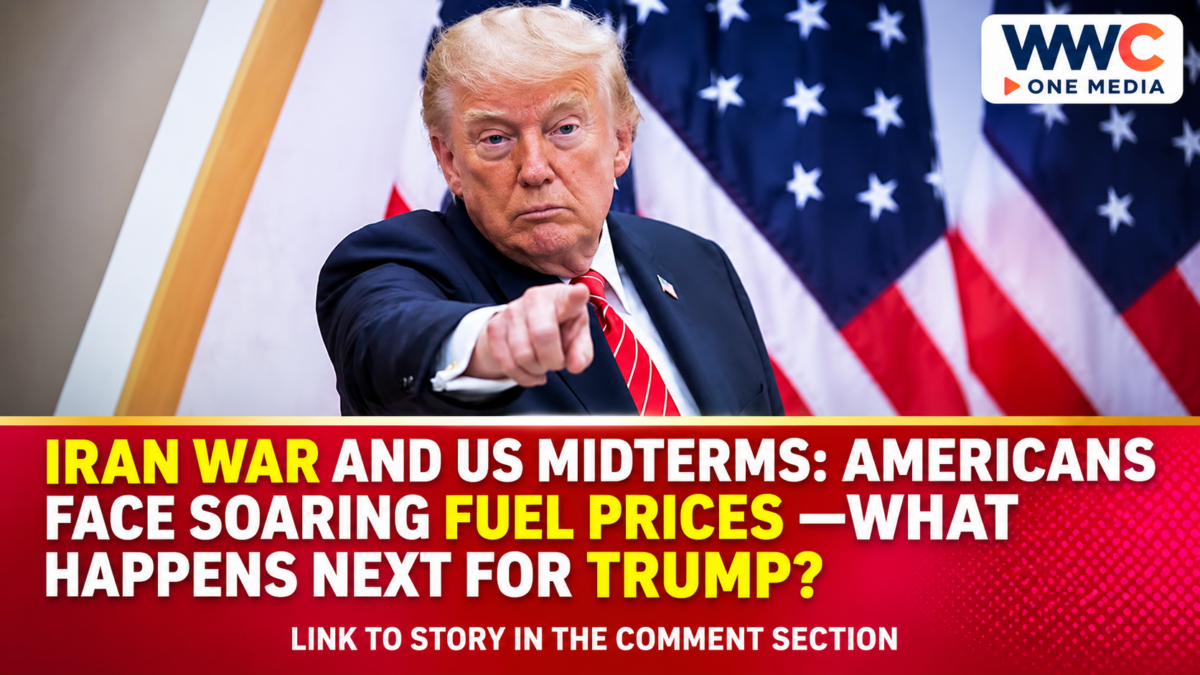
WASHINGTON, United States — The Iran war impact has extended far beyond the Middle East, placing American household finances, energy security and Washington’s foreign policy under growing scrutiny following the Nov. 3, 2026, US midterm elections.
A nationwide survey conducted immediately before the elections found that 56% of American adults prioritised preventing higher domestic prices, even if the United States failed to fully achieve its military objectives in Iran.
Meanwhile, US gasoline prices increased by 37.4% year on year in October, highlighting the economic pressures confronting households.
For President Donald Trump’s administration, the challenge is no longer limited to pursuing its objectives overseas. It must also confront domestic concerns about affordability and the consequences of prolonged international conflict.
Iran War Impact: Americans Prioritise Household Finances
The economic consequences of the conflict featured prominently in public opinion ahead of the congressional elections.
A nationwide survey of 1,000 American adults conducted between Oct. 29 and Nov. 2 found that 56% preferred containing domestic prices over fully achieving US military objectives in Iran.
Only 22% prioritised those military objectives despite the possibility of higher prices.
The results highlight an important distinction between Washington’s strategic priorities and the immediate financial concerns of many American households.
Public attitudes also differed significantly along political lines.
Among Republican respondents, 50% prioritised achieving military objectives, compared with 32% who favoured preventing higher prices.
The findings indicate that Americans were not united in their assessment of the conflict, although affordability emerged as a prominent concern across the broader population.
The Trump administration also faces economic policy challenges beyond the Middle East, including its proposed US tariffs and their potential implications for Asian trade agreements.
Rising Gasoline Prices Intensify Economic Pressure
The latest available US consumer price figures illustrate the financial environment surrounding the November elections.
Consumer prices increased by 0.4% in October on a seasonally adjusted monthly basis, following a 0.6% increase in September.
Energy prices rose by 0.7% in October after increasing by 5.2% in the previous month.
Gasoline recorded an additional monthly increase of 1% in October, bringing its annual price increase to 37.4%.
Food and housing costs also increased during the month, demonstrating that household affordability concerns extended beyond fuel expenses.
The economic figures do not establish that the Iran war caused every increase in consumer prices. Nevertheless, the disruption of Middle Eastern energy supplies provides a significant international context for understanding fuel market pressures.
For households dependent on personal vehicles and businesses reliant on transportation, prolonged energy volatility presents additional financial uncertainty.
Strait of Hormuz Remains Central to Global Energy Security
The economic consequences of the conflict are particularly significant because of the strategic importance of the Strait of Hormuz.
Before the conflict, approximately 20 million barrels of petroleum passed through the waterway daily in 2025, accounting for around one-quarter of global seaborne oil trade.
Approximately 80% of those shipments were destined for Asia.
International energy data also identify Japan and South Korea as particularly dependent on crude oil transported through the Strait.
Although alternative export infrastructure exists, its capacity remains limited relative to the volume historically transported through the waterway.
The disruption has reinforced the importance of diversified energy supplies and alternative production opportunities, including Norway’s Arctic oil expansion and its wider energy security implications.
For Asia-Pacific economies, the issue extends beyond American domestic politics. International fuel prices and shipping costs remain important considerations for businesses, consumers and policymakers across the region.
Oil Prices Remain Vulnerable Despite Supply Recovery
Oil shipments through major Middle Eastern maritime chokepoints increased by 19% in the third quarter of 2026 compared with the preceding quarter.
Nevertheless, Brent crude oil averaged US$124 per barrel in October, its highest monthly average since the conflict began.
The November US energy outlook projected that Brent would average US$99 per barrel in December and US$86 per barrel in 2027.
These figures are forecasts rather than guaranteed future prices.
Renewed supply disruptions or changing market conditions could alter those projections.
The relationship between improving shipment volumes and persistently elevated oil prices illustrates the complexity of restoring stability to international energy markets.
For Asia’s manufacturing and logistics industries, the situation also reinforces the strategic importance of resilient shipping networks, including Hong Kong’s efforts to strengthen international maritime partnerships.
Can Congress Change Washington’s Iran War Strategy?
The midterm elections have renewed attention on the constitutional relationship between Congress and the presidency.
Under the US Constitution, Congress possesses legislative authority, including powers relating to military funding and declarations of war, while the president serves as commander-in-chief of the armed forces.
The pre-election public opinion survey found that 53% of respondents wanted Congress to have the final decision on ending US military action against Iran.
The result indicates considerable public interest in legislative involvement in the conflict.
However, a congressional election does not automatically terminate military operations or establish a new foreign policy.
Any changes involving military authorisations, government funding or restrictions on executive action would depend on subsequent legislative and administrative developments.
The incoming Congress could become an important arena for debate over the conflict’s objectives, financial costs and potential diplomatic alternatives.
What Happens Next?
Washington faces interconnected challenges involving national security, domestic affordability and international energy stability.
A reduction in geopolitical tensions could improve conditions for global energy markets, although the extent and timing of any improvement remain uncertain.
Continued disruption, meanwhile, could expose households and businesses to additional economic pressure.
The midterm election environment demonstrates how closely foreign policy and domestic financial concerns can intersect.
For the Trump administration, the central question is whether its future approach to Iran can address security objectives while responding to public concerns about the cost of living.
The answer could have consequences not only for American politics but also for energy-importing economies throughout the Asia-Pacific.
Frequently Asked Questions
How did the Iran war influence the 2026 US midterm elections?
Pre-election polling found that 44% of surveyed US adults would be less inclined to support a congressional candidate who backed the war. However, polling alone cannot establish that the conflict determined the election outcome.
How much did US gasoline prices increase?
The gasoline price index increased by 37.4% between October 2025 and October 2026.
Why is the Strait of Hormuz important to Asia?
Approximately 80% of the petroleum transported through the Strait in 2025 was destined for Asian markets.
Can Congress end the Iran war?
Congress possesses significant legislative and funding powers relating to military operations. However, ending the conflict would involve legal, political and diplomatic considerations.
Will global oil prices decline in 2027?
The November US energy outlook projected an average Brent crude price of US$86 per barrel in 2027. Actual prices will depend on supply, demand and geopolitical developments.