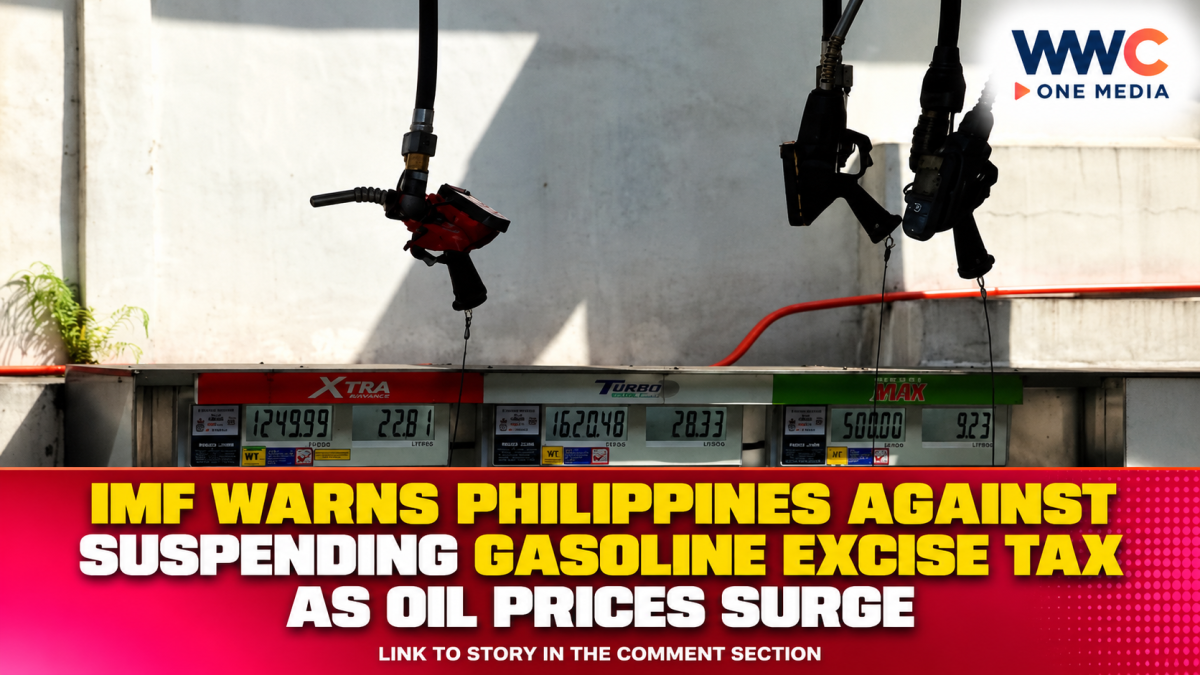
The International Monetary Fund is cautioning the Philippine government against suspending the excise tax on gasoline, warning that broad fuel-tax relief could weaken government revenues at a time when Manila is also trying to bring down its budget deficit.
The warning comes as the Philippines faces renewed pressure from sharply higher global oil prices linked to tensions in the Middle East. The government has already suspended excise taxes on liquefied petroleum gas and kerosene, while officials are weighing additional measures to protect households and businesses from rising fuel costs.
The IMF’s position forms part of its broader assessment of Philippine fiscal policy. The Fund has urged Manila to place greater emphasis on revenue mobilization as it works toward reducing the budget deficit, including by broadening the tax base and improving the design of tax incentives.
IMF mission chief Andrea Pescatori said the composition of the Philippines’ medium-term fiscal adjustment should shift toward stronger revenue collection to protect priority social spending and create room for public investment. The IMF has projected the country’s budget deficit at 5.4% of GDP in 2026, with further reductions expected in the following years.
The concern over gasoline comes as the government considers how far it can go in cushioning consumers from the energy shock without creating a significant hole in public finances.
Under legislation enacted earlier this year, the president can temporarily suspend or reduce petroleum excise taxes when the average Dubai crude price reaches at least US$80 a barrel for one month. Any suspension or reduction can generally last for no more than three months at a time, subject to the conditions established by law.
President Ferdinand Marcos Jr. used that authority in April to suspend excise taxes on LPG and kerosene for three months after Dubai crude prices breached the statutory threshold. The measure excluded gasoline and diesel.
The latest relief package is already carrying a fiscal cost. Customs Commissioner Ariel Nepomuceno said the government could lose at least ₱700 million a month from the current suspension of LPG and kerosene excise taxes. Officials have indicated that suspending taxes on gasoline and diesel would result in substantially larger revenue losses.
Government officials have also been examining alternatives to a broad fuel-tax suspension. These include targeted assistance for transport workers and other sectors directly affected by high fuel prices, allowing support to be directed toward groups facing the greatest immediate pressure.
The government has previously announced fuel subsidies for drivers and operators, toll-related assistance, transport-terminal fee waivers and discounted fares as part of efforts to reduce the impact of expensive fuel without transferring the entire cost to commuters.
Fuel taxes are particularly important to the government’s fiscal position because petroleum products generate both excise-tax and value-added-tax revenues. Cutting one component can provide relief at the pump, but it also reduces funds available for government programs and debt management.
The debate has therefore become a balancing act between short-term relief and fiscal sustainability. Consumers and businesses are facing higher transportation and operating costs, while the government is under pressure to prevent the energy shock from feeding more strongly into inflation.
The IMF has also advised the Philippines to broaden its tax base and avoid tax amnesties, arguing that stronger and more predictable revenue collection is important to the country’s medium-term fiscal adjustment.
For now, the government has not adopted a broad suspension of gasoline excise taxes. Officials continue to assess the economic and fiscal consequences of additional fuel relief as international oil prices remain elevated.
The bigger issue is how Manila can provide meaningful protection from the oil shock without sacrificing the revenue needed to finance public services, investment and the country’s deficit-reduction plans.