
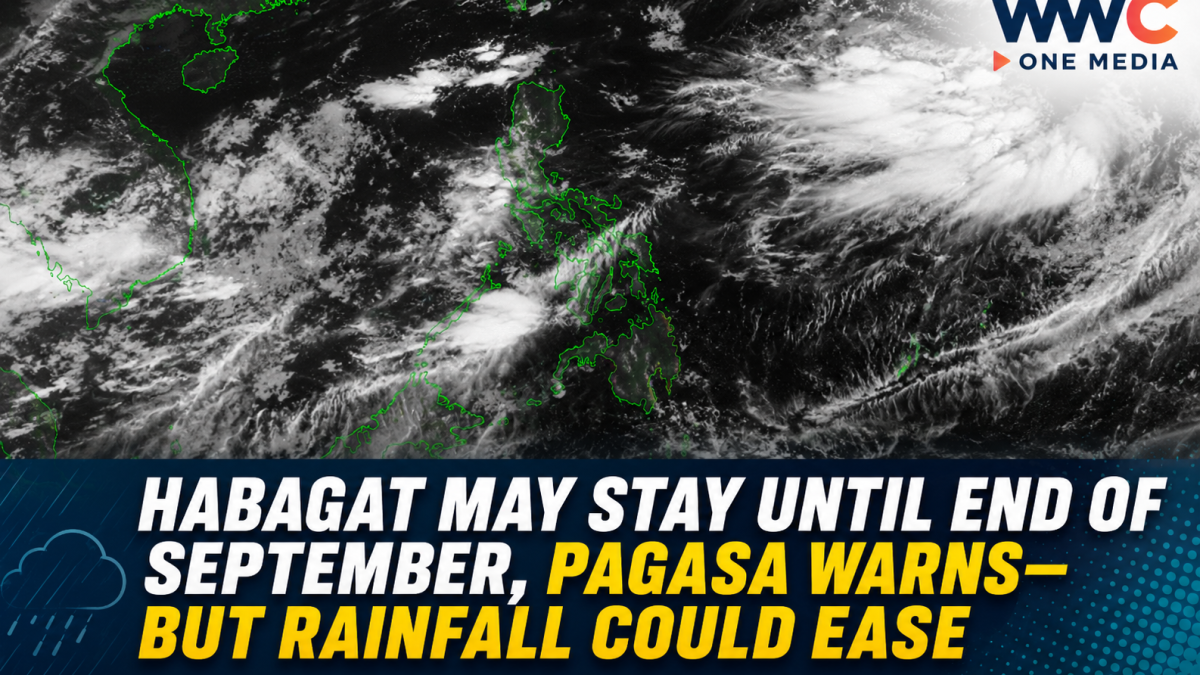
MANILA, Philippines — Filipinos should not expect the southwest monsoon or “Habagat” to disappear anytime soon.
The Philippine Atmospheric, Geophysical and Astronomical Services Administration (PAGASA) said Friday that Habagat is likely to continue affecting the country until the end of September, although rainfall is expected to be generally less intense than what the country experienced in recent weeks.
PAGASA Administrator Nathaniel Servando said the relatively lower rainfall outlook is partly because tropical cyclones north of the Philippines are currently weak and far from the country.
But that does not mean the rainy season is over.
Western sections of Luzon, Occidental Mindoro and western Visayas could still experience above-normal rainfall as the southwest monsoon continues to dominate weather conditions.
Heavy rain can still happen
Despite the expectation of generally lighter rainfall, PAGASA cautioned that episodes of extremely heavy rain remain possible.
Servando said rainfall on the scale of the extraordinary downpour recorded in Quezon City on Aug. 17 could happen again during the Habagat season.
PAGASA’s Science Garden Station in Quezon City recorded 201.7 millimeters of rain in just five hours, from 9 a.m. to 2 p.m. that day.
Servando attributed the possibility of another extreme rainfall event to the continuing Habagat season and the possibility of two to three tropical cyclones developing or affecting the region this month.
That distinction is important: less rain overall does not mean zero risk of sudden, intense rainfall.
PAGASA’s latest weather picture
PAGASA’s Sept. 4 forecast shows the southwest monsoon continuing to affect Luzon and Visayas.
Zambales and Bataan were forecast to experience monsoon rains, with possible flooding and landslides in vulnerable areas. Occasional rains were also expected over Metro Manila, Pangasinan, Pampanga, Tarlac, Bulacan, Rizal, Cavite, Batangas and Occidental Mindoro.
Scattered rains and thunderstorms were forecast in several other parts of Luzon and Western Visayas.
PAGASA’s special outlook also indicates that Habagat-related rains will continue through the weekend, particularly over western and southern portions of Luzon and parts of Western Visayas.
Why September remains a critical month
The latest outlook comes after weeks of weather disturbances in which the southwest monsoon contributed to prolonged periods of heavy rainfall.
The Cordillera Regional Disaster Risk Reduction and Management Council recently reminded residents in hazard-prone areas to remain alert, particularly those living near rivers, flood-prone communities and landslide-susceptible slopes.
Authorities also advised residents to reconsider non-essential travel during periods of severe weather.
The continuing monsoon means that even when the weather temporarily improves, another surge of moisture can still produce intense rainfall in affected areas.
This is particularly important for communities that have already experienced flooding or landslides because saturated ground can increase the risk of additional hazards.
And tropical cyclones remain part of the equation
PAGASA expects two to three tropical cyclones this September, according to Servando.
That does not mean all of them will directly hit the Philippines. However, tropical cyclones can influence the southwest monsoon and potentially enhance rainfall even when their centers remain far from the country.
This is why weather conditions can change rapidly during the Habagat season.
PAGASA’s Sept. 4 bulletin also reported a tropical depression outside the Philippine Area of Responsibility, approximately 1,770 kilometers east of extreme Northern Luzon, moving northwestward.
The bottom line for Filipinos
The latest forecast offers a mixed picture.
The good news: rainfall is expected to be relatively less than the extreme levels seen during the past several weeks.
The warning: Habagat is expected to persist through September, and western Luzon, Occidental Mindoro and western Visayas may still receive above-normal rainfall.
And because PAGASA says two to three tropical cyclones could develop this month, short periods of extremely heavy rain remain possible even during an overall trend toward less rainfall.
For residents in flood- and landslide-prone communities, the message from authorities remains straightforward: do not mistake a temporary improvement in weather for the end of the rainy-season threat.
Stay updated with official PAGASA bulletins and follow evacuation or safety instructions issued by local disaster-response authorities.
This September, the rain may ease—but Habagat is not finished yet.



Leave a Reply