NEW YORK / SINGAPORE — November 3, 2026. Gold prices staged a dramatic recovery in global financial markets after fresh hopes for a diplomatic breakthrough between the United States and Iran sent oil prices sharply lower, eased inflation concerns, and revived demand for precious metals.
The rebound comes after weeks of turbulence that pushed bullion to its weakest levels in approximately one year, raising questions about whether gold’s historic rally had finally lost momentum.
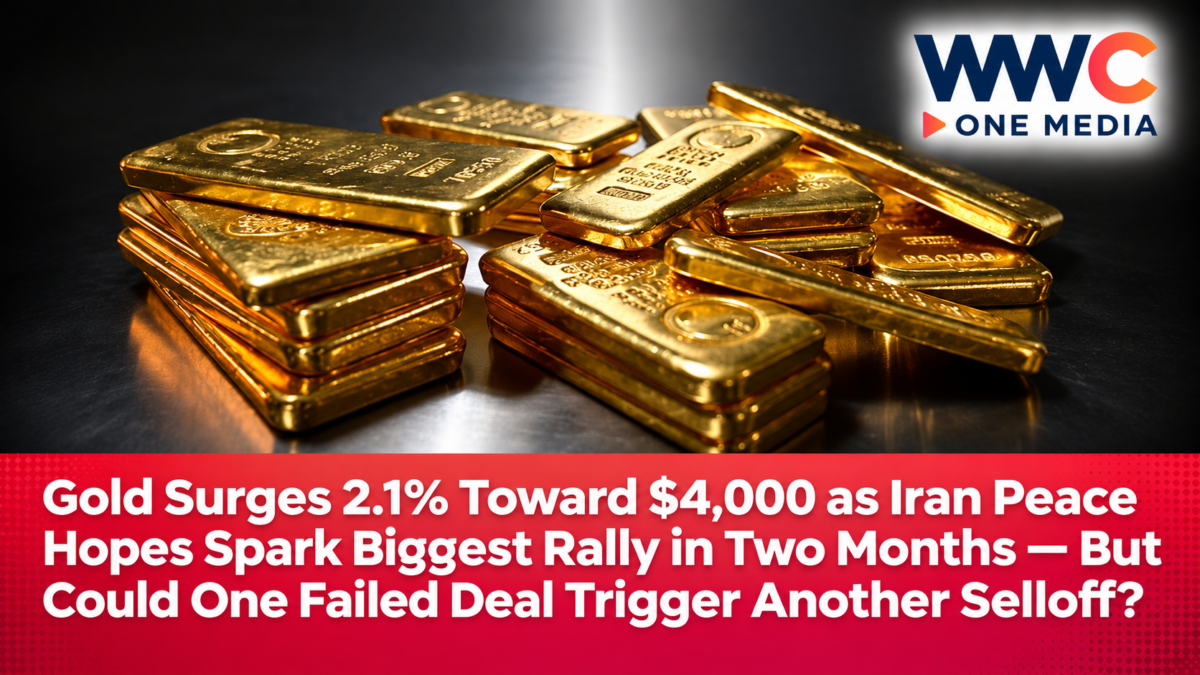
According to Reuters, spot gold jumped 2.1% to approximately US$3,954.41 per troy ounce on November 2, while US gold futures for December delivery advanced 1.8% to US$3,969.60.
The precious metal’s recovery followed an approximately 8% decline in crude oil prices amid renewed diplomatic efforts to end the US–Iran conflict.
Bloomberg reported on November 3 that gold was holding on to its biggest advance in two months as investors assessed the possibility of an agreement.
But the market’s optimism remains fragile.
No final peace agreement has been confirmed, disagreements over Iran’s nuclear program remain unresolved, and the possibility of renewed military escalation continues to threaten financial markets.
The biggest question is whether gold’s rebound signals the beginning of another powerful rally — or merely a temporary recovery before the next wave of geopolitical uncertainty.
Gold Prices Rebound After a Brutal October Selloff
Gold’s latest advance follows an exceptionally difficult period for precious metals.
According to The Wall Street Journal, December gold futures fell 3.29% on October 30 to settle at approximately US$3,885.70 per ounce, their lowest closing level in about a year.
Gold futures lost approximately 6.49% during October as investors responded to higher energy prices, stubborn inflation, and expectations that the US Federal Reserve might maintain restrictive monetary policy.
The selloff was particularly striking because gold is traditionally considered a safe-haven asset during periods of geopolitical instability.
Yet the prolonged Iran conflict has created an unusual environment.
Instead of consistently supporting higher gold prices, the war has contributed to an energy-price shock that intensified inflation concerns and strengthened expectations of higher interest rates.
Those pressures have weighed on gold because the metal pays no interest.
The recent decline also coincided with significant weakness in technology and artificial intelligence stocks.
Market analysts suggested that margin calls and broader liquidity pressures prompted some investors to sell gold alongside other assets.
Gold’s latest recovery therefore represents an important reversal.
But prices remain significantly below the levels reached earlier in 2026.
Why Iran Peace Talks Are Suddenly Helping Gold
The connection between diplomatic negotiations and higher gold prices may appear counterintuitive.
During international conflicts, investors often purchase gold because they consider it a store of value during periods of financial uncertainty.
Normally, an easing of geopolitical tensions might reduce that safe-haven demand.
But the ongoing Iran conflict has created a different market dynamic.
Military disruptions involving the Strait of Hormuz have contributed to higher energy prices and inflation concerns.
Higher inflation can encourage central banks to raise interest rates or keep borrowing costs elevated for longer.
That makes income-producing assets, including government bonds, relatively more attractive than gold.
When hopes for a peace agreement cause oil prices to decline, the inflation outlook can improve.
Investors may consequently anticipate less pressure on central banks to raise interest rates.
That can support gold prices even as geopolitical tensions ease.
The latest rally illustrates how gold is being influenced not only by fear and uncertainty, but also by expectations about inflation, interest rates, and currency movements.
US–Iran Negotiations Gain Momentum, but Major Obstacles Remain
Diplomatic efforts to end the conflict have intensified.
According to The Associated Press, US Vice President JD Vance said Washington and Tehran had engaged in constructive discussions about a possible agreement.
The negotiations involve complex issues, including Iran’s nuclear program, maritime security, and restrictions affecting the Strait of Hormuz.
Qatari mediators have reportedly participated in discussions intended to establish a framework for reducing hostilities.
One of the central proposals involves arrangements that could allow commercial vessels to resume safer passage through the Strait of Hormuz.
In return, Iran has sought relief from restrictions affecting its ports and maritime trade.
However, substantial disagreements remain.
Washington wants verifiable commitments regarding Iran’s nuclear activities.
Iran, meanwhile, has sought assurances that the United States will honor any negotiated agreement.
The possibility of additional military operations remains a significant risk.
Israeli officials have also expressed concerns about the terms of a potential settlement.
Despite diplomatic progress, the negotiations have not produced a confirmed comprehensive peace agreement.
For financial markets, that uncertainty means the latest gold rally remains vulnerable to sudden reversals.
Why the Strait of Hormuz Matters to Gold and Oil Markets
At the center of the crisis is the Strait of Hormuz, one of the world’s most strategically important maritime passages.
The narrow waterway connects the Persian Gulf with international shipping routes and has historically carried approximately one-fifth of global oil and liquefied natural gas supplies.
Disruptions to shipping have raised transportation costs, complicated petroleum exports, and increased uncertainty surrounding international energy supplies.
WWC ONE MEDIA previously examined the danger in its report, Iran Says It Struck an Oil Tanker in the Strait of Hormuz — Now the World Is Watching What Happens Next.
That report detailed claims of tanker attacks and the severe reduction in commercial traffic through the waterway.
The economic consequences extend far beyond oil-producing countries.
When petroleum supplies are disrupted, businesses face higher fuel and transportation costs.
Those increases can eventually contribute to consumer price inflation.
Central banks may then respond by maintaining higher interest rates.
For gold, this creates a complicated relationship in which geopolitical conflict can simultaneously increase demand for protection and strengthen monetary-policy pressures that hurt bullion prices.
A credible agreement restoring energy flows could help reverse some of those pressures.
Oil Prices Fall 8% as Traders Anticipate a Possible Breakthrough
Oil markets reacted sharply to the latest diplomatic developments.
Reuters reported that crude prices dropped approximately 8% as investors assessed the possibility of progress toward ending the conflict.
The decline was important because elevated energy prices have been a major source of inflation concerns throughout 2026.
A sustained reduction in crude prices could provide relief to energy-importing economies.
It could also lower pressure on manufacturers, transport operators, airlines, and other businesses heavily dependent on petroleum products.
However, temporary market declines do not necessarily translate immediately into lower consumer prices.
Fuel costs depend on several factors, including crude oil benchmarks, refining expenses, currency movements, transportation costs, and government taxes.
WWC ONE MEDIA previously examined the opposite market scenario in Oil Prices Hit Six-Week High as Middle East Conflict Deepens Supply Shock Fears.
The earlier report showed how military escalation around the Gulf pushed oil prices higher as traders anticipated possible supply disruptions.
The latest decline demonstrates how quickly commodity markets can reverse when diplomatic expectations change.
But those expectations remain highly sensitive to new developments.
The Federal Reserve Could Determine Gold’s Next Major Move
Beyond geopolitical developments, investors are closely watching the US Federal Reserve.
Interest-rate expectations remain one of the most important drivers of gold prices.
Unlike bank deposits or bonds, physical gold does not generate interest income.
When interest rates increase, the opportunity cost of holding gold can rise.
Higher US yields can also strengthen the dollar, making dollar-denominated bullion more expensive for buyers using other currencies.
Reuters reported that financial markets were assigning approximately a 77% probability to another Federal Reserve interest-rate increase in December.
That estimate had declined from around 80% a week earlier, reflecting changing expectations about inflation and monetary policy.
The figures are market-implied probabilities, not a Federal Reserve announcement or commitment.
They can change rapidly with economic data and financial conditions.
WWC ONE MEDIA previously explored this tension in Can Gold Hit US$5,000? Wall Street Turns Bullish Even as Strong US Jobs Revive Rate-Hike Fears.
The report examined how stronger employment data and expectations of higher interest rates were complicating gold’s rally.
The same uncertainty continues to influence bullion prices.
Even if diplomatic progress pushes oil prices lower, gold could face renewed selling if US economic data strengthens expectations of additional monetary tightening.
Silver Joins Gold’s Rally as Precious Metals Recover
Gold was not the only precious metal to benefit from improved market sentiment.
Reuters reported that silver climbed approximately 3.1% to US$50.64 per ounce on November 2.
Platinum gained around 1.3% to US$1,449.25.
Palladium, however, declined approximately 1.1% to US$966.08.
The different performances highlight how precious metals respond to overlapping but distinct market forces.
Gold is strongly influenced by investor demand, monetary policy, and reserve management.
Silver combines investment demand with substantial industrial uses.
Platinum and palladium are also influenced by industrial activity and automotive-sector demand.
Changes in expectations for global economic growth can therefore affect the metals differently.
The latest rebound suggests that investors are reassessing the outlook for precious metals after a period of intense selling.
But the recovery remains uneven.
Silver experienced particularly sharp losses during October, with futures falling more than 18% over the month.
That volatility demonstrates why a single strong trading session does not necessarily establish a sustained upward trend.
Is Gold Still a Safe Haven During the Iran War?
Gold’s performance during 2026 has challenged the assumption that geopolitical conflict always leads to rising bullion prices.
The war involving Iran has increased demand for financial protection, but it has also intensified inflation and interest-rate pressures.
Those competing influences help explain why gold has experienced substantial price fluctuations.
The latest rebound appears to reflect a combination of declining oil prices, somewhat weaker dollar conditions, and reduced expectations of aggressive monetary tightening.
Investors are also paying attention to broader concerns about fiscal deficits and government debt.
Large public debt burdens can support long-term interest in gold as a reserve asset.
However, those longer-term considerations do not prevent sharp short-term declines.
Gold can experience substantial volatility during periods when investors need liquidity or when market expectations change abruptly.
Consequently, its traditional safe-haven reputation should not be confused with a guarantee of stable prices.
Could Another Middle East Escalation Reverse the Rally?
Despite the renewed optimism surrounding negotiations, military risks have not disappeared.
The United States and Iran continue to disagree over important aspects of a potential settlement.
Questions involving nuclear restrictions, sanctions, maritime security, and future military operations remain unresolved.
A diplomatic breakdown could renew concerns about disruptions to energy supplies.
Higher oil prices could then revive fears of inflation and increase expectations of tighter monetary policy.
That scenario could place fresh pressure on gold, although the precise outcome would depend on broader financial conditions and investor behavior.
WWC ONE MEDIA previously examined the wider conflict in Trump’s Iran War Costs US Taxpayers $47.1 Billion as Hormuz Crisis Drags On — But Could the Next Strike Send the Bill Even Higher?.
The report highlighted the economic costs of military operations and the continuing importance of restoring stability around the Strait of Hormuz.
For commodity traders, a durable settlement would be more significant than temporary optimism surrounding negotiations.
Until a verified agreement is reached and implemented, market reactions are likely to remain sensitive to diplomatic statements and military developments.
What the Gold Rally Means for the Philippines
Although the latest gold movements are centered on global financial markets, they also carry implications for the Philippines.
The country remains exposed to international oil-price volatility because of its dependence on imported petroleum.
A sustained decline in crude prices could eventually reduce pressure on domestic fuel costs, subject to exchange-rate movements and other pricing factors.
Lower energy costs can benefit transport operators, businesses, and households.
For the Bangko Sentral ng Pilipinas, changes in imported inflation could also influence the broader economic outlook.
Meanwhile, movements in international gold prices affect the valuation of gold holdings and can influence conditions for mining companies and investors.
However, higher global gold prices do not automatically mean higher profits for every Philippine mining operation.
Production costs, output volumes, currency movements, taxes, and individual company circumstances also matter.
For Filipino consumers, the most immediate potential benefit from a successful Iran peace agreement could come through more stable energy prices.
That outcome remains conditional on actual developments in international oil markets.
What Investors Should Watch Next
The next direction of gold prices will likely depend on several important developments.
The first is whether US–Iran negotiations produce a credible and enforceable agreement.
Diplomatic announcements may generate market optimism, but actual implementation will determine whether energy supply disruptions begin to ease.
The second is the direction of crude oil prices.
A sustained decline could reduce inflation pressure and influence central-bank expectations.
The third is the Federal Reserve’s monetary policy outlook.
Any shift toward higher interest rates could create renewed headwinds for bullion.
The fourth is the behavior of the US dollar and Treasury yields.
A stronger dollar or rising real yields can weaken demand for gold.
Finally, investors will be monitoring whether the rebound attracts sustained buying interest or produces another round of profit-taking and volatility.
The US$4,000-per-ounce level remains a closely watched psychological milestone, but reaching that price would not independently establish that gold has entered a new long-term rally.
The Bigger Question: Can Gold’s Comeback Survive the Next Geopolitical Shock?
Gold’s November rebound underscores how interconnected geopolitical events, energy markets, and monetary policy have become.
The precious metal recovered more than 2% after renewed hopes for an agreement involving Iran sent crude prices sharply lower.
That recovery followed a difficult October marked by concerns about inflation, interest rates, and liquidity-driven selling.
The latest developments have restored some optimism to the bullion market.
But investors remain caught between two competing forces.
Diplomatic progress could ease inflation concerns and support gold through lower interest-rate expectations.
Renewed military escalation, stronger economic data, or a more restrictive Federal Reserve could quickly change that outlook.
For now, gold has recovered from its recent lows and moved closer to the psychologically important US$4,000 level.
Its next sustained direction remains uncertain.
With gold rebounding sharply and oil prices falling on hopes for peace, could a historic diplomatic breakthrough send bullion into another rally — or will one failed negotiation and the Federal Reserve’s next move turn the recovery into another painful selloff?