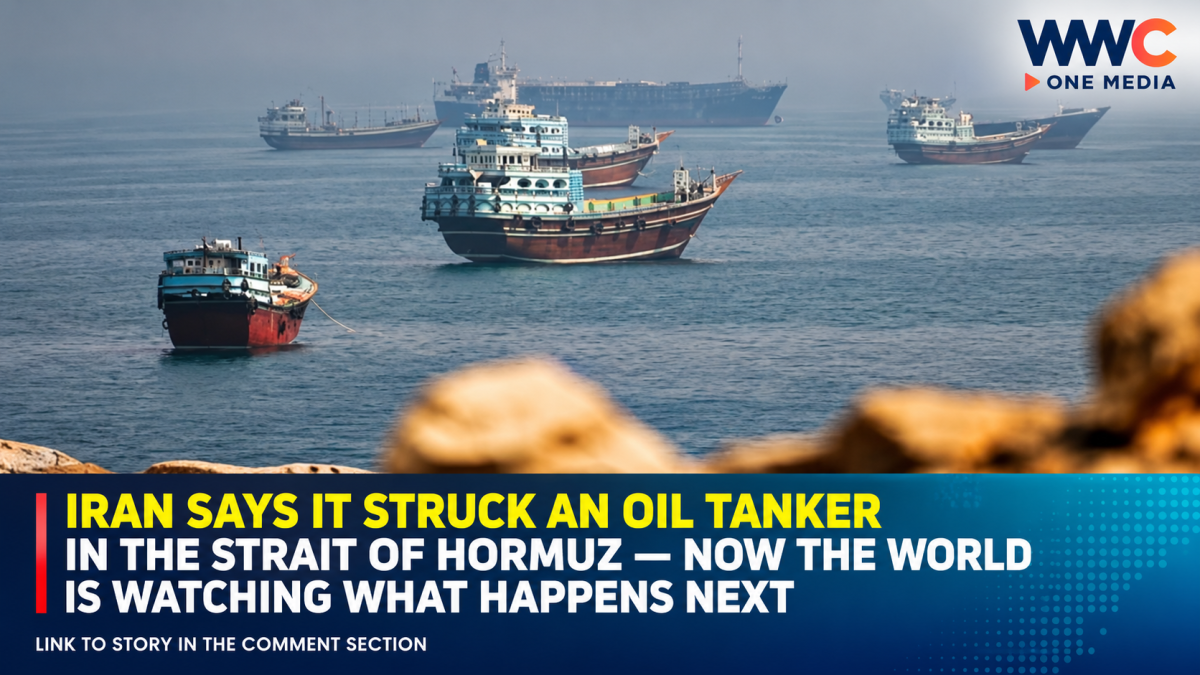
TEHRAN — September 18, 2026: Iran says its Islamic Revolutionary Guard Corps (IRGC) struck a Togo-flagged oil tanker attempting to pass through the strategically vital Strait of Hormuz, adding another flashpoint to an already escalating maritime crisis in the Gulf.
Iranian state media identified the vessel as the Trend, saying it was targeted after what Tehran described as an “illegal passage” through the waterway. According to the IRGC, a fire broke out aboard the tanker and the vessel was subsequently stopped and detained.
The claim has not been independently verified. The Associated Press reported that it could not immediately confirm the Iranian account, while Iran did not publicly provide details about possible casualties, the condition of the vessel or its cargo.
UK maritime agency reports separate ship incident
The development came as the United Kingdom Maritime Trade Operations (UKMTO) reported that a ship had been hit by an “unknown projectile” in the Strait of Hormuz. The projectile caused a fire, which was later extinguished.
UKMTO also reported a separate security incident in the waterway. CNA said it remained unclear whether the maritime agency’s report and the IRGC’s account involved the same vessel.
AP reported that another overnight maritime incident occurred about 16 nautical miles northeast of Khasab, Oman, with the crew reported safe and no environmental impact confirmed at the time of reporting.
Why the Strait of Hormuz matters
The incident is significant because the Strait of Hormuz is one of the world’s most important energy corridors.
Before the current conflict, the waterway carried roughly one-fifth of global oil and gas supplies, according to Reuters. The strategic passage connects the Persian Gulf with the Gulf of Oman and the wider Indian Ocean, making disruptions there capable of affecting energy markets and international shipping.
But shipping activity has already fallen sharply.
Reuters reported on September 18 that only four commodity vessels transited the Strait of Hormuz on Thursday, compared with a 10-day average of about 16 vessels per day. Three vessels were entering the Gulf and one was leaving, according to preliminary Kpler tracking data.
The actual number of crossings could be higher because some ships have been switching off their automatic identification system transponders to reduce the risk of detection while operating in the conflict zone.
Energy shipments face growing uncertainty
The reduction in traffic is not limited to oil tankers.
Reuters reported that three liquefied natural gas vessels had reappeared outside the Strait of Hormuz, including vessels connected with Qatar’s LNG trade. The movements highlight how the security situation is affecting not only crude oil shipments but also the broader flow of energy commodities.
Reuters previously reported that commercial traffic through the strait had fallen substantially as attacks intensified across the region. On September 15, preliminary Kpler data showed only four commodity-vessel transits on Monday, compared with 10 the previous day.
Before the war began on February 28, Reuters said the strait typically handled about 125 large commercial vessels a day, including tankers, gas carriers, bulkers and container ships.
The latest incident follows weeks of attacks on shipping
The reported strike on the Trend comes after a series of attacks involving commercial and Iranian vessels in and around the Strait of Hormuz.
The International Maritime Organization has documented numerous confirmed maritime incidents in the region. As of September 15, its list included vessels that had been damaged, with some incidents involving pollution, missing seafarers and fatalities.
The broader conflict has also seen direct attacks involving Iranian and US-linked shipping.
Reuters reported last week that Iran and the United States had carried out their largest wave of attacks on shipping since the conflict began, while US forces had previously struck Iranian oil tankers.
That escalation has transformed the Strait of Hormuz from a critical commercial passage into one of the world’s most closely watched maritime flashpoints.
What happens next?
For now, the most important unanswered questions concern the Trend’s condition, the circumstances of the reported strike and whether the UKMTO incident involved the same vessel.
Iran’s IRGC has warned that vessels attempting what it considers unauthorized passage could face destruction, according to AP’s account of Iranian state media. At the same time, the United States has been guiding some commercial ships through the waterway amid continuing concerns over attacks.
The immediate consequences will depend heavily on whether commercial traffic through Hormuz continues to decline, whether more vessels are attacked and whether diplomatic efforts can restore safer passage.
With only a fraction of normal shipping traffic currently moving through the waterway, the latest tanker incident adds another layer of uncertainty to an already fragile global energy supply chain.
And the biggest question may no longer be whether another ship will be targeted — but how far the disruption to one of the world’s most important oil and gas routes could spread.