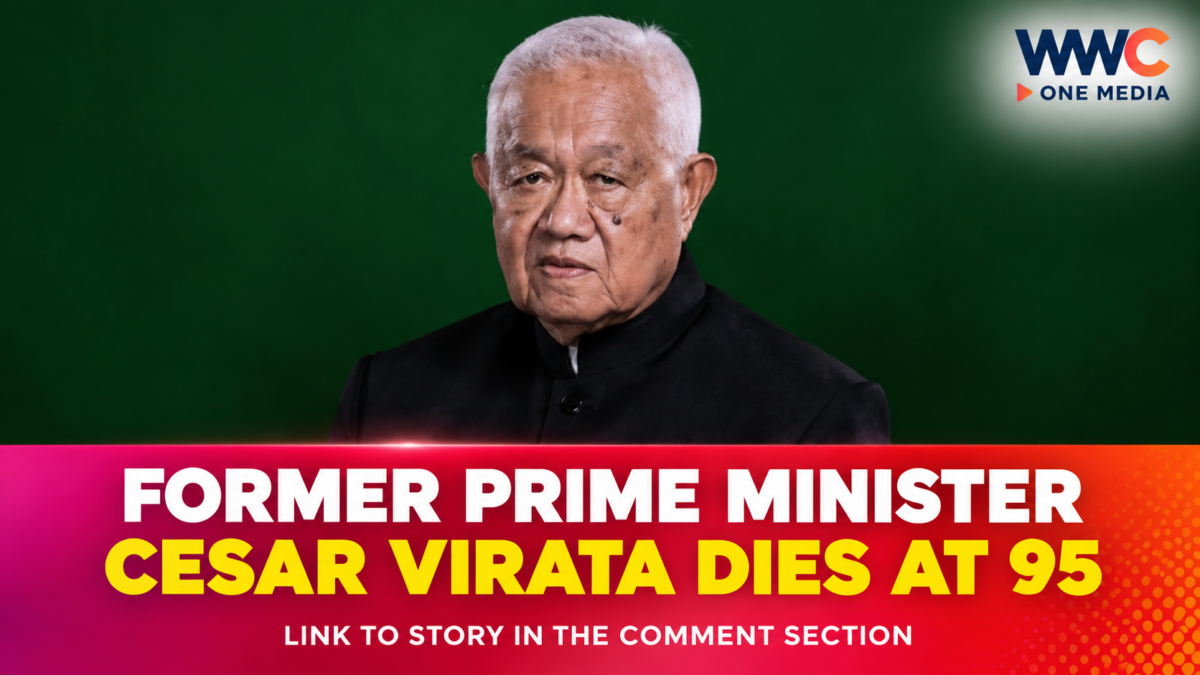
Former Philippine prime minister and longtime finance chief Cesar E.A. Virata died on October 2, 2026, at the age of 95, marking the end of a decades-long career in government, economics, banking and academia. His death was announced by Rizal Commercial Banking Corp. (RCBC), where he had served as a director and corporate vice chairman.
Virata was one of the Philippines’ most prominent economic officials during the latter part of the 20th century. He served as finance minister for much of the period from 1970 to 1986 and became prime minister in 1981, remaining in the post until the end of the Marcos administration in 1986.
His government career extended beyond the finance portfolio. Virata also served as chairman of the Board of Investments and held roles connected to the country’s economic planning agencies. He represented the Philippines in international financial institutions, including the World Bank and Asian Development Bank.
Virata also held international responsibilities during his years in government. In 1976, he became chairman of the Joint Development Committee of the World Bank and International Monetary Fund, and he later chaired the Asian Development Bank Board of Governors. These positions placed him among Philippine officials involved in major international economic and development discussions during the period.
Before entering government, Virata built a career in education and accounting. He became a professor and dean of the University of the Philippines College of Business Administration and also worked as a principal in the management services division of accounting firm SyCip Gorres Velayo & Co.
He studied at the University of the Philippines, earning degrees in mechanical engineering and business administration, before completing an MBA in industrial management at the University of Pennsylvania’s Wharton School. His academic background in engineering, business and management shaped his later work as an economic policymaker and corporate adviser.
Virata continued his involvement in the private sector after leaving government. He joined the board of RCBC in 1995 and became corporate vice chairman in 2000. He was later appointed a senior adviser to the bank in 2007, maintaining a long association with the financial institution.
His corporate career also included board and advisory positions in various companies and institutions, including Malayan Insurance, Lopez Holdings and World Trade Center Management. His work after government reflected his continued involvement in banking, insurance, business and economic affairs.
Virata was also a grand-nephew of former Philippine President Emilio Aguinaldo, linking his family history to an earlier period of Philippine political history. Despite spending much of his career in government, he was generally identified professionally with economics, finance and technocratic policymaking.
His public career, however, was closely associated with the administration of Ferdinand Marcos Sr., under whom he served as finance minister and later prime minister. He remained finance chief through the political transition of 1986, when the Marcos government ended following the People Power Revolution.
After the change in government, Virata remained active in business, consulting and education. He continued to participate in corporate boards and economic discussions, maintaining a public presence long after leaving national government service.
Virata’s death at 95 brings to a close the career of a figure who occupied key positions at the intersection of Philippine economic policy, international finance and private-sector leadership for more than half a century. His government service spanned periods of major economic and political change, while his later work extended his influence into banking, business and academe.