The Food and Drug Administration (FDA) has warned that counterfeit medicines reaching the Davao Region usually originate from Luzon, raising fresh concerns about the safety of the pharmaceutical supply chain and the risk of fake life-saving treatments reaching patients.
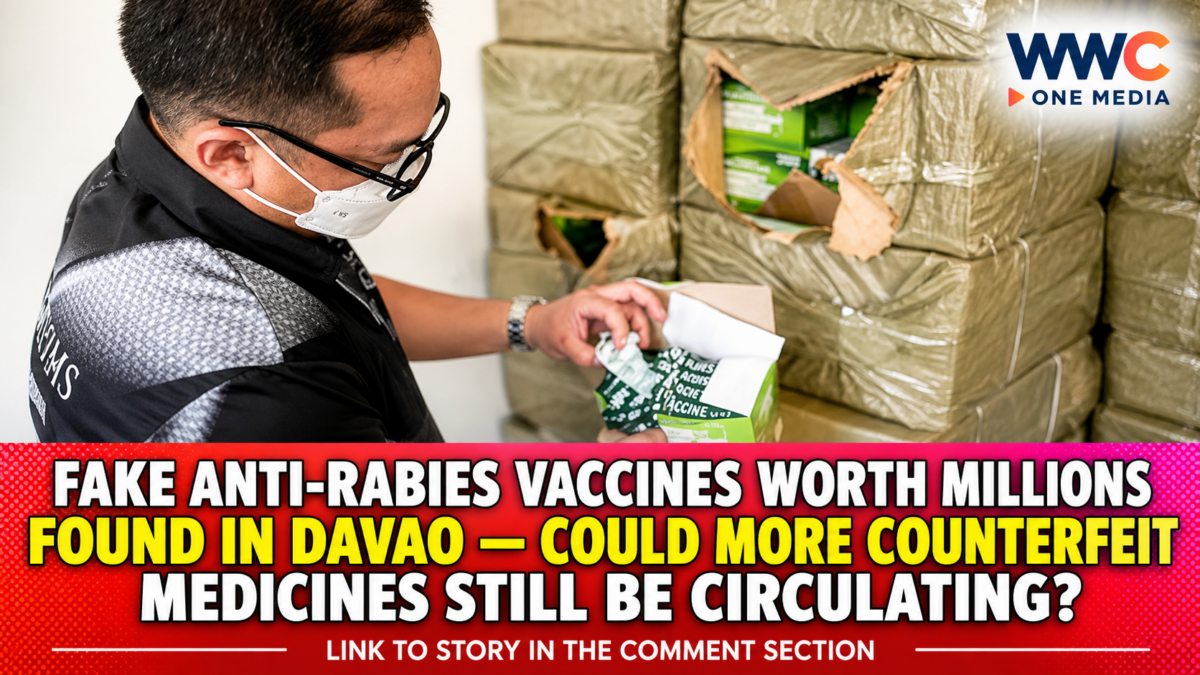
The warning comes after the FDA confirmed several counterfeit medicine products in the region, including fake human albumin and anti-rabies products. Authorities say the discovered items have been secured to prevent them from being sold or administered, while investigators continue tracing their sources.
Eba Marie Antonette Inis, officer-in-charge director II of the FDA Mindanao East Cluster, shared the latest information during the Isyu Karon media forum at The Royal Mandaya Hotel in Davao City on November 6, 2026.
Inis said no one has so far been caught manufacturing counterfeit medicines in Davao. The agency’s current investigation is focused on determining how the fake products entered the region and identifying the suppliers behind their distribution.
The FDA has also withheld the names of the establishments where the products were discovered, explaining that prematurely revealing details could affect ongoing efforts to trace the supply chain. Some sellers, Inis noted, may have been deceived by their own suppliers and might not have known that the medicines they received were counterfeit. SunStar Publishing Inc.+1
Five Counterfeit Medicine Products Confirmed Across Davao Region
The latest figures point to five confirmed counterfeit medicine products recovered from four establishments across the Davao Region this year.
Three of the confirmed products were found in two establishments in Davao City. These involved two batches of human albumin and one batch of the anti-rabies serum Equirab.
The FDA also reported securing significant quantities of anti-rabies products, including:
- 2,500 vials of Speeda anti-rabies vaccine, valued at approximately ₱1.88 million.
- 92 vials of Vaxirab anti-rabies vaccine, worth around ₱210,404.
- One vial of Equirab anti-rabies serum identified during an FDA inventory.
These products were secured to prevent further distribution and use.
The figures highlight why counterfeit medicines are particularly dangerous when they involve treatments used in emergencies. Anti-rabies vaccines and immunoglobulins are important components of post-exposure care, while human albumin is used in hospital settings for specific medical conditions.
A fake or improperly manufactured product may fail to provide the protection or treatment a patient needs. In some cases, it could expose patients to additional health risks. SunStar Publishing Inc.+2
Why Anti-Rabies Products Are a Major Target
According to Inis, anti-rabies products are among the medicines targeted by counterfeiters because of their relatively high prices.
The concern is especially serious because rabies is a potentially fatal disease. Once clinical symptoms develop, the disease is almost always fatal, making timely and appropriate post-exposure treatment critical.
The World Health Organization has previously issued alerts about falsified rabies vaccines and anti-rabies serum circulating in the Philippines. Its 2020 medical product alert identified falsified versions of Verorab, Speeda and Rabipur vaccines, as well as Equirab anti-rabies serum.
That earlier warning demonstrates that counterfeit rabies products are not an entirely new problem for the country. The latest Davao findings reinforce the need for continued monitoring, particularly because patients and families may be unable to distinguish genuine products from convincing-looking fakes. World Health Organization+1
FDA Previously Warned About Fake Albumin and Equirab
The latest investigation follows specific FDA advisories issued in October 2026.
In FDA Advisory No. 2026-1609, posted on October 26, the agency warned the public about counterfeit Albuminar-25 human albumin.
The FDA said CSL Behring no longer manufactures Albuminar and identified AlbuRx 25% 50 mL as the only authorized human albumin product in the Philippine market at the time of the advisory. It also stated that the last batch of Albuminar 25% supplied to the country had expired in September 2022.
Another warning, FDA Advisory No. 2026-1402, posted on October 5, concerned counterfeit Equirab with Batch No. A06825016 and an indicated expiration date of March 2027.
The FDA cautioned that the counterfeit products could pose serious health risks if administered and warned that those found selling them could face penalties.
Consumers and healthcare providers should not assume that a familiar brand name, packaging design or printed expiration date proves a medicine is genuine. Verification through official FDA advisories and registration records remains essential. SunStar Publishing Inc.
How to Spot Possible Counterfeit Medicines
The FDA has urged pharmacies, hospitals and other medicine retailers to strengthen their purchasing and inspection procedures.
Inis specifically advised drugstore owners to purchase medicines only from FDA-licensed suppliers. Deliveries should also come with proper documentation, including receipts that identify the product’s lot number and expiration date.
The agency has highlighted several warning signs that consumers and healthcare professionals should take seriously:
- Prices that are unusually low compared with the normal market price.
- Packaging with spelling mistakes, poor printing or suspicious labels.
- Labels written in foreign characters without appropriate translations.
- Tablets that are cracked, discoloured or unusually altered.
- Unusual changes in the colour or appearance of injectable medicines.
- Vials, rubber stoppers or containers that differ from previously verified products.
- Missing sales invoices or documentation identifying the supplier, batch and expiration date.
In an earlier report, Inis cited anti-rabies products normally priced above ₱1,000 being offered for around ₱600 as an example of a suspicious price difference.
However, appearance and price alone cannot conclusively establish whether a medicine is counterfeit. Suspected products should be checked with the FDA or the appropriate healthcare professional rather than being used based on assumptions. SunStar Publishing Inc.+1
Online Medicine Purchases Also Require Caution
The FDA has also warned consumers about buying medicines from unauthorized online sellers.
According to Inis, online ordering is permitted only through sellers that meet the agency’s licensing requirements, including those operating through a physical drugstore. Consumers should be cautious of sellers operating entirely through online accounts without a verifiable licensed establishment.
This warning is particularly important as counterfeit and misleading product listings remain a wider consumer-protection concern.
WWC ONE MEDIA has previously reported on efforts by TikTok Shop and the Department of Trade and Industry to address counterfeit merchandise and unsafe online shopping practices. Although those measures cover a broader range of products, the same consumer principle applies: a product appearing in an online marketplace is not automatically authentic or government-approved.
Read more: TikTok Shop and DTI Push Safer Online Shopping After 208 Million Listings Blocked.
Consumers should avoid purchasing prescription medicines from unverified social media sellers, informal marketplaces or individuals who cannot provide legitimate supplier information. They should also never replace prescribed treatment with products from questionable sources. SunStar Publishing Inc.+2
What Philippine Law Says About Counterfeit Medicines
The Philippines has a specific law addressing the manufacture, sale and distribution of counterfeit drugs.
Republic Act No. 8203, also known as the Special Law on Counterfeit Drugs, prohibits the manufacture, sale, distribution, trafficking, importation and other activities involving counterfeit medicines.
The law covers products with incorrect or missing active ingredients, insufficient amounts of the required ingredients, and medicines deliberately mislabeled regarding their identity or source. It also applies to fake packaging and certain unauthorized use of legitimate trademarks.
Liability can extend across the supply chain, including manufacturers, importers, distributors, brokers, sellers and certain pharmacy operators or pharmacists. For sellers and distributors and their agents, the law provides for proof of actual or constructive knowledge that the products were counterfeit.
Penalties can include imprisonment and fines. Depending on the violation, the law provides for imprisonment of up to 10 years and fines ranging from ₱100,000 to ₱500,000, alongside applicable administrative sanctions.
This means the investigation is not limited to identifying the retail outlet where a fake product was discovered. Authorities may also need to trace the distributors, suppliers and other parties involved in bringing the counterfeit medicines into the market. Issuances Library+2
FDA Says Confirmed Counterfeit Cases Have Declined
Despite the latest discoveries, Inis said confirmed counterfeit medicine cases in the region have declined over the years.
She credited the improvement partly to cooperation between the FDA, pharmacists and hospitals, including training that helps healthcare workers recognize suspicious products.
Medical personnel who administer injectable medicines are particularly important in detecting possible counterfeits. Differences in vial appearance, the colour of the contents and rubber stoppers can alert healthcare workers to products that need further examination.
Some hospitals have also reported discrepancies involving deliveries before the medicines reached patients, allowing suspected products to be flagged earlier.
The FDA’s Regulatory Enforcement Unit conducts surveillance operations in coordination with other law enforcement agencies.
The agency has encouraged healthcare facilities to continue reporting suspicious products rather than waiting until patients experience complications. SunStar Publishing Inc.+1
Why the Davao Investigation Matters Beyond the Region
The discovery of counterfeit medicines in Davao raises questions about how effectively pharmaceutical products are monitored as they move between suppliers, distributors, pharmacies and hospitals.
The FDA’s statement that counterfeit products reaching the region usually come from Luzon does not mean that all medicines shipped from Luzon are suspicious. It points instead to the need to identify the specific sources and distribution channels involved in the counterfeit cases.
The World Health Organization has warned that falsified and substandard medical products are a global public-health problem. Such products can contain incorrect ingredients, inadequate doses or harmful substances, potentially leading to treatment failure and serious injury.
The WHO has also identified unauthorized online sales and complicated distribution networks as factors that make counterfeit products harder to detect and control.
For the Philippines, the challenge is to ensure that medicines remain traceable from legitimate suppliers to the facilities and patients that ultimately use them. World Health Organization+1
WWC ONE MEDIA has also covered other public-safety and consumer-protection concerns involving illegal products and online fraud. Related reports include the PDEA seizure of ₱1.36 billion worth of suspected shabu at Manila Port and the growing threat of scams affecting Filipino consumers. While these are separate issues, they underscore the importance of stronger enforcement and public awareness.
How Davao Residents Can Help Prevent Fake Medicines From Reaching Patients
The FDA is urging the public to check whether medicines and establishments are registered through its official online verification portal. Suspected counterfeit products can also be reported through the agency’s official website.
Consumers should keep receipts and packaging whenever possible, particularly when purchasing medicines that require careful handling or are administered by healthcare professionals.
Patients should obtain medicines from licensed drugstores and hospitals, and consult qualified healthcare workers if they notice unusual packaging, unexpected changes in a product or suspicious supplier information.
Anyone who suspects that a medicine may be counterfeit should avoid using it until it has been properly checked. Patients who have already received a suspicious injectable product should promptly inform their healthcare provider.
The FDA’s latest warning is a reminder that counterfeit medicines are more than an issue of fake packaging or lost money. When the products involved are used to prevent rabies or treat serious medical conditions, the consequences can be life-threatening.
The investigation in Davao is continuing as authorities work to identify the sources behind the counterfeit products. Until those supply channels are fully traced, the FDA’s message to pharmacies, hospitals and consumers remains clear: verify the supplier, check the product and never take chances with medicines that could determine a patient’s survival.