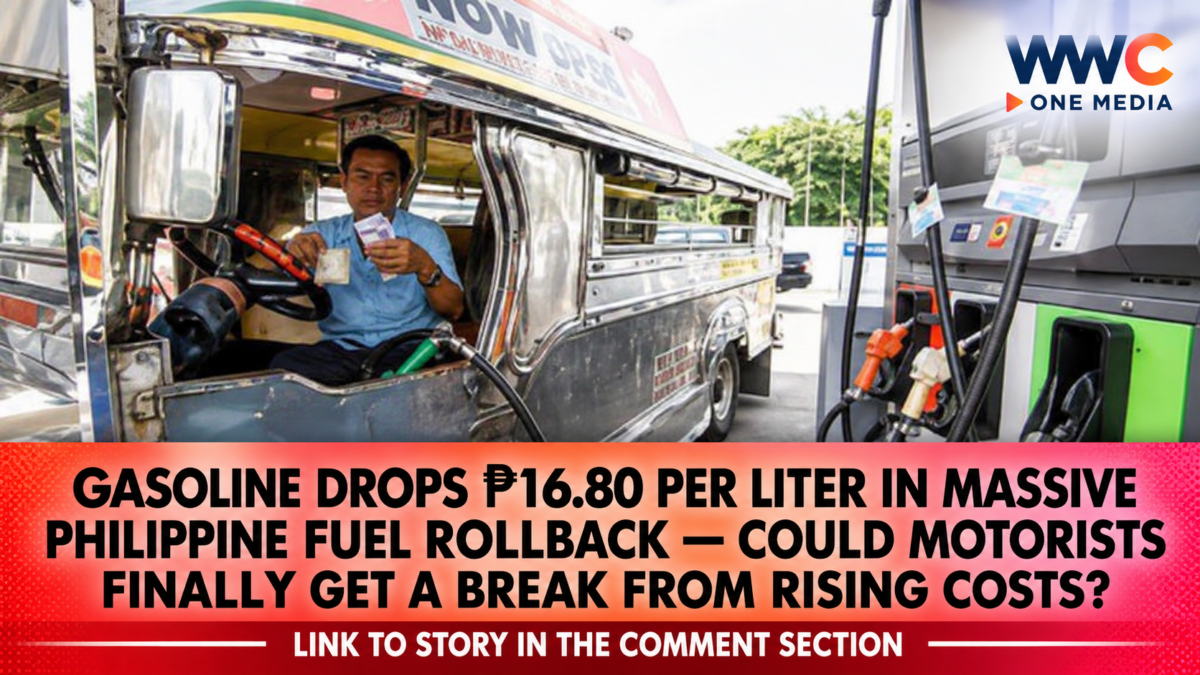
Filipino motorists are set to receive major relief at the pump as oil companies implement one of the biggest fuel price rollbacks of 2026, with gasoline prices falling by ₱16.80 per liter, diesel by ₱4.10 and kerosene by ₱3.70 beginning Tuesday, November 10.
The Department of Energy (DOE) confirmed the reductions for the November 10–16 pricing period, following a sharp decline in international oil prices as concerns over a possible escalation of the conflict between the United States and Iran eased.
The gasoline reduction is particularly significant after weeks of volatile adjustments that have kept transportation and household expenses under pressure. Private motorists, motorcycle riders, delivery operators and businesses that depend on fuel could all benefit from the latest rollback.
Energy Secretary Sharon Garin described the reduction as welcome relief for motorists, public transport operators and households, while assuring consumers that the department would continue monitoring fuel prices and supply conditions. Department of Energy Philippines+3
Complete Fuel Price Rollback for November 10–16
The DOE announced the following reductions per liter:
| Petroleum product | Price reduction |
|---|---|
| Gasoline (RON 91, RON 95 and RON 97) | ₱16.80 |
| Diesel | ₱4.10 |
| Kerosene | ₱3.70 |
The adjustments apply nationwide, although the exact pump prices will vary among fuel retailers depending on their existing prices and implementation schedules.
The reductions are scheduled to take effect on Tuesday, November 10. Motorists should check individual oil-company advisories for the precise time their preferred station implements the new prices. GMA News Online+2
Why Did Fuel Prices Suddenly Drop?
According to the DOE’s Oil Industry Management Bureau, the major rollback was driven by declining international oil prices amid growing expectations of a possible diplomatic resolution to the conflict between the United States and Iran.
Qatar’s mediation efforts and political developments in the United States helped ease fears of further military escalation and possible disruptions to petroleum shipments from the Middle East.
Another important factor is the Strait of Hormuz, a critical shipping route through which substantial volumes of the world’s oil and liquefied natural gas move.
When tensions threaten shipping through the strait, global markets tend to factor in the possibility of supply shortages, higher transportation costs and increased insurance premiums. As those concerns ease, the geopolitical risk premium reflected in oil prices can decline.
The DOE said expectations of more stable shipments through the region helped improve market sentiment and contributed to the significant reduction in petroleum prices.
However, the situation remains sensitive to developments in the Middle East. Any renewed escalation could quickly reverse some of the gains. Department of Energy Philippines+2
How Much Could Motorists Save at the Pump?
The reductions could translate into substantial savings, particularly for motorists who regularly fill larger fuel tanks.
For example:
- A vehicle buying 40 liters of gasoline could save approximately ₱672 compared with the previous price.
- A vehicle buying 50 liters of gasoline could save approximately ₱840.
- A diesel vehicle purchasing 40 liters could save approximately ₱164.
- A kerosene purchase of 20 liters would be approximately ₱74 cheaper.
These are illustrative savings based on the announced per-liter reductions. Actual expenses will depend on the quantity purchased and the previous pump price at each station.
The gasoline rollback is especially significant for private motorists and motorcycle riders, while the diesel reduction offers some relief to jeepneys, buses, trucks, delivery vehicles and other diesel-powered operations.
However, lower diesel prices do not automatically mean immediate reductions in public transport fares or the prices of food and other commodities. Those costs are influenced by several factors, including operating expenses, inventory and distribution costs. GMA News Online+1
Philippines Has Around 50 Days of Fuel Supply
Despite the sharp changes in international oil prices, the DOE has assured the public that the country’s petroleum inventory remains adequate.
As of November 6, the Philippines had an estimated 50.33 days of total petroleum supply, according to the department.
The available inventory included:
| Fuel product | Estimated supply |
|---|---|
| Gasoline | 51.64 days |
| Diesel | 53.95 days |
| Kerosene | 143.07 days |
| Jet fuel | 55.62 days |
| Fuel oil | 55.97 days |
| LPG | 29.84 days |
These figures indicate that the country has a supply buffer, although they do not guarantee that international price volatility will stop affecting local pump prices.
The government is also exploring ways to strengthen long-term energy security, including overseas petroleum storage arrangements and the development of strategic fuel reserves.
WWC ONE MEDIA previously examined the initiative in Philippines Moves to Secure Oil Reserves Abroad as Middle East Conflict Threatens Fuel Supply. Department of Energy Philippines+2
More Than ₱1.2 Billion in Fuel Subsidies Distributed to PUV Drivers
The government is also providing targeted assistance to public transportation operators affected by fuel-price volatility.
According to figures cited by SunStar, the DOE had distributed ₱1,237,718,683.18 in fuel subsidies as of November 5, benefiting 110,211 public utility vehicle drivers.
The programme is intended to help eligible transport operators manage fuel expenses and maintain their services despite changing pump prices.
The latest rollback may provide additional relief to transport operators, but the subsidy programme remains a separate form of government assistance.
WWC ONE MEDIA has also reported on earlier fuel-related assistance and supply concerns, including Philippines Has 47 Days of Fuel Supply Left — But the Bigger Threat to Drivers May Already Be at the Pump. SunStar Publishing Inc.+1
Why the Latest Rollback Matters After Weeks of Price Volatility
The latest reduction follows a period of mixed fuel-price adjustments.
On November 3, gasoline prices increased by ₱3.50 per liter, while diesel fell by ₱1 and kerosene by ₱1.90.
That adjustment was covered in WWC ONE MEDIA’s report, Gasoline Jumps ₱3.50 a Liter on November 3 as Diesel and Kerosene Roll Back.
The latest rollback is considerably larger, particularly for gasoline users. It also demonstrates how quickly Philippine pump prices can change when international petroleum markets respond to geopolitical developments.
Earlier reports by WWC ONE MEDIA have examined the wider impact of the Middle East crisis on local fuel costs, including Fuel Shock Returns: Pump Prices Could Jump by Nearly ₱6 a Liter as Middle East War Threatens Oil Supply. WWC One Media+2
Will Fuel Prices Continue Falling?
The November 10 rollback offers substantial short-term relief, but it does not guarantee another reduction next week.
Future adjustments will depend on international crude and refined petroleum prices, developments in the Middle East, shipping conditions and the peso-dollar exchange rate.
The DOE has said it will continue monitoring the global market and coordinating with oil companies to ensure that favorable international price movements are reflected in domestic pump prices.
For now, motorists can take advantage of the lower prices during the November 10–16 adjustment period. Those planning to refuel should still compare prices among nearby stations because actual pump prices vary by retailer.
The latest rollback is a welcome development for Filipino consumers, but the country’s dependence on imported petroleum means that global conflicts and supply disruptions can still affect the cost of fuel at home.
After weeks of uncertainty, motorists finally have a significant reason to welcome Tuesday’s price adjustment. The bigger question is whether this relief will continue — or whether another international oil-market shock will erase the savings in the coming weeks.