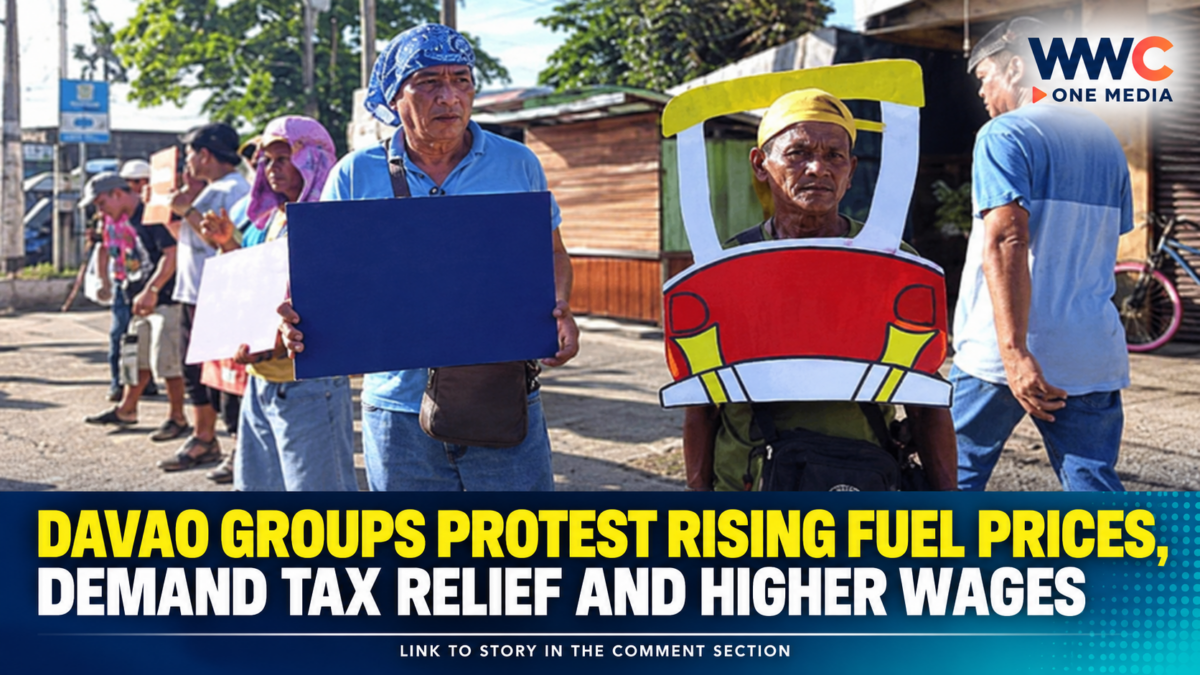
Progressive and sectoral groups gathered in Davao City on September 30 to protest rising fuel prices and call for government action on the increasing cost of transportation, basic goods and household expenses.
The rally was held at Freedom Park along Roxas Avenue and was led by Bagong Alyansang Makabayan-Southern Mindanao. The demonstration coincided with the second day of a nationwide two-day transport strike organized by Pagkakaisa ng mga Samahan ng Tsuper at Operator Nationwide, or PISTON.
Protesters called for the removal of value-added tax and excise taxes on petroleum products, as well as the repeal of Republic Act 8479, or the Downstream Oil Industry Deregulation Act of 1998. They also demanded measures addressing wages and inflation.
Bayan-Southern Mindanao spokesperson Rauf Sissay said workers continue to face difficulties despite the latest wage increase in the Davao Region. The regional minimum wage for nonagricultural workers reached P540 per day effective September 1 under Wage Order No. RB 11-24.
Sissay said the group believes the current minimum wage remains insufficient for families, while also raising concerns about the planned full implementation of the Davao Bus Project. He argued that the transition could affect public utility jeepney drivers and small operators whose livelihoods depend on existing routes.
The protesters also called for stronger government assistance for drivers and operators who may be affected by changes in the public transportation system. They questioned whether existing support would be enough for workers, particularly those who have limited alternative employment opportunities.
Kadamay-Davao chair emeritus Leon Bolcan said rising oil prices also place pressure on low-income families because transportation costs can affect the prices of basic commodities. The group is seeking a P1,200 daily family living wage, substantially higher than the current regional minimum wage.
The protest came shortly after provisional fare increases for public utility vehicles took effect on September 28. While some passengers have accepted the higher fares, drivers said the adjustment has not necessarily translated into significantly higher take-home income because fuel and other operating costs have also increased.
One Davao City jeepney driver interviewed during the protest said his daily take-home earnings had fallen to about P500 to P600 from roughly P800 previously because of higher fuel expenses. He said he supports four children, including college students, and continues to face other household costs.
The groups’ demands come amid continuing pressure from elevated international and domestic fuel prices. Transport workers have repeatedly sought fuel-tax relief, lower pump prices and additional assistance as higher operating expenses reduce their earnings.
PISTON has continued to push for lower fuel prices and higher fares, arguing that drivers and operators remain under financial pressure despite recent fare adjustments. The latest Davao protest adds to calls from transport and labor groups for measures that would reduce the impact of fuel costs on workers and consumers.