
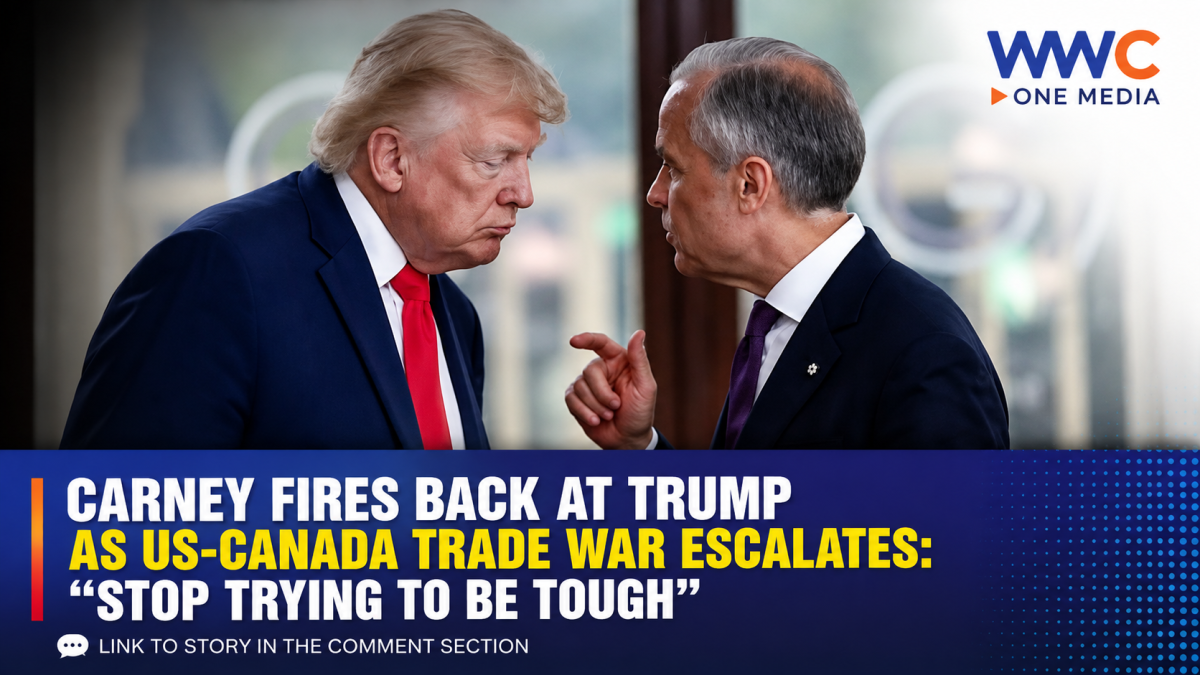
OTTAWA — The already bitter trade dispute between the United States and Canada has erupted into another war of words, with Canadian Prime Minister Mark Carney telling the Trump administration to “stop doing memes, stop throwing shade and stop trying to be tough” and return to serious negotiations.
Carney’s comments came after trade negotiations between Washington and Ottawa collapsed on Aug. 21, with both sides still sharply divided over tariffs, automobiles, cultural protections and Canada’s ability to pursue trade agreements with other countries.
Carney: Canada won’t accept a deal that weakens its industries
Speaking to reporters in Ottawa on Sept. 1, Carney said Canada remains open to a mutually beneficial agreement — but only if Washington approaches negotiations seriously.
He accused the United States of seeking terms that could leave Canadian industries effectively operating as subsidiaries of American companies or eventually being “wound down” altogether.
Carney specifically pointed to the automotive sector, as well as French-language and cultural protections, as major areas of disagreement. He also rejected any attempt to restrict Canada’s ability to negotiate future free-trade agreements with other countries.
“Canada is a sovereign state,” Carney said, insisting Ottawa would decide which countries it trades with.
Trump escalates pressure on Ottawa
The latest confrontation follows a series of increasingly provocative moves and statements from Washington.
Since negotiations broke down, President Donald Trump has continued attacking Canada’s leadership and has pushed his controversial proposal to make Canada the 51st U.S. state.
Trump has also promoted the idea of renaming Lake Ontario “Lake America,” while U.S. officials have continued criticizing Canada’s trade policies.
U.S. Treasury Secretary Scott Bessent has argued that Canada cannot respond to the United States “tit for tat” because the American economy is vastly larger.
U.S. Defence Secretary Pete Hegseth also drew criticism from Ottawa after posting an image mocking Canadian military personnel. Carney called the post “beneath their office.” The Pentagon subsequently stood by the post.
The tariff fight is about to get more expensive
The rhetoric comes as the economic confrontation moves toward another major escalation.
The United States has imposed 50% tariffs on $27.6 billion worth of Canadian goods, according to Canada’s Finance Department. Ottawa has announced matching counter-tariffs on targeted U.S. products, covering sectors including steel, appliances, agricultural equipment, pulp and paper and electronics. Those Canadian measures are scheduled to take effect Sept. 8, 2026.
Trump has also threatened to raise U.S. tariffs on Canadian automobiles, trucks and auto parts to 50% beginning Jan. 1, 2027, after negotiations over a broader trade arrangement collapsed.
That threat is particularly significant because the North American auto industry operates through highly integrated supply chains spanning Canada, the United States and Mexico.
Why the dispute matters beyond tariffs
The confrontation is becoming more than a dispute over the price of imported goods.
Canada and the United States share one of the world’s most deeply integrated economic relationships, with companies on both sides depending on cross-border supply chains.
A prolonged tariff battle could therefore increase costs for manufacturers and consumers, disrupt investment decisions and put pressure on industries that rely heavily on cross-border trade.
Reuters reported that the breakdown in negotiations followed Canada’s rejection of last-minute U.S. demands it considered unacceptable. Washington, however, has disputed Canada’s characterization of what happened and maintains that it offered Ottawa a favorable deal.
Ottawa says the relationship may never return to “normal”
Carney’s government is increasingly preparing Canadians for a longer-term change in relations with Washington.
Bea Bruske, president of the Canadian Labour Congress, said after meeting with Carney that Canadians should not expect the relationship with the United States to return to its previous normal anytime soon.
That reflects a broader concern in Ottawa that the dispute could fundamentally alter how Canada approaches trade, economic security and its relationship with its largest trading partner.
At the same time, Carney has emphasized that Canada is not closing the door on negotiations.
His message is essentially that the door remains open — but Ottawa will not walk through it on terms it believes threaten Canadian economic sovereignty.
What happens next?
The immediate test will come on Sept. 8, when Canada’s new retaliatory tariffs are scheduled to take effect.
If Washington and Ottawa cannot get negotiations back on track, the next stage could involve higher tariffs, additional countermeasures and further damage to one of the world’s most important bilateral trading relationships.
For now, Carney is betting that standing firm will strengthen Canada’s negotiating position.
Trump’s administration is betting that economic pressure will force Ottawa back to the table.
And with billions of dollars in trade now caught in the crossfire, the next move from Washington could determine whether this is merely another negotiating tactic — or the beginning of a much deeper rupture between two historic allies.
WWC ONE MEDIA J.M.D




Leave a Reply