
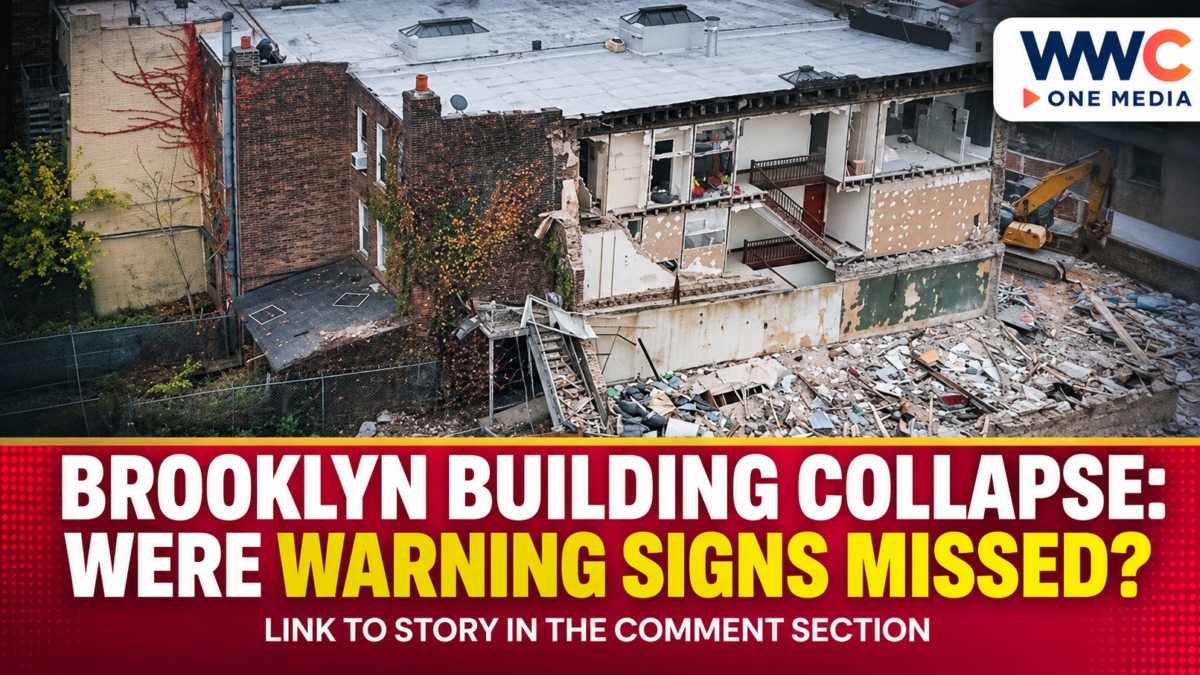
NEW YORK — Nov. 22, 2026. New York City is investigating the Nov. 11 collapse of a three-storey residential building at 1321 Flatbush Avenue in Brooklyn, where eight people died and 18 civilians and firefighters were injured. The building fell into an adjoining construction excavation, while official records raise broader questions about property oversight, emergency preparedness and how dangerous structural conditions should be reported.
The central unanswered question is whether any warning signs existed and, if so, whether they were properly assessed. Public accounts describe a tenant’s lawsuit over allegedly ignored cracks, but the original filed complaint has not been independently examined for this update. Its particular allegations cannot be treated as established findings.
Brooklyn Building Collapse: The Official Timeline
At a Nov. 11 city briefing, Fire Commissioner Lillian Bonsignore said emergency services received a call at approximately 4:01 p.m. reporting a collapse at 1321 Flatbush Avenue. Officials described a three-storey multiple dwelling that fell into the neighbouring construction site, leaving people trapped in the building and excavation area.
More than 250 fire and emergency medical personnel responded. Officials warned that unstable material, dangerous voids and a partly damaged neighbouring structure complicated rescue operations. Early fatality and injury counts were preliminary because crews were still searching.
By Nov. 15, the Fire Department’s public announcement recorded eight deaths and 18 injured civilians and firefighters. It also said crews rescued and recovered 12 people from the collapsed building. Those figures supersede the initial count.
WWC’s separate coverage of an animal rescued after the Brooklyn collapse addresses a different aspect of the response. Recovery stories should not obscure the unresolved investigation into what made the structure fail.
What Officials Said About the Adjacent Excavation
During the first city briefing, Department of Buildings Commissioner Ahmed Tigani identified excavation as the work underway on the neighbouring site. He explained that an approved plan existed for a three-storey building and that plans seeking approval for a nine-storey development had not yet been approved at the time.
That distinction matters. An application is not construction approval, and excavation does not prove causation. Investigators must consider the actual authorised work, the condition of neighbouring buildings and whether necessary protections were installed and maintained.
The mayor said the Department of Buildings and law-enforcement partners would investigate the cause. The city has not published a final cause determination in the official records reviewed for this update.
What the Landlord Watchlist Establishes
On Nov. 14, New York City’s Public Advocate published a notice identifying Olufemi Falade as the registered head officer of the collapsed property’s management. It reported that he had appeared on the office’s annual landlord watchlist six times in the preceding decade, including in 2017, 2019, 2020, 2021, 2022 and 2024.
A watchlist is an administrative accountability tool, not a court finding that its subject caused a later structural disaster. Past building-management concerns warrant examination, but the link between any particular violation, warning or response and this collapse must be established through the investigation.
Analysis: Scrutiny should focus on the dates and substance of recorded defects, whether the conditions concerned structural stability, which people received notices and what action followed. A tally of past listings cannot answer those questions on its own.
Why the Reported Crack Warning Remains Unverified
Public descriptions of a recently filed civil case say a former resident reported photographed cracks before the collapse. That is a serious allegation, but the actual complaint, attached photographs, filing identification and any defendants’ responses were not directly available for independent review.
Until the primary court record is obtained, a claim that a landlord ignored a specific warning should not be stated as a proven fact. Even an authenticated complaint would establish what a claimant alleged, not whether the allegation has been accepted by a court.
New York City’s official 311 guidance gives residents a route to report buildings that shake or lean, cracked or bulging walls and potentially unstable exterior facades. The guidance distinguishes urgent danger, for which people should call 911, from other defects that can be reported through 311. This is general public guidance, not a finding about whether a particular Flatbush resident filed a report.
What Structural Oversight Must Answer
A credible technical inquiry needs to examine the structure itself, conditions at the excavation boundary, inspection records and the sequence of work before the collapse. The relevant evidence must distinguish an observed crack from its underlying cause and determine whether a structural response was necessary.
The broader importance of clearly separated investigations is illustrated by WWC’s coverage of Thailand’s building-collapse court case, where proceedings about company ownership did not settle the separate engineering question of why a building fell. The Thai and Brooklyn incidents are unrelated.
For Philippine readers, WWC’s report on the failed Tarlac flood-control structure offers another distinct example of the need to separate official initial observations from a final engineering conclusion. It does not provide evidence about Brooklyn.
Displaced Residents Still Need Assistance
New York City’s 311 emergency page continues to describe an investigation at 1321 Flatbush Avenue. It directs affected families to the American Red Cross and points to a relief fund supporting those affected by the collapse.
The Public Advocate also provided assistance information. That continuing response underlines the difference between an emergency rescue, a housing recovery and any later legal determination about responsibility.
Analysis: A full public accounting should explain not only the physical mechanism of failure but also whether existing reporting and inspection processes gave residents an effective means of escalating concerns. Responsibility cannot be assigned by public suspicion.
What Happens Next
The most consequential records would be a published Department of Buildings investigation, authenticated construction and inspection documents, and the original court complaint with any subsequent responses or orders. They could identify which claims are allegations, which facts officials verified and which matters remain disputed.
For now, the city has confirmed the disaster, the adjoining excavation and the final reported toll in its Nov. 15 notice. It has not established in the opened public records whether a reported crack warning was ignored or what caused the building to collapse.
Frequently Asked Questions
When did the Brooklyn building collapse happen?
New York City officials reported the collapse at 1321 Flatbush Avenue on Nov. 11, 2026, with an emergency call at approximately 4:01 p.m.
How many people died or were injured?
The Fire Department’s Nov. 15 announcement reported eight deaths and 18 injured civilians and firefighters.
Did the construction next door cause the collapse?
The city confirmed excavation was underway at an adjacent site. It has not established the final cause in the official records reviewed here.
Were warnings about cracks ignored?
That allegation has appeared in descriptions of a tenant’s lawsuit, but the original complaint was not independently inspected for this article. It cannot yet be stated as a verified finding.
How can New Yorkers report an unstable building?
New York City’s 311 guidance provides a reporting route for structural problems and advises calling 911 for immediate danger, including a building that is collapsing or at risk of collapse.










