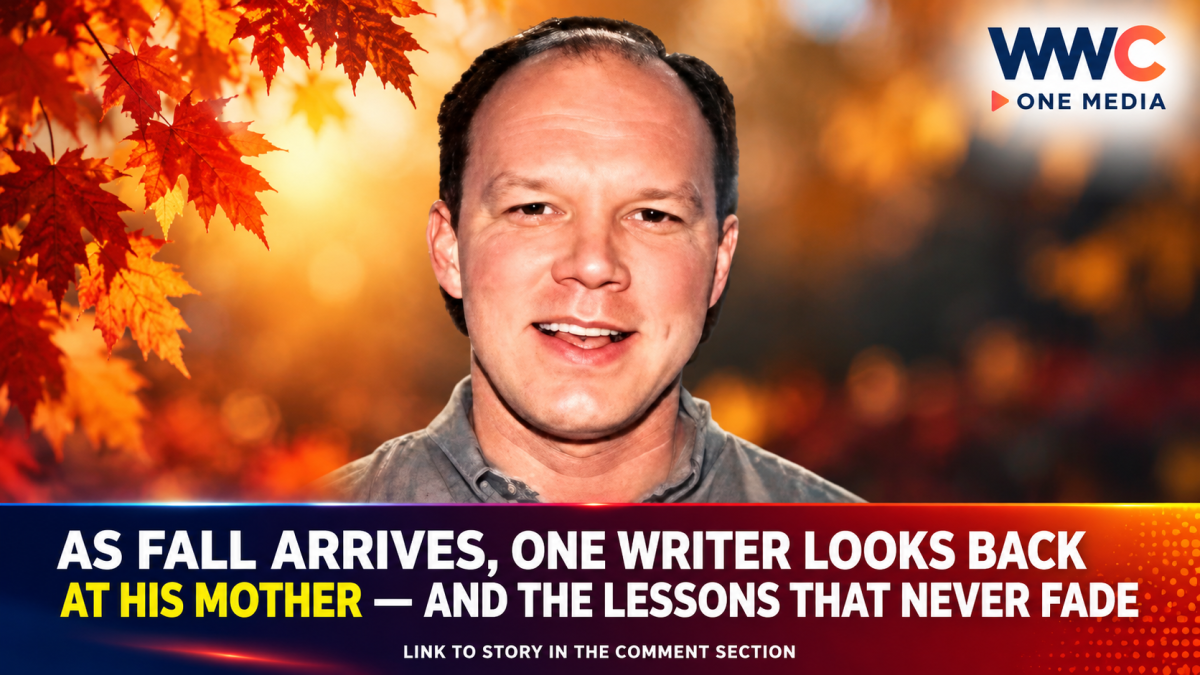
SEOUL — As autumn arrives, the changing season has prompted one writer to look backward — toward childhood, family and the woman whose influence has followed him through every stage of life.
In a personal column published by The Korea Times, Bernard Rowan, a political science professor at Chicago State University, offers a heartfelt tribute to his mother and reflects on how her love and guidance shaped the person he became.
Rather than focusing on a single memory, Rowan traces his relationship with his mother across decades — from childhood milestones to education, marriage and adulthood.
A Mother’s Influence Across a Lifetime
Rowan recalls being the first of four children and remembers his mother being present through defining moments, including his first birthday, first flight, first day of school, graduate-school graduation and marriage.
For him, motherhood represents more than childhood care.
He describes his mother as a source of comfort, protection and encouragement, particularly as he grew older and began pursuing his own dreams.
Her message, he writes, was to keep moving forward even when his ambitions differed from those of other people.
That encouragement became one of the lasting lessons he carried into adulthood.
From Family to a Bigger Idea of Humanity
One of the deeper themes in Rowan’s reflection is his mother’s understanding of family.
He says she encouraged him to see humanity as a kind of universal family, beyond distinctions such as nationality, ethnicity, religion and other differences.
That idea transformed his memories of his own family into something broader: a lesson about how people relate to one another.
For Rowan, the influence of an older generation is not simply something to remember. It is something that can continue through the values, habits and relationships passed to the next generation.
The Gifts That Become Part of Us
Rowan also reflects on the creative interests he associates with his mother.
He says he inherited a love of writing from her and also developed an appreciation for cooking, baking and nature.
Those seemingly ordinary interests become symbols of something larger in his column: the ways parents can leave their mark without necessarily realizing how deeply their children are watching and learning.
A recipe, a love of nature, a creative habit or a few encouraging words can become part of someone’s identity years later.
Why Autumn Fits the Reflection
The arrival of fall provides the backdrop for Rowan’s meditation on memory and aging.
He writes about staying close to elders and learning from their experiences, describing this as an important lesson as he enters a later stage of life.
The season therefore becomes more than scenery.
Autumn’s sense of transition mirrors Rowan’s thoughts about growing older, remembering where we came from and carrying family lessons forward.
His central message is ultimately simple: the influence of a mother can extend far beyond childhood.
It can shape how someone approaches family, creativity, ambition, relationships and even their understanding of the wider human community.
And sometimes, as Rowan’s reflection suggests, the older we become, the more clearly we understand just how much of ourselves began with the people who first taught us how to live.
WWC ONE MEDIA G,A