
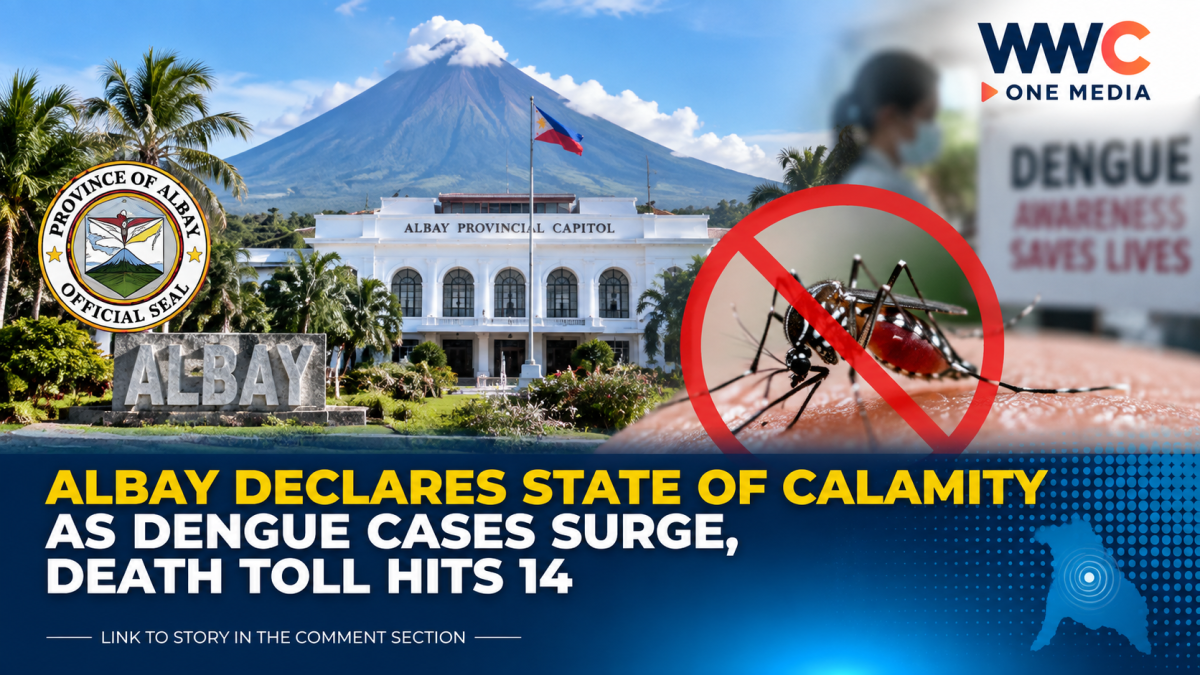
LEGAZPI CITY, Albay — Albay has declared a state of calamity over the province’s worsening dengue situation, as reported infections climbed to 1,785 cases and 14 deaths, prompting officials to unlock additional emergency resources and intensify community-wide mosquito control efforts.
The Albay Sangguniang Panlalawigan approved the declaration on September 10, 2026, following a recommendation from the Provincial Disaster Risk Reduction and Management Council led by Governor Noel Rosal. The declaration will remain in effect until lifted by the provincial government.
The latest figures from the Albay Provincial Health Office–Provincial Epidemiology and Surveillance Unit show how quickly the situation has deteriorated. As of September 2, the province had recorded 1,457 cases and 11 deaths. By September 8, the tally had risen to 1,785 cases and 14 fatalities.
That means 328 additional cases and three more deaths were recorded within just six days, underscoring the urgency of the provincial government’s response.
Why officials declared a state of calamity
The declaration gives the provincial government greater flexibility to mobilize emergency resources and mount a coordinated response to the outbreak.
According to local reports, the province can use its Quick Response Fund for critical measures, including dengue testing kits, medical supplies and materials for vector control. Authorities are also working to strengthen interventions at the barangay level.
The response is not limited to hospitals.
Governor Noel Rosal has ordered the reactivation and strengthening of the Aksyon Barangay Kontra Dengue (ABKD) program and barangay dengue brigades. The initiative brings together barangay officials, health workers, schools, businesses, civic groups and residents to identify and eliminate mosquito-breeding sites.
Authorities are also reinforcing the “Four O’Clock Habit,” encouraging communities to conduct a daily inspection and cleanup of areas where stagnant water can collect.
The campaign complements the Department of Health’s 4S strategy: search and destroy mosquito breeding places, use self-protection measures, seek early consultation, and support targeted spraying or fogging when indicated.
The numbers are moving fast
The surge has been particularly concerning because the province had already crossed the 1,400-case mark by early September.
The Daily Tribune reported that Albay had 1,457 cases and 11 deaths through September 2, representing a 27.37% increase from the 1,144 cases recorded during the comparable period in 2025.
Local officials have since reported an even higher total.
Bombo Radyo Legazpi reported that the province reached 1,785 cases and 14 deaths by September 8, with officials warning that many of the fatalities involved patients who arrived at hospitals in critical condition.
Health authorities have also been carrying out information caravans in municipalities while making dengue test kits available through health centers.
A local surge despite an earlier regional decline
The Albay outbreak also highlights why regional dengue figures can sometimes mask serious local increases.
Earlier in 2026, DOH Bicol reported that the region had recorded 568 confirmed dengue cases from January 1 to May 16, a 42% decline from the 982 cases reported during the same period in 2025.
But the situation in Albay subsequently moved in the opposite direction, with provincial cases accelerating sharply in the months that followed.
The latest Albay figures therefore point to a localized public-health emergency requiring sustained intervention even as broader regional numbers had previously shown improvement.
What residents should watch for
Dengue can initially resemble an ordinary viral illness, making early medical consultation important. Fever is a common symptom, but warning signs can become more apparent as the illness progresses.
Residents are being urged to seek medical attention for persistent high fever, severe weakness, unusual bleeding, vomiting blood, blood in urine or stool, severe abdominal symptoms, or other signs of deterioration.
One of the key messages from Albay health officials is that the period after the fever subsides should not automatically be considered safe. Some serious dengue complications can emerge around this stage, making close observation particularly important.
For communities, prevention remains crucial: remove standing water, cover water containers, clean gutters and other potential breeding sites, protect against mosquito bites and promptly report suspected clusters.
With 1,785 infections and 14 deaths already recorded, Albay’s state of calamity declaration signals that the province is moving beyond routine dengue prevention and into a much broader emergency response.
The next challenge will be stopping the numbers from climbing even further.


Leave a Reply