
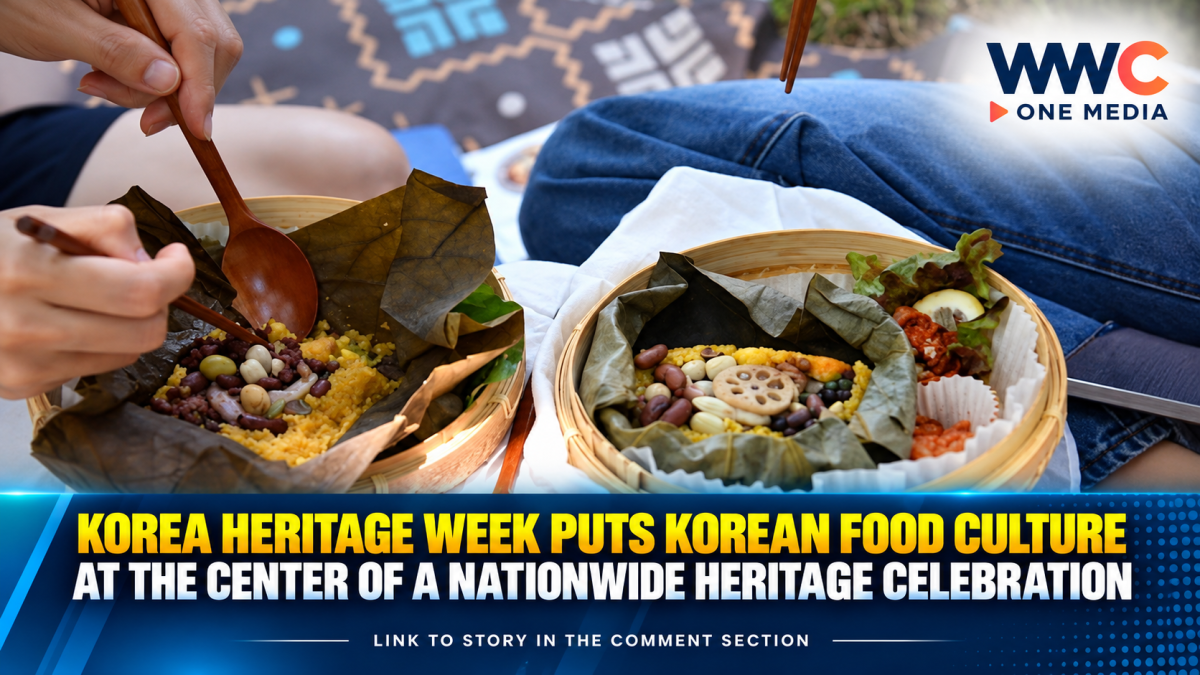
SEOUL — Korea’s rich food traditions will take center stage this October as the Korea Heritage Service launches the 2026 Korea Heritage Week, bringing heritage sites, regional cuisine and hands-on cultural experiences together across the country.
The Korea Heritage Service, in cooperation with the Korea Cultural Heritage Utilization Council, will hold the annual program throughout October across 16 local governments in five regions.
Now in its third year, Heritage Week is designed to make national heritage more accessible by allowing people to experience historic places through activities connected to local communities and traditions.
This year’s edition continues the food-centered approach introduced last year, linking the history of heritage locations with the culinary traditions that developed around them.
Five special programs connect food with history
The centerpiece of the 2026 program will be five regional special programs, accompanied by approximately 380 local heritage programs and a nationwide mobile stamp tour.
Rather than simply placing traditional dishes on a menu, organizers are using food as a way to explain how people lived, traded, traveled and built communities around Korea’s historic sites.
Seoul-Gangwon: Food beside the Han River
In the Seoul-Gangwon region, visitors will head to the Yanghwajin Ferry and Jamdubong Peak Historic Site, an area that was historically associated with Joseon-era commerce and transportation along the Han River.
Participants will be able to prepare and taste dishes connected to the area’s food history while also experiencing a traditional court-music performance.
The program effectively turns a historic transportation hub into a living classroom where food and history meet.
Gyeonggi-Incheon: The story behind jajangmyeon
In the Gyeonggi-Incheon region, Heritage Week will explore the history of Incheon’s former port district.
The area contains historic buildings associated with the city’s development after the port opened in 1883, including structures connected with foreign banks and shipping companies.
Visitors will tour the historic district and prepare foods such as jajangmyeon, a dish closely associated with the multicultural culinary environment that developed around Incheon Port.
The program highlights how Korea’s food culture has evolved through migration, trade and cultural exchange.
Chungcheong: A century-old recipe book comes alive
In Cheongju, the program will draw on a roughly century-old local recipe book to explore traditional food and drink.
The approach gives visitors an opportunity to see how historical documents can reveal details about everyday eating habits and regional culinary traditions.
Jeolla: Cooking with the region’s rice heritage
In Gimje, visitors will explore the history of the ancient Byeokgolje irrigation reservoir, one of Korea’s important historical agricultural sites.
The program combines a heritage lesson with hands-on cooking using locally produced rice, connecting the history of agricultural infrastructure with the food that continues to define the region.
Gyeongsang: Traditional dishes meet evening heritage
In the Gyeongsang region, an evening program at the Gyeongju Choi Family House will combine traditional dishes with court-music performances and homemade rice wine.
The setting is intended to provide a more immersive look at traditional food culture and the social customs surrounding meals and hospitality.
Food becomes a gateway to Korean heritage
The program reflects a broader effort by Korean cultural authorities to present heritage as something people can actively experience rather than simply observe.
Korea Heritage Week has previously incorporated food, crafts, performances, field trips and educational activities into heritage sites.
In 2025, for example, the government promoted programs ranging from traditional fermented sauces and Buddhist tea culture to cooking with Gawaji rice and exploring regional specialties. Korea.net described that year’s event as the second edition, with around 400 programs organized under the theme “National Heritage in Daily Life.”
The 2026 edition builds on that approach while placing Korean food culture at the heart of the national program.
A different way to experience K-food
Korean food has become increasingly visible internationally through the global popularity of K-pop, Korean dramas and Korean entertainment.
But Heritage Week takes a different approach.
Instead of presenting K-food simply as a contemporary global trend, the program places individual dishes within the historical landscapes, agricultural systems, trade routes and communities that shaped them.
That could give visitors a deeper understanding of why particular foods became associated with particular regions.
The result is a form of cultural tourism in which a historic site can provide the context for understanding a dish — and the dish can, in turn, offer a window into the history of the place.
Free programs, but reservations are required
The five featured regional programs will be free to attend, but advance online reservations are required.
According to the Korea Times report, reservations will open on a staggered, first-come, first-served basis by region from September 14 through September 18 through the official Korea Heritage Week website.
That means people interested in the limited-capacity experiences will need to pay attention to their region’s registration schedule.
Beyond the five special programs, hundreds of additional local heritage activities will be available throughout October.
More than a festival
The Korea Heritage Service’s approach reflects a larger shift in how South Korea is presenting its cultural heritage.
Historic buildings, archaeological sites and traditional practices are increasingly being connected with everyday experiences — food, music, crafts and local travel — to make heritage more accessible to younger audiences and international visitors.
The Korea Cultural Heritage Foundation, which operates under the Korea Heritage Service, likewise describes its work as including programs that transmit and promote traditional household culture, including food, customs and related cultural products.
For 2026 Korea Heritage Week, the message is particularly simple:
To understand Korea’s heritage, sometimes you have to pull up a chair and taste it.
And this October, historic sites across the country will become the backdrop for doing exactly that.
WWC ONE MEDIA G.A




Leave a Reply