
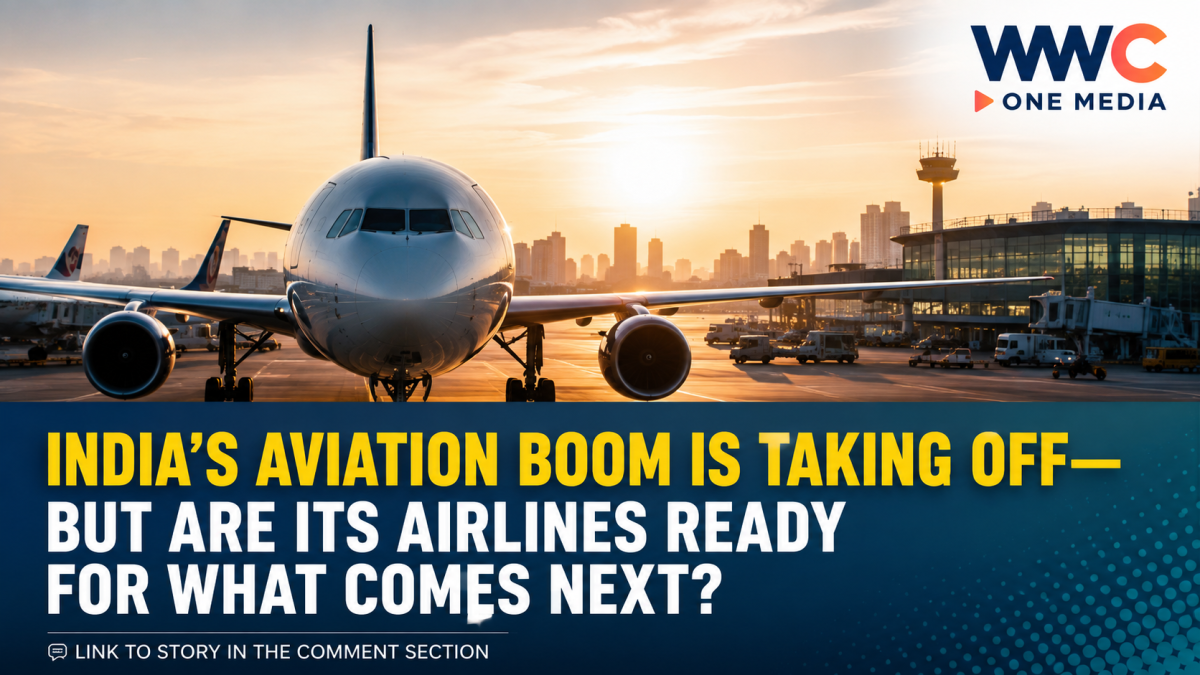
India’s aviation industry is growing at breathtaking speed—but a string of safety concerns, operational disruptions and mounting financial pressures is raising a critical question: Can the country’s aviation ecosystem keep up with its own ambitions?
India has spent years celebrating its rise as one of the world’s fastest-growing aviation markets. Passenger numbers have surged, new airports have opened and airlines have placed massive aircraft orders.
But behind the boom, turbulence is building.
Recent crises involving the country’s two dominant airline groups—Air India and IndiGo—have intensified scrutiny of safety standards, regulatory oversight and the resilience of an industry increasingly dependent on just a handful of major players. Together, the two groups account for the overwhelming majority of domestic airline capacity, raising broader concerns about competition and systemic risk.
A Rapidly Growing Industry Faces a Reality Check
The scale of India’s aviation expansion is undeniable. Indian airlines carried roughly 167 million passengers in 2025, while more than 70 airports have reportedly been added over the past decade and carriers have collectively ordered around 1,500 aircraft, according to recent AFP reporting.
Industry data also underscores IndiGo’s enormous role in that growth. IATA reported that India’s domestic market expanded from about 613,000 flights in 2014 to nearly 1.1 million in 2024, with IndiGo accounting for around 53% of departing flights from and within India that year.
But aviation experts warn that aircraft and airports alone do not create a sustainable aviation powerhouse.
The supporting ecosystem—including trained personnel, maintenance capacity, regulatory oversight and airline finances—must expand at the same pace.
That is where the warning signs are beginning to flash.
Air India Under Intensifying Scrutiny
Air India remains under intense scrutiny following the fatal June 2025 crash of a Boeing 787 Dreamliner near Ahmedabad that killed 260 people. The final cause of that disaster remains subject to an official investigation, and it would be premature to draw conclusions before investigators complete their work.
More recently, an Air India Airbus A320 operating from Phuket to Delhi experienced a sudden loss of altitude in August 2026, injuring passengers. A preliminary Airbus analysis reviewed by Reuters found that all three hydraulic systems briefly lost pressure, leaving key flight controls unresponsive for several seconds before the aircraft recovered and landed safely. The cause remains under investigation.
The incident also prompted scrutiny of pilot fitness after an initial screening involving the captain detected psychoactive substances, although further testing and the official investigation are necessary to determine the significance of that finding and whether it had any connection to the incident.
Meanwhile, Air India is facing enormous financial pressure. Reuters reported this week that the airline was seeking about US$1.5 billion in additional equity from its owners after posting losses of approximately US$2.33 billion for the financial year ending in March.
IndiGo’s Dominance Brings Its Own Risks
IndiGo, India’s largest airline, has been one of the biggest success stories of the country’s aviation boom. Yet its sheer size means operational problems can quickly become a national aviation problem.
In late 2025, poor preparation for new pilot rostering and fatigue rules triggered a major disruption that led to thousands of flight cancellations and widespread passenger chaos. The crisis exposed the vulnerability of a market where one carrier controls such a significant share of domestic travel.
The airline has also faced more recent operational challenges, including intermittent problems with its reservation platform in August 2026 that disrupted some bookings and online check-ins.
Separately, India’s aviation regulator issued warnings after an audit identified non-compliance involving the handling of dangerous goods, according to reports citing regulatory findings and company disclosures.
None of these developments alone defines the safety of India’s aviation system. But together, they have intensified the debate over whether rapid growth is placing too much pressure on airlines and regulators.
Growth Is Not the Same as Sustainability
The industry’s challenges are also financial.
Airlines are dealing with higher fuel costs, currency pressures and longer routes caused by geopolitical tensions and airspace restrictions. These pressures have forced carriers to reassess expansion plans and have made profitability increasingly difficult in a business already known for thin margins.
Even as India adds passengers and planes, the country’s airlines must still solve the fundamental problem that has haunted the sector for decades: How do you grow rapidly while remaining profitable, competitive and safe?
The question is especially urgent as the industry becomes increasingly concentrated. Calls for more competition have grown, and the government has taken steps toward expanding the number of major carriers. Reuters also reported in July that the possibility of new entrants—including interest from major business groups—was being explored as policymakers seek a more competitive aviation market.
The Bigger Challenge Ahead
India’s aviation story is not one of failure. It is, in many ways, a remarkable success story.
Millions more people can fly today than a decade ago. Airports are expanding, airlines are ordering new aircraft and India is positioning itself as a major global aviation power.
But the latest turbulence offers a powerful reminder: growth without equally strong investment in safety culture, regulation, infrastructure and financial resilience can create new vulnerabilities.
The next phase of India’s aviation boom may therefore be its most important yet.
The country has already proven it can put more people in the air.
Now comes the harder test—making sure the system beneath them is strong enough to carry the weight of that success.




Leave a Reply