
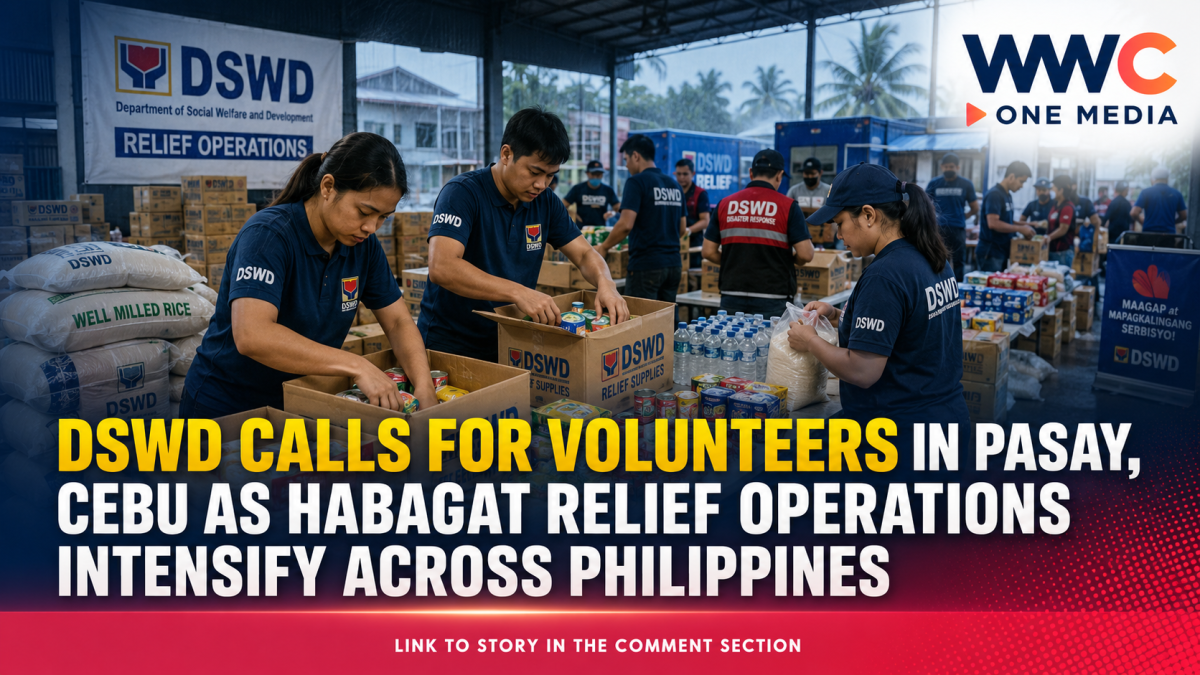
MANILA, Philippines — The Department of Social Welfare and Development is calling for more volunteers to help prepare family food packs at its disaster-response hubs in Pasay City and Cebu, as government agencies race to keep relief supplies moving amid prolonged rains, widespread flooding and the aftermath of recent tropical cyclones.
ABS-CBN News reported on Sunday, August 30, that the DSWD was inviting volunteers to assist in repacking food packs in Pasay and Cebu, putting renewed attention on the huge behind-the-scenes operation required to keep evacuation centers and disaster-hit communities supplied.
The appeal comes at a critical time.
DSWD on red alert as rains refuse to let up
The DSWD has placed its disaster-response operations on red alert as the southwest monsoon, locally known as the habagat, continues to bring heavy rainfall and flooding to several parts of Luzon and the Visayas.
The heightened status followed the national government’s red-alert activation beginning August 28, with DSWD field offices, disaster teams and relief resources placed on heightened readiness.
According to official DSWD Disaster Response Operations Monitoring and Information Center data cited on August 30, the government had 3,524,177 family food packs already strategically prepositioned nationwide as of 6 a.m. on August 29.
The stockpile also included 305,415 ready-to-eat food boxes, 14,895 other food items and 287,848 non-food relief items positioned around the country for rapid deployment.
But having millions of food packs in warehouses does not end the job.
As supplies are dispatched to flooded towns and evacuation centers, production hubs must continue packing and replenishing stocks so the government can respond to new requests from local governments without exhausting strategically positioned supplies.
Around 8 million people affected by habagat, recent cyclones
The scale of the continuing disaster helps explain why the DSWD is seeking additional helping hands.
NDRRMC figures reported over the weekend showed that around 8 million people, or roughly 2.3 million families, had been affected by the combined effects of the habagat and tropical cyclones Luis, Maymay and Neneng.
Authorities reported 32 deaths, 19 injuries and three missing persons, although casualty figures remained subject to government validation.
The weather threat was also far from over on Sunday.
PAGASA said the habagat would continue bringing monsoon rains over several parts of Luzon, including Pangasinan, La Union, Benguet, Bataan, Zambales, Tarlac and Pampanga, with flash floods and rain-induced landslides possible during periods of heavy to intense rainfall.
GMA News reported that a red rainfall warning was raised over Bataan and several areas of Central Luzon on Sunday morning, while flooding remained reported in portions of Metro Manila.
Thousands more food packs moved closer to vulnerable communities
Relief supplies are already being moved toward areas facing continued rainfall.
Inquirer reported Sunday that the DSWD delivered 24,029 additional family food packs to the Ilocos Region, including supplies sent to warehouses and prepositioning locations in Ilocos Norte, Ilocos Sur and La Union.
The deliveries were meant to replenish stocks and position assistance closer to communities that could be affected by continued rains and flooding.
That constant cycle — pack, transport, distribute and replenish — is where volunteers can play an important role.
Why Pasay and Cebu matter
The Pasay facility is one of the DSWD’s major disaster resource hubs for Luzon, while the Visayas Disaster Resource Center in Barangay Tingub, Mandaue City, Cebu is a major production and logistics center serving the Visayas and nearby regions.
The Cebu facility received a major mechanization upgrade earlier this year. DSWD Field Office 7 said its upgraded production system can manufacture up to 30,000 family food packs during an eight-hour shift, roughly tripling its previous capacity and allowing supplies to be replenished faster during large-scale emergencies.
Technology, however, has not eliminated the need for people.
Previous DSWD volunteer operations at both the Luzon and Visayas resource centers have relied on students, civic organizations, government personnel, private-sector groups and individual citizens to help pack, organize and prepare supplies for deployment.
Bayanihan becomes part of the disaster-response supply chain
The latest appeal is therefore more than a call to put goods inside boxes.
Each completed food pack becomes part of a national logistics chain that can eventually reach families forced from their homes by flooding, communities isolated by severe weather and evacuation centers waiting for additional supplies.
And with millions already affected while habagat rains continue, keeping that supply chain moving could become increasingly important in the days ahead.
Those interested in volunteering should check the official DSWD and relevant DSWD regional social-media channels for the latest registration procedures, schedules and safety instructions before proceeding to a repacking facility, as volunteer arrangements may change depending on operational requirements.
The DSWD has also urged residents in flood-prone and high-risk communities to follow evacuation orders and other instructions from their local governments rather than waiting for floodwaters to rise before leaving their homes.




Leave a Reply