
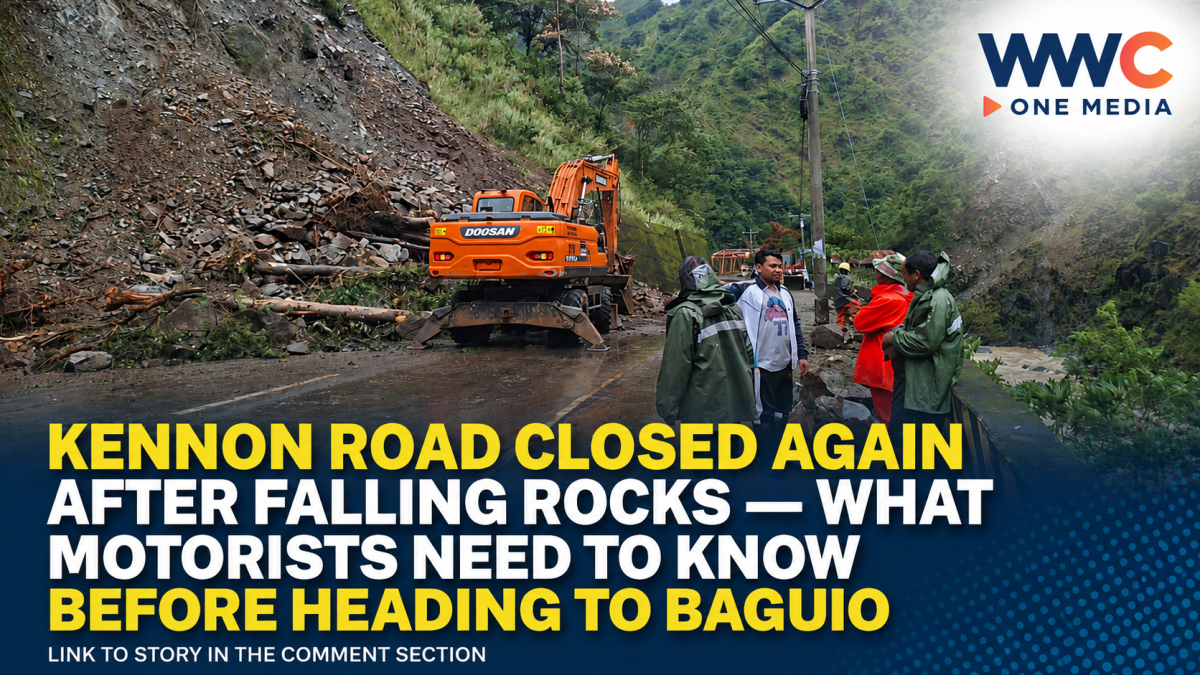
BAGUIO CITY, Philippines — Motorists heading to Baguio were urged to stay alert after a section of the historic Kennon Road was temporarily closed Sunday, August 30, following falling rocks and continuing erosion triggered by persistent rains.
The affected area was located near Camp 5, where authorities initially closed the road at around 5 p.m. as rocks continued to fall from the surrounding slopes. By 7 a.m. on August 31, one lane had become passable, but access remained restricted to residents while clearing and safety operations continued.
Barangay officials and local responders were assisting in clearing the affected section as authorities monitored the mountainside for additional hazards.
The latest incident is part of a string of weather-related disruptions that have repeatedly affected Kennon Road in recent weeks. The nearly 34-kilometer mountain highway, which connects the lowlands to Baguio City, has long been vulnerable to landslides, rockfalls and erosion during prolonged heavy rainfall.
Earlier this month, heavy rains sent mud, floodwater and rock debris onto sections of Kennon Road in Tuba, Benguet, forcing authorities to restrict access and suspend clearing operations at times because of unsafe conditions. Motorists were repeatedly advised to avoid the route when weather conditions worsened and to take alternative roads instead.
Just days before the latest closure, the Department of Public Works and Highways (DPWH) had reopened Kennon Road to light vehicles only, with a five-ton load limit, after clearing debris from previous landslides and rockfalls. Authorities, however, warned that continued rainfall could again force temporary closures.
A Bigger Problem Behind the Repeated Closures
The recurring danger on Kennon Road has also renewed questions about the long-term stability of its surrounding slopes.
Public Works Secretary Vince Dizon recently ordered government engineers and geologists to examine the root causes of repeated landslides along the mountain highway, including whether old mining operations and underground tunnels may be contributing to slope instability.
The government is also looking at longer-term protective measures, including the extension of a rockshed designed to shield motorists from falling boulders and debris. According to previous reports, repairs and additional protective infrastructure are being planned as authorities seek more permanent solutions to the road’s recurring hazards.
For now, officials are reminding motorists, commuters and pedestrians not to take chances during heavy rain.
Motorists are advised to monitor official DPWH-Cordillera and local government advisories before traveling, avoid closed or hazardous road sections, and use alternative routes when necessary. Road conditions in mountainous areas can change quickly, especially during prolonged rainfall.
The reopening of any affected section of Kennon Road will depend on clearing operations and safety assessments by authorities.
As rains continue, the bigger question remains: how long can one of the country’s most iconic mountain roads withstand the hazards that keep coming down from above?

Leave a Reply