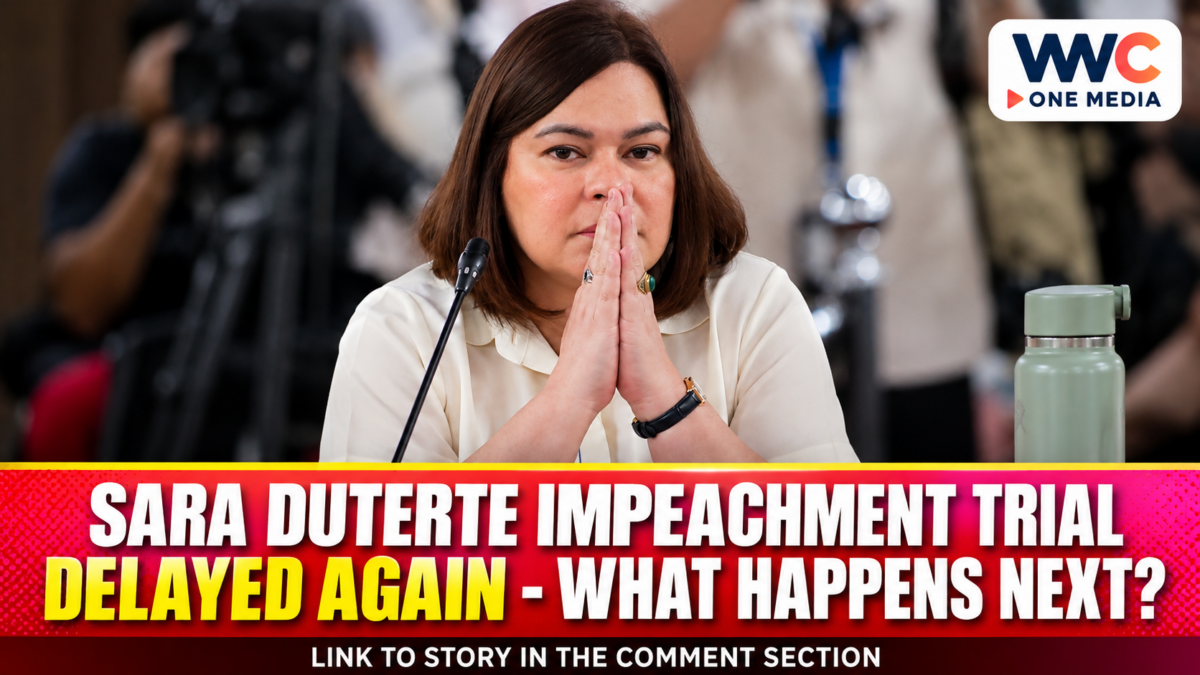
The impeachment trial of Philippine Vice President Sara Duterte is facing another scheduling setback after the Senate impeachment court cancelled two hearing days originally scheduled for November 26 and 27, pushing the next stage of the defence presentation into December.
The interruption comes at a consequential point in the proceedings. The House prosecution has completed its presentation of evidence, leaving Duterte’s legal team to answer the allegations that remain before the Senate impeachment court.
The cancelled dates were part of the court’s schedule for hearing additional defence witnesses. During the November 20 proceedings, lead defence counsel Sheila Sison informed Presiding Officer Francis Escudero that the lawyers and prospective witnesses were unavailable on November 26 and 27 and had other professional commitments.
The presiding officer granted the request and scheduled the next hearings for December 1 to 4.
The change has renewed attention on how much time the defence will need to complete its presentation, whether further adjustments will be necessary and whether the Senate can finish the case before Congress adjourns for the year.
The immediate issue is scheduling. The larger question is whether the remaining proceedings can be completed without compromising either the respondent’s right to present a defence or the court’s responsibility to reach a decision.
Why the November Hearings Were Cancelled
The November 26 and 27 sessions were originally intended to accommodate further defence witnesses.
The defence explained during the November 20 hearing that its counsel and prospective witnesses could not attend those dates because of prior commitments and other engagements. The court accepted the request and adjusted the calendar.
The cancellation does not amount to a suspension of the impeachment case or a decision on the allegations against Duterte. It is a scheduling adjustment made by the tribunal responsible for conducting the trial.
The distinction matters because the Senate impeachment court controls its proceedings. Requests from either side can affect the calendar, but neither the prosecution nor the defence has unilateral authority to determine the final schedule.
House prosecution panel member and Bicol Saro party-list Representative Terry Ridon has questioned the repeated changes and the amount of additional time the defence may need. His position reflects the prosecution’s concern about delays, but it does not establish that the defence has violated a court order or that the Senate has accepted a fixed deadline for its remaining witnesses.
The court, rather than individual lawmakers, will determine how much time is appropriate.
The Trial Now Centres on One Remaining Article
The scheduling dispute must also be understood in the context of the prosecution’s decision to withdraw three of the four original impeachment articles.
The remaining Article II concerns allegations involving unexplained wealth and financial disclosures.
That development narrowed the issues the Senate is being asked to decide. It also changed the practical scope of the defence presentation, although it does not automatically determine how many witnesses or hearing days are necessary.
The prosecution’s financial case has included an estimate of ₱817.87 million in alleged undeclared assets and unexplained wealth involving Duterte and her husband, lawyer Manases Carpio, covering the period from 2022 to 2025.
That amount is an allegation presented through the prosecution’s evidence, not a final judicial finding that the wealth was unlawfully acquired. The defence has the opportunity to challenge the evidence, question its interpretation and present explanations before the senator-judges.
For readers following the financial issues, WWC previously examined the evidence and questions surrounding the ₱817.87-million figure.
The distinction between an allegation and a finding is especially important in impeachment proceedings. The Senate must evaluate the evidence and the explanations offered by both sides before deciding whether the constitutional grounds for conviction have been established.
Why the Defence Schedule Matters
The defence’s presentation is not simply a formality. It is a central part of the process through which the respondent can challenge the prosecution’s claims.
A fair hearing requires sufficient opportunity to present relevant witnesses and documents. At the same time, the court has to manage its calendar and ensure that proceedings remain focused on the matters still before it.
That balance is becoming more significant as the year-end legislative calendar approaches.
The Senate has other responsibilities, including deliberations on the proposed national budget. Its ability to allocate time for the impeachment trial must therefore be considered alongside its legislative work.
The court’s announced December 1–4 hearing window gives the defence another opportunity to continue its presentation. Further dates may be needed depending on the number of witnesses, the time required for questioning and the court’s procedural decisions.
The central issue is not simply how many days the defence has already used. It is whether the remaining presentation can be completed efficiently while preserving the respondent’s opportunity to answer the allegations.
Earlier disputes over the impeachment court’s voting rules have also shown how procedural questions can shape the trial. WWC previously examined the Supreme Court challenge to the Senate’s revised impeachment voting formula.
That dispute is separate from the present scheduling issue. However, both developments demonstrate why the rules governing the proceedings matter alongside the financial evidence itself.
The Senate, Not the House, Will Decide the Case
The constitutional division of responsibility is central to understanding the current dispute.
Article XI, Section 3 of the 1987 Philippine Constitution gives the House of Representatives the exclusive power to initiate impeachment cases. It gives the Senate the sole power to try and decide them.
House prosecutors can present evidence, question witnesses and argue that the respondent should be held accountable. They cannot determine the outcome of the trial.
The Senate impeachment court must evaluate the evidence and follow its adopted rules of procedure. Its final decision must also meet the constitutional voting requirement applicable to the case.
The Constitution limits the judgment in an impeachment case to removal from office and disqualification from holding public office. It also provides that a person convicted through impeachment may remain liable to prosecution, trial and punishment under ordinary law.
The process is therefore distinct from a criminal trial. An impeachment conviction is not itself a criminal conviction, and the allegations being examined should not be treated as established wrongdoing before the Senate reaches its judgment.
WWC has also explained how earlier disputes over the impeachment voting threshold raised questions about the court’s constitutional responsibilities.
What Happens Next
The Senate impeachment court is scheduled to resume the defence presentation on December 1, with hearings set for December 1 to 4.
The immediate priority will be to determine which witnesses can appear, how much time their testimony requires and whether the defence can complete its presentation within the available dates.
The court will also need to manage the formal submission and consideration of evidence before moving towards the next stages of the proceedings.
The November cancellations have not settled any of the substantive allegations. Nor do they establish that the defence has exhausted its opportunity to present evidence.
For the House prosecution, the challenge is to keep the case focused on the remaining article and demonstrate why its evidence supports the allegations. For Duterte’s defence, the task is to provide explanations and challenge the prosecution’s interpretation of the records.
For the Senate, the responsibility is to preserve a fair process while ensuring that the trial does not become unnecessarily prolonged.
The next hearing dates will show whether the December timetable can hold. But the final outcome will depend not on the number of cancelled sessions alone, but on the evidence presented, the explanations offered and the judgment of the senator-judges.
Frequently Asked Questions
1. Why were Sara Duterte’s November 26 and 27 impeachment hearings cancelled?
Lead defence counsel Sheila Sison informed the Senate impeachment court that counsel and prospective witnesses were unavailable on those dates because of prior commitments and other engagements. The presiding officer granted the request.
2. When will the impeachment trial resume?
The next scheduled hearings are December 1 to 4, 2026.
3. How many impeachment articles remain against Sara Duterte?
The prosecution withdrew three of the original four articles. Article II, concerning allegations involving unexplained wealth and financial disclosures, remains.
4. Has the Senate ruled that Sara Duterte is guilty of unexplained wealth?
No. The financial claims remain allegations and evidence to be evaluated by the Senate impeachment court. The ₱817.87-million figure is a prosecution estimate, not a final finding of wrongdoing.
5. Who decides the impeachment case?
The Senate has the sole constitutional power to try and decide impeachment cases. The House of Representatives acts as the prosecuting chamber.