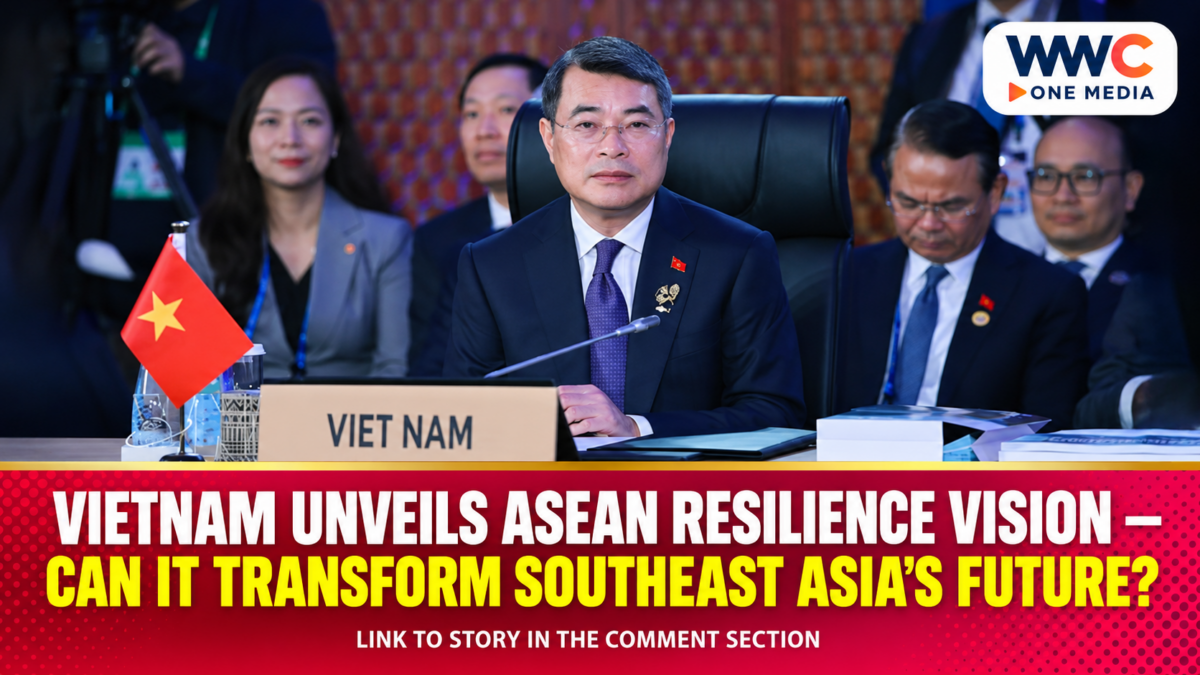
MANILA — Vietnam has presented a strategic vision for strengthening ASEAN resilience, placing economic security, technological advancement and regional stability at the centre of Southeast Asia’s long-term development agenda.
Vietnamese Prime Minister Le Minh Hung outlined three strategic priorities during the plenary session of the 49th ASEAN Summit in Manila on Nov. 15, 2026, alongside a proposal to expand regional cooperation in space technology.
The agenda comes as the Association of Southeast Asian Nations (ASEAN) seeks to translate its Community Vision 2045 into measurable development outcomes.
Vietnam’s proposals address a fundamental question facing Southeast Asia: how can economies remain internationally connected while becoming better equipped to withstand external disruptions?
Vietnam ASEAN resilience vision puts regional security first
Vietnam is advocating closer diplomatic, defence and legal cooperation to maintain an environment conducive to economic development.
Among its proposals is the development of clearer regional procedures for coordinating emergency responses and exchanging critical information during crises.
Such arrangements could help governments communicate more efficiently when emergencies affect multiple jurisdictions.
The approach reinforces the importance of peaceful dispute resolution and regional cooperation rather than confrontation.
During the summit’s retreat session, Vietnam also supported continued negotiations for a substantive South China Sea Code of Conduct consistent with international law, particularly the 1982 United Nations Convention on the Law of the Sea.
These priorities complement the broader economic and diplomatic agenda discussed during the 49th ASEAN Summit in Manila.
For internationally connected businesses, regional stability is closely associated with investment confidence, predictable operating conditions and dependable transportation networks.
Digital transformation and energy security take centre stage
Vietnam identified digital integration, investment quality and dependable supply networks as important components of regional economic cooperation.
The country called for effective implementation of the ASEAN Digital Economy Framework Agreement (DEFA), which was signed as part of the bloc’s economic integration efforts.
Closer digital integration could create opportunities for businesses operating across national borders, particularly enterprises seeking access to regional customers and technology services.
However, the benefits will depend on how effectively participating economies coordinate regulations, infrastructure development and implementation.
Vietnam also expressed readiness to participate in advancing the ASEAN Power Grid and Manila Energy Initiative.
Regional electricity connectivity could provide participating economies with additional options for managing supply disruptions and meeting future electricity demand.
Energy cooperation complements the wider push towards economic integration, including the upgraded ASEAN–China Free Trade Agreement.
Together, these initiatives illustrate how economic integration can extend beyond conventional trade arrangements to include the systems that support production, communications and investment.
Vietnam proposes a new frontier for ASEAN: Space technology
One of Vietnam’s most distinctive proposals is an initiative linking space technology with regional development and resilience.
Its objectives encompass greater access to space-based information, responsible development of space capabilities and stronger connections between researchers, educational institutions, businesses and investors.
Satellite information has potential applications in agricultural monitoring, disaster preparedness, environmental observation and infrastructure planning.
For instance, access to suitable satellite imagery could help authorities assess flood-affected communities or monitor changing environmental conditions.
Regional cooperation could also provide smaller economies with opportunities to participate in research and technology development without independently establishing every component of a space programme.
The proposal introduces another technological dimension to ASEAN’s development agenda.
However, it remains important to distinguish the initiative from an operational regional space programme. Its eventual scale and effectiveness would depend on cooperation arrangements, resources and participating institutions.
Food security remains part of the resilience agenda
Vietnam also emphasised the need to strengthen economic security by protecting essential supply systems, including food and energy.
Disruptions affecting agricultural production, transportation or critical imports can create challenges extending beyond individual national economies.
Regional coordination may help participating countries identify supply vulnerabilities and develop alternative arrangements before emergencies occur.
This direction complements initiatives examined in ASEAN’s resilient agriculture development plan, particularly efforts to strengthen agricultural sustainability and preparedness.
For businesses, dependable access to raw materials and essential commodities can be as important as access to new markets.
A regional resilience strategy must therefore consider not only economic growth during favourable conditions but also the ability of industries and communities to continue functioning during periods of disruption.
Investing in people and regional health security
Vietnam’s third strategic priority focuses on strengthening ASEAN through workforce development and social cooperation.
The country advocated improving digital capabilities, facilitating labour mobility and reinforcing social protection.
These priorities are particularly relevant to industries undergoing technological transformation, where workers may require new skills to participate in emerging economic opportunities.
Vietnam also committed to coordinating with Indonesia, Thailand and other ASEAN members to advance the establishment and operation of the ASEAN Center for Public Health Emergencies and Emerging Diseases (ACPHEED).
An effective regional public health mechanism could strengthen cooperation when health emergencies require coordinated responses across national borders.
Vietnam additionally encouraged greater cooperation in cultural and creative industries, recognising their place in sustainable regional development.
These proposals connect economic competitiveness with broader objectives involving employment, public welfare and institutional preparedness.
What happens next for ASEAN Community Vision 2045?
ASEAN leaders concluded the summit’s plenary session by adopting or noting 87 outcome documents covering different aspects of regional cooperation.
The next challenge is implementation.
Digital agreements will require workable regulatory arrangements. Energy connectivity will need infrastructure and technical coordination. Space cooperation will depend on institutional partnerships and investment, while workforce development will require accessible education and training.
Vietnam’s proposals offer a framework for connecting these priorities within a broader regional strategy.
For economies across the Asia-Pacific, the significance of this approach lies in its potential to support more dependable trade networks, technological cooperation and economic preparedness.
But the ultimate measure of ASEAN’s resilience will not be the number of initiatives announced at regional summits.
It will be whether those commitments produce functioning systems capable of supporting businesses, workers and communities when the next major disruption arrives.