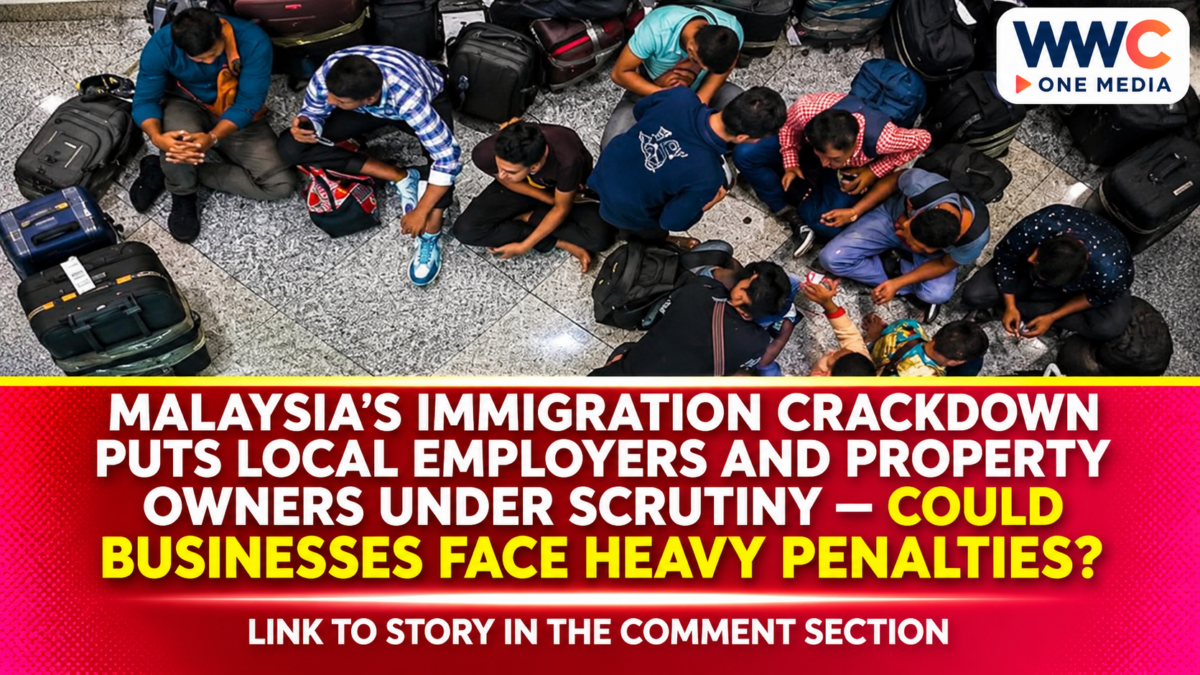
KUALA LUMPUR, MALAYSIA — Malaysia’s immigration enforcement strategy is placing responsibility on businesses, employers and individuals who facilitate immigration violations, as the government simultaneously introduces significant changes to its management of refugees and asylum seekers.
During parliamentary proceedings on Nov. 19, 2026, Deputy Home Minister Shamsul Anuar Nasarah confirmed that enforcement measures cover both foreign workers and employers found violating immigration requirements.
The Malaysia immigration crackdown highlights the legal responsibilities of businesses employing foreign nationals, including the verification of work permits, compliance with approved employment conditions and proper management of business premises.
Meanwhile, the country’s transition towards a government-managed refugee registration programme has introduced additional questions about documentation, employment eligibility and humanitarian protection.
For Malaysian businesses, the message is increasingly clear: employing foreign workers without complying with applicable regulations can expose employers themselves to serious legal consequences.
Malaysia immigration crackdown extends beyond foreign workers
Malaysia’s Immigration Act 1959/63 establishes offences involving the unlawful employment of foreign nationals and the provision of accommodation under specified circumstances.
Section 55B addresses the employment of individuals who do not possess valid immigration permission as required by the legislation.
Separate provisions address knowingly harbouring individuals who have contravened immigration laws and the responsibilities of people exercising control over premises.
These provisions mean that enforcement is not necessarily limited to the immigration status of an individual worker.
Business owners, managers and premises operators may also face investigation where evidence indicates that they have committed an applicable offence.
Malaysia’s previous enforcement activities are explored in WWC ONE MEDIA’s coverage of immigration investigations involving foreign workers at a Kuala Lumpur entertainment venue.
However, ownership of a business or property does not automatically establish criminal liability. Authorities must apply the relevant legal provisions to the circumstances of each case.
Property operators could face substantial financial penalties
Malaysia’s existing immigration enforcement framework includes significant financial consequences for specified premises-related offences.
The Immigration Department identifies penalties of between RM5,000 and RM30,000 for each individual involved in an offence under Section 55E, with imprisonment of up to 12 months or both penalties also possible upon conviction for a first offence.
Knowingly harbouring an individual who has contravened immigration legislation may also attract financial penalties ranging from RM10,000 to RM50,000 under the applicable provisions.
The specific penalties depend on the offence, circumstances and judicial outcome.
For landlords and commercial property operators, these provisions underline the importance of understanding how premises are being used and identifying the legal responsibilities associated with their management.
Similar accountability questions have emerged elsewhere in Southeast Asia, as examined in WWC ONE MEDIA’s coverage of Singapore’s immigration enforcement against alleged overstaying and harbouring offences.
The laws of Malaysia and Singapore differ, but both illustrate why immigration compliance can extend beyond the individual whose immigration status is being investigated.
More than 17,000 labour inspections highlight employer responsibilities
Malaysia’s enforcement activities also address employment conditions and worker protection.
During the Nov. 19 parliamentary proceedings, the Deputy Home Minister reported the following figures for Peninsular Malaysia through Sept. 30, 2026:
| Enforcement activity | Recorded total |
|---|---|
| Integrated labour enforcement operations | 642 |
| Statutory labour inspections | 17,488 |
The inspections covered employment legislation, worker accommodation and wage-related requirements.
Immigration enforcement also addressed employment without appropriate documentation, misuse of immigration passes and work undertaken outside approved employment arrangements.
These developments highlight the importance of ensuring that businesses understand the conditions attached to their employees’ immigration permissions.
Contractors and subcontractors introduce additional compliance considerations, particularly where a company depends on external organisations to provide labour.
The importance of contractor accountability was previously examined in WWC ONE MEDIA’s coverage of work-pass investigations involving companies operating at Singapore’s Changi Airport.
Businesses should not assume that outsourcing recruitment or workforce management automatically eliminates their own legal responsibilities.
Malaysia introduces a different approach to refugee registration
The immigration enforcement debate coincides with Malaysia’s transition towards its own refugee registration system, known as the Dokumen Pendaftaran Pelarian (DPP).
The country’s Home Ministry clarified on Oct. 30 that the programme does not create a route to permanent residency or Malaysian citizenship.
Eligibility is subject to conditions, including a Jan. 1, 2023, entry cutoff. Individuals who arrived after the specified date are not eligible for consideration under the programme as outlined in that announcement.
Possession of an existing UNHCR card does not automatically establish eligibility.
The programme provides for a temporary special pass subject to government conditions. Any employment opportunities made available to participants are likewise conditional and limited.
On Nov. 18, UNHCR ceased its registration and documentation activities in Malaysia following the government’s decision to assume responsibility for these functions.
However, this change does not mean that all humanitarian assistance has ended.
UNHCR continues providing protection-related assistance and processing resettlement cases while discussing arrangements intended to preserve continuity of protection during the transition.
Can Malaysia balance immigration enforcement with worker protection?
Effective immigration administration requires distinguishing between different legal and humanitarian circumstances.
A foreign national holding valid employment permission, an individual seeking international protection and a person suspected of committing an immigration offence cannot automatically be treated as belonging to the same category.
Malaysia’s parliamentary discussions have also identified exploitation, mistreatment and violations of foreign workers’ rights as matters requiring coordinated enforcement.
These concerns encompass wage payments, employee welfare and accommodation standards.
The wider importance of protecting migrant workers through appropriate housing regulations is explored in WWC ONE MEDIA’s coverage of Singapore’s prosecution of an allegedly unlicensed foreign worker dormitory.
For businesses, responsible employment practices involve more than checking immigration documents.
They also require compliance with applicable employment conditions and the proper treatment of workers.
For authorities, the challenge is ensuring that enforcement addresses individual conduct and established legal violations rather than nationality or refugee status alone.
What happens next?
Malaysia’s government continues to develop its refugee registration framework while enforcing existing immigration and employment legislation.
The Home Ministry has identified repatriation and third-country resettlement as longer-term policy priorities.
These processes depend on cooperation from countries of origin, security considerations and the willingness of receiving countries to accept individuals.
For employers in Peninsular Malaysia and Labuan, existing recruitment requirements also include obtaining prior approval for hiring new foreign workers under Section 60K of the Employment Act 1955, where applicable.
Businesses should review their employment arrangements, confirm the validity and conditions of workers’ immigration permissions and obtain professional advice where regulatory obligations remain unclear.
The success of Malaysia’s approach will depend not simply on the number of enforcement operations conducted.
It will also depend on whether employers comply with the law, workers receive appropriate protection and refugee administration remains orderly and humane.
Malaysia’s immigration debate is increasingly becoming a question of shared accountability. The challenge is ensuring that those responsible for proven violations face appropriate consequences while legitimate businesses and vulnerable individuals receive fair treatment.
Frequently Asked Questions
What is the Malaysia immigration crackdown?
It involves enforcement of existing immigration requirements against individuals and businesses suspected of violating applicable immigration and employment laws.
Can Malaysian employers be penalised for hiring workers without valid passes?
Yes. Section 55B of the Immigration Act 1959/63 addresses unlawful employment involving individuals without the required immigration permission.
Can property operators face immigration-related penalties?
Yes. Section 55E provides penalties for specified offences involving individuals exercising control over premises. Liability depends on the applicable legal requirements and circumstances.
What is Malaysia’s DPP refugee registration programme?
The Dokumen Pendaftaran Pelarian is a government-managed refugee registration framework involving conditional, temporary documentation. It does not automatically confer permanent residency or citizenship.
Has UNHCR stopped all services in Malaysia?
No. Its registration and documentation activities ceased effective Nov. 18, 2026, but resettlement processing and other protection-related assistance continue.