
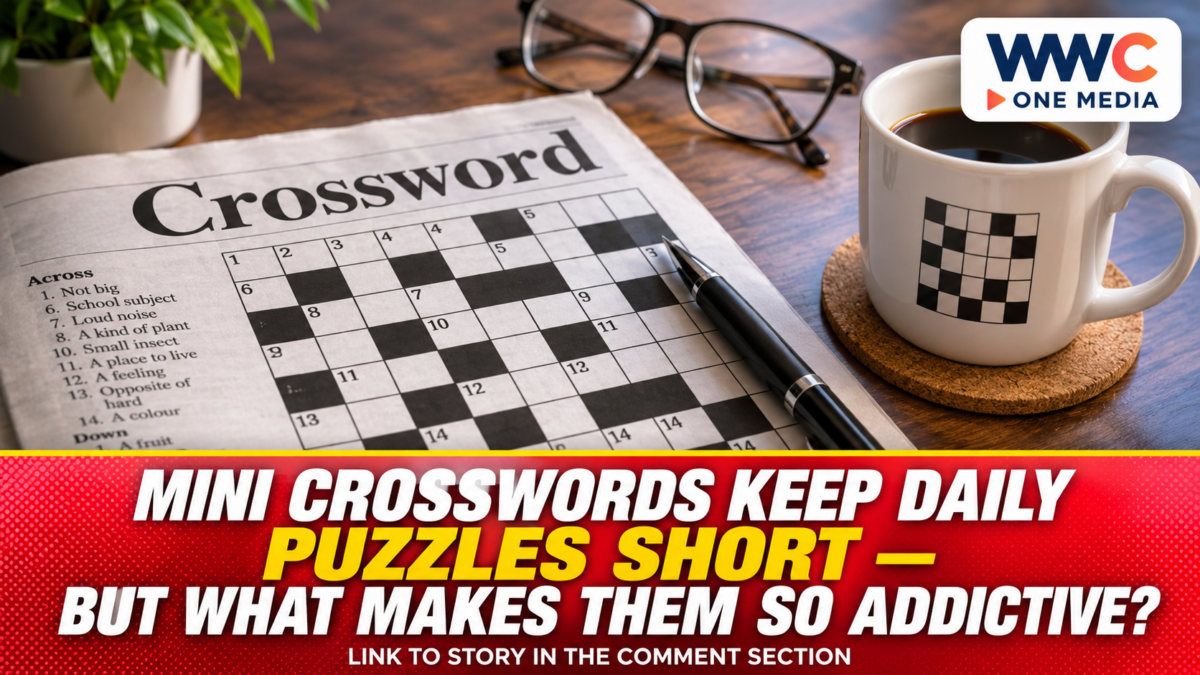
A mini crossword offers a compact alternative to the traditional newspaper puzzle: a smaller grid, a limited set of clues and a challenge designed to fit into a short break. The format has become part of the digital puzzle experience, where players can solve, check progress and return to archived games through online platforms.
The appeal is straightforward. A short puzzle gives readers a clear task with a visible finish line, without requiring the time commitment of a full-sized crossword. But its simplicity does not mean the solving process is always easy.
Mini Crosswords Turn Wordplay Into a Short Challenge
A crossword works by connecting words through intersecting horizontal and vertical answers. A correct letter in one entry can help unlock another, while a wrong answer may create problems in several parts of the grid.
The New York Times describes its Mini as a smaller version of its regular crossword. Its official instructions explain that players fill white squares with letters by solving Across and Down clues, with the answers crossing one another.
That structure is what makes the format interesting. Players are not simply answering a list of unrelated questions. Each answer becomes part of a connected system, allowing one solved clue to provide information for another.
The smaller format reduces the amount of material on the screen, but it does not remove the need for vocabulary, general knowledge and careful interpretation.
Why the Mini Crossword Fits Digital Reading Habits
A short puzzle has a natural advantage on phones and computers: it can be started and completed without setting aside a long period of time.
For publishers, interactive features can also give readers another reason to visit a website beyond its news articles. A puzzle creates a different kind of visit. Instead of arriving only to read a report, a visitor has a task to complete and may return when another edition becomes available.
That is an editorial and product-design observation, not proof that every puzzle increases traffic, subscriptions or advertising revenue. Those outcomes would need to be demonstrated through a publisher’s own audience and business data.
The format also fits into a wider digital entertainment landscape. WWC has previously examined how an immersive Sherlock Holmes puzzle experience in Singapore turns clue-solving into an activity that extends beyond a screen. A crossword is much simpler, but both formats ask participants to pay attention, connect information and work toward a solution.
The Rules Are Simple, but the Clues Can Be Tricky
The basic objective is to complete the grid correctly. The challenge comes from the way clues are written.
Some clues point directly to a word or definition. Others depend on word associations, familiar expressions, abbreviations or a particular interpretation of a phrase. A solver may understand the subject but still need to test different possible answers against the crossing letters.
The best approach is often to begin with the clues that appear most familiar. Filling in those answers gives the player additional letters that can narrow down the possibilities elsewhere.
When an answer does not fit, it is worth reconsidering the clue rather than forcing the word into the grid. One incorrect letter can affect more than one entry.
The New York Times’ help documentation also describes digital features that support the solving process, including checking or revealing letters and answers. These tools can help a player move forward, although using assistance may affect how a platform records a completed puzzle or a solving streak.
Streaks and Timers Add Another Layer
Some digital puzzle products include timers, personal statistics or streak indicators. These features change the experience from simply completing a grid into tracking performance over time.
The New York Times explains that its Mini includes a timer and personal leaderboards. Its documentation also describes statistics such as puzzles solved, solve rate, current streak and longest streak.
Those tools can give regular players a way to monitor their own progress. A solver may try to improve a personal time, maintain a streak or complete a puzzle without using hints.
But a timer is not a measure of intelligence, and a streak is not a requirement for enjoying a puzzle. People solve at different speeds, and the purpose of a casual game does not need to be competition.
This distinction matters when digital entertainment uses progress indicators. A feature intended to encourage participation should remain optional, rather than making players feel that missing one day means they have failed.
Puzzles Are Part of a Wider Interactive Entertainment Market
Crosswords sit within a much larger category of interactive entertainment. Word games, trivia, mystery adventures and logic challenges all give audiences an active role instead of asking them only to watch or read.
The difference lies in the level of participation. A crossword can be completed alone in a few minutes. A mystery game may involve a longer narrative, several locations or cooperation with other players.
WWC’s coverage of The Detective Is Already Dead game looks at a different form of puzzle-led entertainment: a mystery adventure built around choices and branching outcomes. Meanwhile, its report on the Cyberzone Game Fest 2026 explores the social side of gaming, where players and developers meet around interactive experiences.
These examples should not be treated as evidence that crosswords and video games have the same audience or business model. They illustrate how varied interactive entertainment can be, from a small word grid to a larger shared experience.
For publishers, the practical question is whether a feature is useful to the audience and fits the publication’s identity. A puzzle should be accessible, clearly presented and easy to use. It should also complement the publication rather than distract from its core journalism.
What Happens Next
The future of daily puzzles will depend on how publishers choose to present them and whether readers find enough value to return. Features such as archives, mobile-friendly grids, personal statistics and optional hints can make a puzzle easier to revisit.
However, the existence of a daily puzzle does not by itself establish a publisher’s audience size, revenue or retention performance. Those claims require verifiable analytics or company disclosures.
For readers, the basic attraction remains uncomplicated: a small grid, a set of clues and the satisfaction of completing a connected set of answers. A mini crossword does not need a major prize or a complicated storyline to provide a brief mental challenge.
Frequently Asked Questions
What is a mini crossword?
A mini crossword is a smaller crossword puzzle with a compact grid and Across and Down clues. Players fill the squares with answers that intersect.
How is a mini crossword different from a regular crossword?
The main difference is its size and shorter format. A regular crossword generally contains a larger grid and more clues, while a mini is designed as a briefer solving experience.
Can I solve a mini crossword on my phone?
Yes. Some publishers provide crossword games through mobile apps and websites. Availability and access requirements depend on the publisher.
Do I need to finish a mini crossword quickly?
No. Timers and personal statistics are optional features on some platforms. Players can solve at their own pace.
Can I use hints if I get stuck?
Some digital crossword platforms provide checking or reveal tools. The available assistance and its effect on scores or streaks depend on the platform.










