
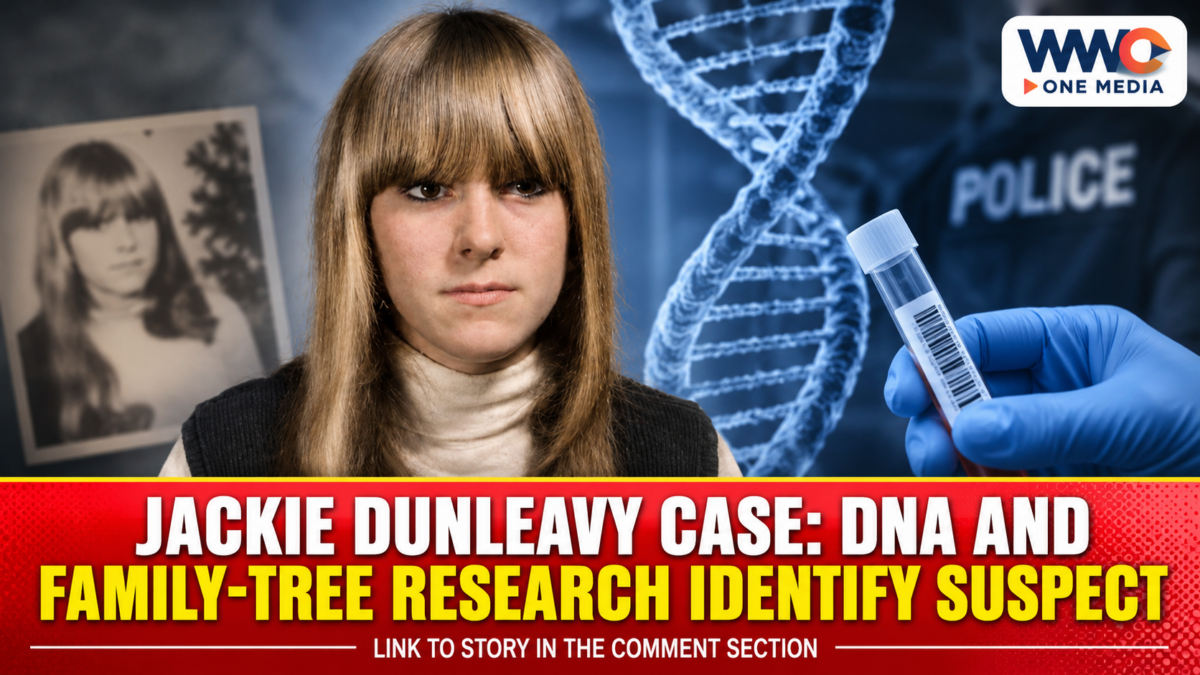
Police in London, Ontario, announced on November 23, 2026, that modern DNA analysis and forensic investigative genetic genealogy had identified Michael Joseph Moore as responsible for the 1968 killing of 16-year-old Jacqueline “Jackie” Dunleavy. Moore died on March 3, 2018, before investigators reached their conclusion, meaning no criminal charges can now be laid.
The announcement closes a major investigative question that remained unresolved for nearly six decades. It also demonstrates how biological evidence collected in an earlier investigation can retain value when preserved and later examined using methods that were not available at the time.
The outcome, however, is not a court judgment. The identification and evidentiary assessment were announced by police, and no criminal trial will take place because the person they identified is deceased.
The Jackie Dunleavy case began with a disappearance after work
Dunleavy was a Grade 10 student at Westminster Secondary School and worked at the Stanley Variety Store on Stanley Street near Wharncliffe Road.
On January 9, 1968, she finished her shift at approximately 6:30 p.m. and was last seen leaving the shop on foot. At approximately 8 p.m., three young people found her on the grounds of Katherine Harley School, now the location of Matthews Hall, on Oxford Street.
Emergency responders attended, and she was pronounced dead. Police said the investigation established that she had been murdered. Although she had suffered a head injury, the cause of death was determined to be strangulation.
The original homicide investigation involved numerous leads and witness interviews. Investigators also collected biological and other forensic evidence. Despite those efforts, the person responsible was not identified, and the case remained unsolved.
The passage of time did not mean the file was abandoned. Police said successive generations of investigators reviewed it as new investigative opportunities emerged.
Preserved evidence became central to the new investigation
A significant earlier effort was Project Angel, a joint initiative involving the London Police Service and Ontario Provincial Police that ran from 1997 to 2001.
The latest review involved a comprehensive examination of historical evidence and additional DNA testing. Police said specialized forensic work by Othram identified distant genetic relatives associated with the unknown suspect’s DNA profile.
Investigators then worked with the Toronto Police Service on genealogical research. That work involved constructing family trees to narrow the field toward a potential suspect.
The process did not end with a genetic lead. Police said investigators conducted further interviews, gathered new evidence and obtained DNA samples for comparison. Those samples were submitted to the Centre of Forensic Sciences for analysis.
This sequence matters because genetic genealogy is an investigative lead-generation method, not a substitute for confirming evidence. Family relationships can help investigators identify people for further examination, while additional comparison and corroborating investigative work are needed before police can reach a conclusion.
The London announcement describes both the genealogical work and subsequent DNA comparison as parts of the investigation.
Why forensic genetic genealogy can change an old case
Traditional DNA investigations often rely on comparing a profile with a known reference sample or a profile held in an authorised database. Forensic investigative genetic genealogy can provide another route when investigators do not have a direct match.
In broad terms, the method uses genetic information to identify possible distant relatives. Investigators can then research family connections and narrow the possible source of an unknown DNA profile.
That does not mean a relative is responsible for a crime. Nor does a family-tree connection alone establish guilt. The investigative value lies in helping police identify a person whose DNA can then be examined through appropriate comparison procedures and other evidence.
The Dunleavy investigation illustrates why preserving biological evidence can matter long after the original crime. A sample that could not identify a suspect in 1968 remained available for later testing as forensic methods developed.
The importance of careful evidence handling is also relevant to other cases involving DNA. WWC has reported on the role of forensic DNA in identifying victims after the MV June Aster ferry fire, where genetic comparison was used for a different purpose: establishing the identities of recovered remains.
Police say the evidence would have supported charges
The London Police Service identified Moore as the person responsible for Dunleavy’s murder. The release said he was 25 at the time of the killing, had been born in Ireland in 1942 and had emigrated to Canada in January 1967.
He had been living in London for less than a year when Dunleavy was killed. Police said he moved into an apartment on Springbank Drive in May 1967.
The police statement said investigators were confident that the evidentiary threshold to support criminal charges had been met. It added that Moore would have been arrested and charged had he been alive.
But the legal distinction remains important. Moore died on March 3, 2018, before he was identified through the investigation. No criminal charge, trial or verdict can follow from the announcement.
The police decision to publicly identify him was described as a considered decision based on the evidence, public interest and the service’s responsibility to provide an account of an investigation that had remained unresolved for decades.
The case also shows why reporting on criminal investigations must distinguish between a police conclusion and a judicial finding. WWC’s earlier examination of the Nida Blanca murder investigation and its unresolved legal questions explored how a case can remain without a definitive court determination even after years of investigation.
The investigation may still receive historical information
Although police have identified the person they believe was responsible, the service said it recognises that people may still hold relevant historical information.
The appeal is directed at anyone who knew Moore, had contact with him or remembers information connected to the period. Investigators said details that appeared insignificant at the time could have relevance when considered alongside the evidence now assembled.
The request does not mean police have announced a new suspect or that the central identification has been withdrawn. It reflects the possibility that additional information could help complete the historical record.
The importance of distinguishing confirmed information from unanswered questions is also visible in contemporary homicide reporting. In a separate case, WWC’s coverage of the Scarborough investigation explained why a police release identifying victims does not automatically establish every circumstance or responsibility surrounding a crime.
What happens next
The London Police Service has asked anyone with information related to the investigation to contact the service at (519) 661-5670.
No criminal proceedings are possible against Moore because he is deceased. The public record now contains the police service’s account of how investigators reached their conclusion, including the use of preserved evidence, modern DNA analysis and genealogical research.
For Dunleavy’s family and the wider community, the announcement provides an official investigative answer to a question that remained open for nearly 58 years. It cannot restore the life lost or produce a trial, but it records the conclusion reached by investigators and explains how evidence collected decades earlier helped make that conclusion possible.
Frequently asked questions
Who was responsible for Jackie Dunleavy’s 1968 killing?
The London Police Service identified Michael Joseph Moore as the person responsible in its November 23, 2026 announcement.
How was the Jackie Dunleavy case solved?
Investigators re-examined preserved evidence, conducted additional DNA testing and used forensic investigative genetic genealogy to identify distant genetic relatives associated with the unknown DNA profile. Further genealogical research and DNA comparisons helped narrow the investigation to Moore.
Why was Michael Joseph Moore not charged?
Moore died on March 3, 2018, before investigators identified him through the case review. Police said criminal charges can no longer be laid.
What is forensic investigative genetic genealogy?
It is an investigative technique that uses genetic relationships to identify possible distant relatives of an unknown DNA source. Researchers can use family-tree work to help narrow an investigation, which must then be supported by further evidence.
Can the public still provide information about the case?
Yes. The London Police Service is asking anyone with relevant historical information to call (519) 661-5670.










