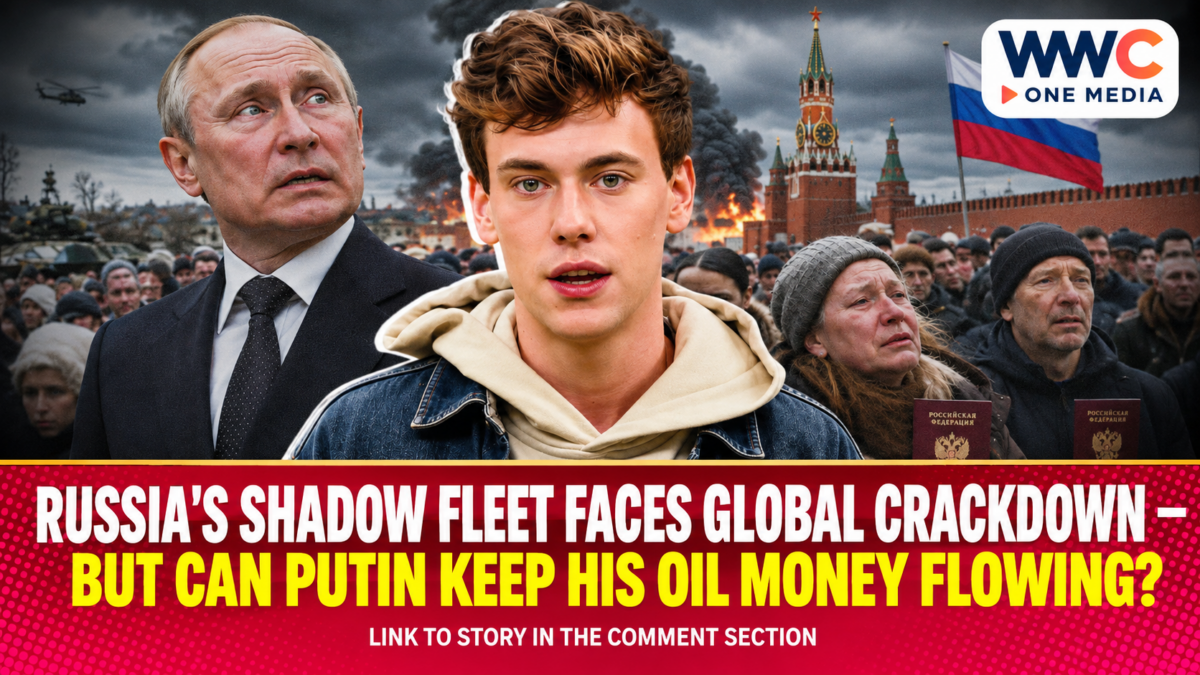
BRUSSELS — Russia’s shadow fleet is facing mounting international pressure as the European Union expands sanctions against oil traders, shipping operators, financial institutions and businesses connected to Moscow’s war economy.
On November 16, 2026, the European Union imposed additional restrictions on 12 individuals and 101 entities, widening its campaign against the economic networks that help Russia sustain its war in Ukraine.
The measures signal a broader strategy: targeting not only the vessels carrying Russian oil but also the commercial and financial infrastructure that makes those shipments possible.
With hundreds of vessels already facing restrictions, the central question is whether Moscow can maintain its energy revenues without incurring increasingly expensive commercial and financial risks.
Russia Shadow Fleet: Moscow’s Oil Network Faces Growing Pressure
Russia’s shadow fleet consists of a network of vessels associated with efforts to circumvent international restrictions on Russian petroleum exports.
The fleet allows Moscow to maintain access to overseas customers despite restrictions imposed on its energy industry following the full-scale invasion of Ukraine in February 2022.
As of July 23, 2026, more than 670 vessels had been placed under EU restrictions involving port access and maritime services.
However, the number of sanctioned ships should not be confused with the number of vessels destroyed, permanently immobilised or removed from international trade.
Sanctioning a tanker creates legal and commercial restrictions, but its practical effectiveness depends on enforcement, international cooperation and the willingness of commercial partners to comply.
This distinction is critical when assessing whether Russia’s energy export network is weakening or merely becoming more expensive to operate.
Europe Targets the Businesses Behind Russian Oil Exports
The November sanctions extend beyond shipping companies.
Nearly 50 Russian banks and financial institutions were included in the latest measures, alongside businesses involved in oil production, refining and energy infrastructure.
Companies located in China, the United Arab Emirates, Oman and Seychelles were also targeted over their involvement in purchasing Russian-origin petroleum products.
The restrictions follow another round of sanctions announced on October 15, 2026, involving businesses connected to Russian oil trade and sanctions circumvention.
For international businesses, the expanding restrictions mean that compliance risks can arise through commercial relationships with designated counterparties, even when the businesses themselves are located outside Russia.
The developments add another dimension to the evolving geopolitical relationship between Beijing and Moscow, examined in WWC ONE MEDIA’s coverage of the China-Russia treaty and Shenzhen summit.
Financial institutions, commodity traders and maritime service providers could face increasingly complicated compliance decisions as governments continue to expand their sanctions programmes.
Why Russian Oil Remains Central to the Economic Battle
The economic logic behind the sanctions is straightforward: restricting the profitability of Russian energy exports is intended to reduce the financial resources available to Moscow.
Oil shipments involve more than the purchase and sale of petroleum. They also require financing, insurance, maintenance, transportation and other commercial services.
Restrictions affecting these services can increase operating costs and reduce the attractiveness of transactions involving sanctioned businesses.
The United States has also targeted Russia’s oil production and export sector through sanctions against petroleum companies and shipping networks.
Nevertheless, reduced profitability does not automatically mean that Russian oil exports will stop.
Moscow’s ability to maintain revenue will depend partly on international oil prices, demand from overseas buyers and the effectiveness of sanctions enforcement.
The broader contest over energy supplies is also reflected in international developments such as the potential expansion of food and energy imports under the Philippines-US trade relationship.
Maritime Safety Becomes Another Major Concern
The shadow fleet presents challenges that extend beyond economic sanctions.
International maritime discussions have identified risks associated with ageing vessels, inadequate maintenance, unclear ownership arrangements and insufficient insurance coverage.
These conditions can complicate accountability when maritime accidents occur.
An oil spill involving a poorly insured vessel, for example, could expose coastal communities and governments to significant environmental and financial consequences.
The challenge is particularly important for economies that depend heavily on international shipping and maritime commerce.
Governments must therefore balance sanctions enforcement with navigational rights, environmental protection and their obligations under international maritime law.
The designation of a commercial vessel under a sanctions programme does not automatically establish that it is a lawful military target.
Economic restrictions and military operations are separate matters governed by different legal frameworks.
Could Economic Pressure Force Moscow to Change Course?
Europe’s sanctions campaign increasingly focuses on the relationship between Russian energy exports, commercial activity and government finances.
However, predicting the collapse of Russia’s economy or political system would require evidence extending far beyond shipping restrictions.
A country can experience substantial economic pressure without undergoing immediate political change.
The more useful indicators include changes in petroleum export earnings, government finances, shipping costs and the availability of international financial services.
Meanwhile, the humanitarian consequences of the conflict remain central to the international response, as illustrated by the continuing developments surrounding the Dymer apartment attack near Kyiv.
Whether additional economic sanctions can influence Moscow’s decisions remains uncertain.
What Happens Next for Global Energy Markets?
The European Union has suspended automatic adjustments to its Russian crude oil price cap until July 15, 2027, with an interim review scheduled for January 2027.
The decision reflects the difficulty of maintaining pressure on Russia while responding to disruption in international petroleum markets.
For energy-importing economies across Asia-Pacific, the consequences of tighter enforcement could vary considerably.
If restrictions reduce available oil supplies, upward pressure on transportation and energy costs could emerge. If alternative supplies remain sufficient, the broader market impact could be more limited.
Neither outcome is guaranteed.
The relationship between international energy markets and domestic petroleum costs remains important, including developments such as the recent fuel price adjustments affecting gasoline and diesel consumers.
The next phase of the sanctions campaign will test whether governments can turn increasingly extensive legal restrictions into measurable economic pressure.
For Moscow, the challenge is not simply finding buyers for its petroleum. It is maintaining a commercially viable system capable of delivering that petroleum and receiving payment.
The shadow fleet remains part of that equation. Its future could become an important indicator of the effectiveness of international economic pressure on Russia.