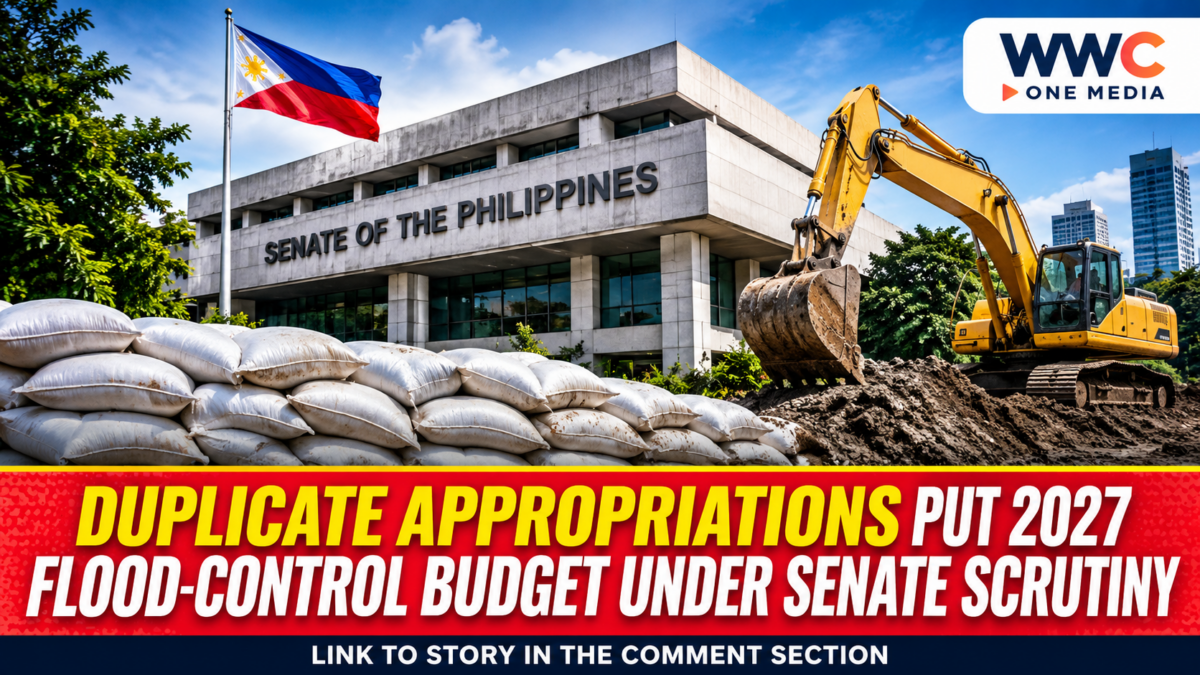
The proposed 2027 national budget is facing another round of scrutiny after Sen. Panfilo “Ping” Lacson raised concerns about possible duplicate or multiple appropriations for flood-control projects. In a Senate statement dated November 22, Lacson said he intended to seek the removal of the questioned allocations during the chamber’s deliberations and, if necessary, at the bicameral conference committee.
The issue places project identification and budget documentation at the centre of the next stage of the national spending review. It also raises a question lawmakers must resolve before approving the final budget: are repeated entries financing separate work, or are some proposed allocations covering projects that have already appeared elsewhere in the spending programme?
The distinction matters. A proposed appropriation is authority sought for public spending; it is not, by itself, proof that a contract was awarded, funds were released or a contractor was paid. Establishing actual duplication requires a comparison of the project records, not simply similar descriptions in budget documents.
What the duplicate appropriations concern means
Lacson’s concern involves flood-control projects appearing more than once in the proposed 2027 budget. He said he would move to remove duplicate or multiple appropriations during Senate deliberations, with action at the bicameral conference committee also possible.
The public statement, however, does not provide a complete project-by-project schedule identifying the entries in question. It does not set out the corresponding project locations, implementing offices, engineering scopes, amounts or earlier budget references needed to independently establish which entries may be duplicates.
That missing detail is important because two projects can have similar descriptions without being the same undertaking. Separate river sections, phases of construction, rehabilitation work and additional protection measures may legitimately carry related descriptions.
The reverse is also possible: different wording may conceal projects that cover the same location and scope. A reliable assessment therefore needs more than a comparison of titles.
For each questioned entry, reviewers would need to examine its exact location or coordinates, engineering description, implementing office, project identification number, funding history and implementation status. Contract and payment records would then help establish whether the concern extends beyond the proposed budget.
The 2027 budget documents provide the starting point
The Department of Budget and Management published the FY2027 National Expenditure Program on August 11, 2026. Its online release includes several volumes, among them Volume II-B, which contains detailed agency budget material relevant to examining public works allocations.
These documents provide the formal starting point for checking proposed spending. They allow lawmakers, auditors and the public to examine how agencies have presented their funding requirements before Congress completes the appropriations process.
WWC previously examined the broader ₱1.47-trillion infrastructure programme proposed for 2027, including the government’s stated screening requirements for proposed projects. That wider infrastructure programme is relevant context, but it does not independently establish the specific duplicate entries Lacson has raised.
A meaningful cross-check would compare the proposed 2027 entries with previous General Appropriations Acts, earlier budget proposals and the relevant project implementation records. It should also distinguish continuing projects from new proposals and identify whether a project has been revised, extended or divided into separate phases.
Without that comparison, the public cannot responsibly conclude that every repeated-looking entry represents double funding.
Why project-level verification matters
The concern arrives amid wider scrutiny of how flood-control projects are selected, documented and implemented.
In previous cases, government investigations have focused on discrepancies between paperwork and actual project conditions. WWC’s report on a Bulacan flood-control project declared complete before investigators inspected the site illustrates why project records must be checked against physical implementation. That case is separate from Lacson’s current budget concern and should not be treated as evidence that the newly questioned allocations are irregular.
Oversight also depends on the timing and quality of government audits. In an earlier report, WWC discussed the Commission on Audit’s proposed resources for restoring a stronger pre-audit system for government transactions. Preventive checks can help identify documentation problems before funds move, while post-audit work examines transactions after they occur.
There is another planning issue. Flood-control structures are most useful when their locations, engineering specifications and surrounding drainage systems form part of a coherent programme. WWC has previously reported on unfinished or outdated flood-control master plans, a separate concern that underscores why project proposals need clear technical justification.
For the current budget question, the practical test is whether each allocation can be tied to a distinct, necessary and properly documented undertaking.
The difference between an appropriation and actual spending
Budget terminology can make the issue difficult to follow.
An appropriation is an amount authorised for a specified public purpose through the budget process. An agency may subsequently undertake procurement, enter into a contract, incur obligations and make payments as implementation proceeds.
These are different stages. A project appearing in a proposed budget does not automatically mean money has already been spent. Likewise, an allocation in one year and a proposed allocation in another year do not automatically establish duplication: the later amount might cover an unfinished phase, a revised scope or a separate component.
To determine whether public funds are being requested twice for the same work, reviewers need to trace the project from its original approval through its current implementation status. If a project is already completed, the records should explain why a new allocation is being proposed for what appears to be the same scope. If it remains unfinished, the budget documents should make clear what work remains and how the new amount relates to the earlier funding.
This is where transparent project identifiers and consistent location data become especially useful. They make it easier to compare entries across budget years and reduce the risk of relying on broad descriptions alone.
What happens next
The Senate Committee on Finance’s published schedule lists Department of Public Works and Highways budget interpellations for November 27 as part of its review of the proposed FY2027 General Appropriations Bill. That session provides a scheduled opportunity for lawmakers to examine the department’s proposed spending, although the agenda does not establish that the specific duplicate-allocation issue will be resolved on that date.
Lacson has said he intends to seek the removal of the questioned entries during the Senate process and, if needed, at the bicameral conference committee. Any eventual changes will depend on the deliberations and the final legislative budget process.
The most useful public disclosure would be a detailed list of the questioned projects, with their locations, scopes, amounts and corresponding earlier allocations. The DPWH and budget reviewers could then explain which entries represent separate work, continuing obligations or possible duplication.
Until those details are made available and checked, the concern should remain a matter for scrutiny rather than a settled finding of wrongdoing.
The test for the 2027 budget is not simply whether flood-control projects receive funding. It is whether each proposed allocation can be identified, justified and traced to work the government actually needs to carry out.
Frequently asked questions
What are the duplicate appropriations raised by Lacson?
Lacson raised concerns that some flood-control projects may have duplicate or multiple appropriations in the proposed 2027 national budget. A complete public project-by-project list was not included in the Senate statement reviewed.
Does a duplicate budget entry mean the government paid twice?
No. An appropriation is a budget authorisation, not proof of a payment. Establishing whether funds were paid twice requires examination of contracts, obligations, disbursements and project implementation records.
Which government agency’s budget is relevant to the issue?
The Department of Public Works and Highways is central to the review because it implements major public works and flood-control projects. The DBM’s FY2027 National Expenditure Program provides the proposed budget documents.
When is the DPWH budget scheduled for Senate interpellation?
The Senate Committee on Finance schedule lists DPWH among the agencies for interpellation on November 27, 2026, during the review of the proposed FY2027 General Appropriations Bill.
Can the Senate remove questioned project allocations?
Lacson said he would seek their removal during Senate deliberations and, if necessary, at the bicameral conference committee. The final budget will depend on the legislative process and the approved appropriations measure.